

A garage door or automatic gate that refuses to open or close properly is almost always caused by one of a handful of mechanical, electrical, or environmental failures that prevent the system from completing its full cycle. If you are an Arlington homeowner dealing with this right now, you are not alone. These issues come up regularly across Tarrant County, and the good news is that most of them have a clear diagnosis. Understanding the root cause is the first step toward a safe and lasting garage door repair. This post walks through every major reason these systems fail, explains how North Texas weather plays a direct role, and helps you recognize when the situation calls for a trained technician rather than a weekend fix.
The Most Common Reasons a Garage Door Stops Working in Arlington
Before assuming the worst, it helps to know that most garage door failures trace back to a small set of components. These parts absorb stress daily, and over time they wear down, break, or shift out of position. Here is what to look for first.
Broken or Damaged Garage Door Springs
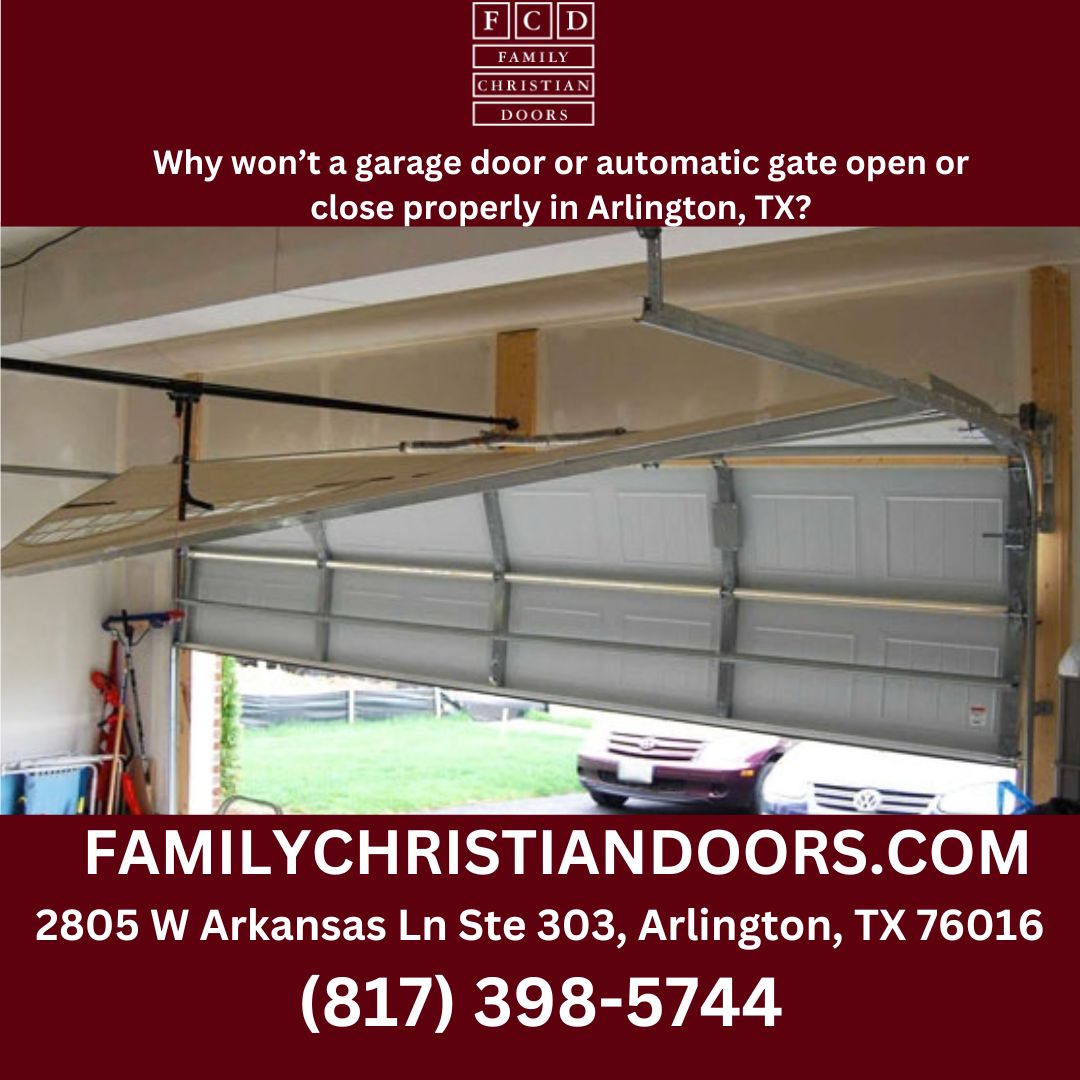
Garage door springs carry the full weight of the door every time it moves. Torsion springs sit above the door on a horizontal bar, while extension springs run along the tracks on either side. When a Broken Garage Door Spring occurs, the door typically drops suddenly, refuses to lift more than a few inches, or hangs at an angle. You may also hear a loud bang from inside the garage the moment a spring snaps.
In Arlington, springs are under even greater stress because of wide seasonal temperature swings. Metal contracts in winter and expands during summer heat, which accelerates fatigue at the coil points over time. A spring that was installed years ago during milder conditions may reach its failure point faster than the manufacturer’s rated cycle count would suggest.
Spring replacement is one of the most dangerous repairs a homeowner can attempt without proper training. The tension stored in a wound spring is significant enough to cause serious injury if it is released incorrectly. This is a job that should be handled by a qualified technician.
Safety Sensors Out of Alignment
Every modern garage door opener is required by federal law to include safety sensors near the floor on each side of the door opening. These sensors send an invisible beam across the doorway. If anything interrupts that beam while the door is closing, the opener reverses direction immediately as a safety measure.
When sensors drift out of alignment, even by a fraction of an inch, the door behaves erratically. It may close partway and then reverse without any visible obstruction. You might also notice the opener light blinking repeatedly, which is the system’s way of flagging a Safety Sensor Out of Adjustment. Dirt, spider webs, or vibration from daily use can all knock sensors out of position. In some cases the fix is a simple realignment, but if the sensor housing is cracked or the wiring is damaged, replacement is the right call.
Garage Door Off Track
The rollers on your garage door ride inside vertical and horizontal tracks that guide the door along its full range of motion. If a roller pops out of the track, the door can become stuck, bind against the frame, or tilt noticeably to one side. This can happen because of a direct impact to the door, a worn-out roller, or a track that has bent or shifted.
Operating a door that is off track even slightly puts strain on every other component in the system, including the opener motor, the springs, and the cables. If you notice the door moving unevenly or hear a scraping sound during operation, stop using the door and have it inspected before the damage spreads further.
Failed Opener Motor or Circuit Board
The opener is the motorized unit mounted to the ceiling of your garage that drives the door up and down. Inside the opener housing sits a circuit board that interprets signals from your remote, keypad, and wall button. When the motor wears out or the circuit board fails, the system may show no response at all, respond intermittently, or run continuously without stopping.
Surge damage from summer thunderstorms is a notable cause of circuit board failure in the Arlington area. A single nearby lightning strike can send a voltage spike through your home’s wiring that fries the board without leaving any visible sign of damage. If your opener worked fine yesterday and does nothing today after a storm, the circuit board is one of the first things a technician will check.
Why Your Automatic Gate Won’t Open or Close
Automatic gates share some similarities with garage doors in terms of their electronic components, but they also have unique failure points that require specific knowledge to diagnose and fix correctly.
Bad Gate Opener Circuit Board
The circuit board inside a gate opener controls every function of the system, from reading remote signals to managing motor direction and timing. A bad board can cause the gate to open but not close, respond only sometimes, or stop responding entirely. Heat exposure is a primary culprit in Texas, where summer temperatures inside metal enclosures can climb well beyond what the electronics are rated to handle consistently.
Broken Gate Hinges or a Leaning Gate Post
A swing gate depends on solid, properly mounted hinges to move freely and close with a tight fit. When a hinge cracks or pulls away from the post, the gate sags and drags against the ground or frame. A leaning gate post creates a similar problem by shifting the entire gate out of its designed plane of motion. Either condition puts mechanical stress on the opener motor, which struggles to move a gate that was not designed to travel at an angle. In many cases the motor appears to be the problem when the real issue is structural.
Ground Loop Failure or Limited Remote Range
Many commercial and residential automatic gates use a buried ground loop, which is a wire embedded in the pavement or driveway surface that detects vehicle presence. When this loop is damaged by ground settling, root growth, or heavy vehicle traffic, the gate may fail to open on approach. Separately, if your remote’s signal range has shortened noticeably, the issue is often a low battery, antenna obstruction, or frequency interference rather than a failing opener.
How Arlington’s Texas Climate Makes These Problems Worse
Most garage door and gate repair guides are written for a general audience. Arlington sits in a climate zone that creates specific stress patterns on mechanical systems that homeowners here should understand directly.
Extreme Heat Accelerates Spring and Hardware Wear
Summers in Arlington regularly push temperatures above 100 degrees Fahrenheit. Garage interiors, which absorb radiant heat from the roof and walls, often reach temperatures that are significantly higher than outdoor readings. Metal springs, cables, and hardware expand under that heat, and the repeated cycle of expansion and contraction throughout the season shortens the effective lifespan of these components. Lubricants also break down faster in high heat, leaving metal parts to grind against each other without adequate protection.
Humidity and Moisture Damage to Electrical Components
While Arlington is not a coastal city, it experiences periods of high humidity, particularly during spring and early summer. Moisture infiltration into opener housings and gate control boxes corrodes circuit boards, terminal connections, and wiring. Sensors positioned low to the ground are especially vulnerable because they sit in the zone where humidity and condensation accumulate most.
What Arlington Homeowners Should Watch for Seasonally
Spring is the best time to schedule a full inspection before heat stress peaks. Check for rust on springs and cables, listen for new grinding or squeaking sounds, and test the sensor beam manually by passing your foot through it during a closing cycle. Before winter, lubricate all moving parts with a product rated for temperature extremes. After any major storm, test the full cycle of both your door and gate before relying on them for security.
Common Failure Points at a Glance
| Component | Common Symptom When Failing |
|---|---|
| Garage Door Spring | Door will not lift, hangs at an angle, or drops suddenly |
| Safety Sensors | Door reverses without obstruction, opener light blinks repeatedly |
| Gate Circuit Board | Gate opens but will not close, or shows no response to remote |
| Rollers and Tracks | Door scrapes, binds, or tilts during operation |
| Gate Hinges or Post | Gate sags, drags on ground, or strains the opener motor |
Shared Warning Signs Across Both Systems
Whether you are dealing with a garage door or an automatic gate, certain behavioral patterns indicate that something is wrong before the system fails completely. Paying attention to these signals early gives you the opportunity to address problems while they are still straightforward repairs.
Grinding, Jerking, or Stopping Mid-Cycle
Smooth, consistent movement is the standard for a properly maintained door or gate. Any grinding noise typically points to metal-on-metal contact where lubrication has failed or a component has shifted out of position. Jerking motion during travel often means a roller is damaged or a track is bent. A system that stops mid-cycle without reversing may have a motor that is overheating, a limit switch that is out of calibration, or a partial obstruction in the travel path.
Remote Works Sometimes But Not Always
Intermittent remote response is one of the most reported complaints from homeowners before a full system failure. Fresh batteries are always the first thing to check. If a new battery does not solve it, you may be dealing with a Limited Garage Door Remote Range issue caused by a weakening antenna inside the opener unit, frequency interference from a nearby device, or an early sign of circuit board degradation. In the case of a gate opener, a damaged ground loop can also produce inconsistent behavior that looks like a remote problem.
Door or Gate Reverses Before Fully Closing
A system that reverses before reaching the fully closed position is responding to something it interprets as a problem. For garage doors, misaligned sensors are the most common cause. For both doors and gates, limit switch settings that tell the motor when to stop may have drifted out of calibration. A physical obstruction in the travel path, even a small buildup of debris along the bottom seal, can trigger the same response.
DIY Checks vs. When to Call a Professional in Arlington
There is a reasonable range of checks that any homeowner can perform safely. There is also a clear line where professional expertise is not just recommended but genuinely necessary for safety reasons.
Safe Checks You Can Do Without Tools
Start with the simplest variables before drawing any conclusions. Replace the batteries in your remote and test the wall button separately to isolate whether the issue is the remote or the opener itself. Look at the sensor lights near the bottom of the garage door tracks. Both sensors should show a steady light, typically green on one side and amber on the other. A blinking or absent light points to a sensor problem. Visually inspect the tracks on both sides for visible dents, bends, or debris. Check that nothing is sitting in the door’s path along the floor. For a gate, inspect the hinges visually for cracking or separation from the post.
Repairs That Require a Trained Technician
Spring replacement is at the top of this list without exception. The stored energy in a torsion or extension spring is capable of causing severe injury if the spring is handled without proper tools and technique. Cable repairs fall in the same category because the cables work in direct coordination with the springs under load. Circuit board replacement requires matching the correct board to your specific opener model and properly configuring it after installation. Garage Door Off-Track repair needs to be done carefully to avoid further bending the tracks or damaging the door panels. Gate post realignment involves ground anchoring and structural assessment that goes beyond a simple visual inspection.
Get Your Garage Door or Gate Working Again in Arlington, TX
When a garage door or automatic gate stops working, the underlying cause is almost always one of the issues covered in this post. Whether the problem is a broken spring, a misaligned sensor, a failed circuit board, or structural damage to a gate post, identifying the correct cause is what leads to a repair that holds up over time rather than a temporary fix that fails again in a few weeks.
Arlington homeowners face a specific set of environmental pressures that make regular inspection and timely repair more important than in cooler, drier climates. Heat, temperature swings, and seasonal humidity all accelerate wear on the components that keep these systems running safely every day.
Family Christian Doors serves the Arlington area with the diagnostic experience and technical knowledge to find the real source of the problem and fix it correctly. If your garage door or gate is not operating the way it should, the right step is to have a qualified technician take a look before the issue becomes a larger and more costly repair. Reach out to Family Christian Doors or visit familychristiandoors.com/garage-door-repair-arlington to schedule a service call with a team that knows Arlington homes and takes the work seriously.
