

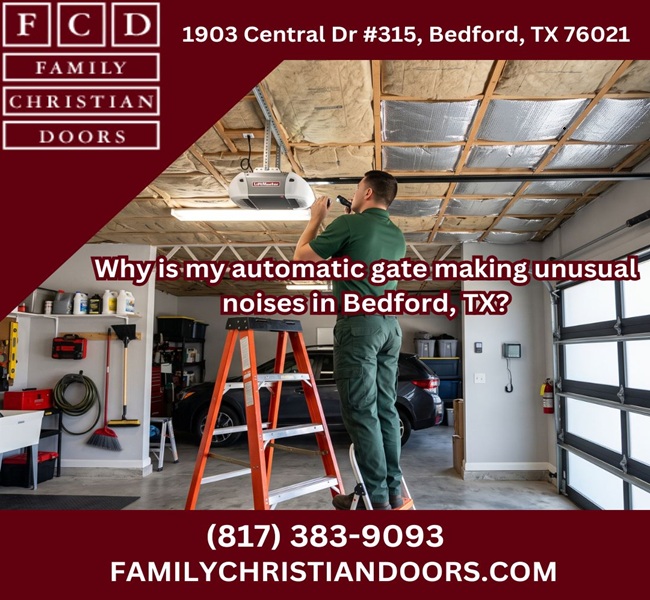
An automatic gate usually makes unusual noises because one of its moving parts, most often the opener motor, drive gears, rollers, or hinges, has worn down, dried out, or drifted out of alignment. That new grinding, squealing, or humming sound is rarely random. It is your gate telling you that a component is working harder than it should. For homeowners across Bedford and the wider Dallas Fort Worth area, catching that signal early matters, because a small noise today often becomes a stuck or unsafe gate later. Understanding what each sound means helps you decide whether a quick adjustment will solve it or whether a trained technician, the same kind of specialist you would call for garage door repair, should look closer before the wear spreads to other parts of the system.
The Quick Answer: What Unusual Gate Noises Usually Mean
A new or worsening noise almost always points to friction, wear, or misalignment somewhere in the drive or hinge system. Automatic gates and their openers are engineered to run smoothly and quietly, so when the sound changes, something mechanical has changed with it. Most causes trace back to a small group of parts, and many of them can be corrected before they fail completely. A few noises, however, are early warnings of a safety problem, and those deserve prompt attention rather than another week of hoping the sound goes away on its own.
The Parts of Your Gate That Make Noise When They Fail
To read what your gate is telling you, it helps to know which components are responsible for which sounds. Each part fails in its own recognizable way.
The Opener Motor and Drive System
The opener is the heart of the system. Whether your gate uses a chain, screw, or gear drive, the motor supplies the force that moves a heavy panel dozens of times a day. A steady hum with no movement, a labored straining sound as the gate starts, or a deep grinding under load often points to tired motor bearings, a weak capacitor, or a drive that is fighting more resistance than it should. In the North Texas climate, motors run hotter through the long summer and work harder, which tends to expose a marginal motor sooner rather than later.
Gears and Sprockets
Inside many openers, nylon or metal gears and sprockets convert the motor’s rotation into the gate’s travel. These parts wear gradually over thousands of open and close cycles. A gate that grinds, hesitates, then lurches forward is a classic sign of stripped or chipped gear teeth. This is one of the more common failures on older units, and Garage Door Gear and Sprocket wear only gets louder once the teeth begin to break down.
Rollers, Bearings, and Hinges
Squealing, squeaking, and chirping are the sounds of dry or worn rollers, bearings, and hinges. When the lubricant that keeps these parts gliding thins out or collects grit, you get metal rubbing against metal. Fresh lubrication often quiets a young gate, but rollers and bearings that have flattened or seized call for Garage Door Roller Repair rather than another round of oil.
Safety Sensors and Electrical Components
Rapid clicking, buzzing, repeated beeping, or a gate that reverses partway are often electrical in nature. A Safety Sensor Out of Adjustment, loose wiring, a failing control board, or a chattering relay can all produce these symptoms. Because the sensors are what stop your gate from closing on a vehicle, a pet, or a child, any noise tied to the safety system is worth treating as both a mechanical and a safety concern.
Why Bedford Conditions Wear These Parts Faster
Bedford sits on the expansive clay soils common across Tarrant County. That clay swells when it rains and shrinks in dry spells, and over time this movement shifts gate posts, tracks, and hinge points slightly out of alignment. A gate that is even a little out of true forces its rollers and motor to fight extra friction, which speeds up wear. Add the long summer heat, wind-blown dust, and fine grit that settle into moving parts, along with pollen and debris that cloud sensor lenses, and you have a set of local conditions that push gate components toward noise and failure faster than a generic maintenance schedule would predict.
Matching the Sound to the Source
The quickest way to narrow down a problem is to listen carefully and match the type of noise to the part most likely behind it. Use the guide below as a starting point before you inspect or call for service.
| Sound You Hear | Component Likely at Fault |
| Grinding or scraping | Worn opener gears or sprocket |
| Squealing or squeaking | Dry rollers, bearings, or hinges |
| Humming or buzzing with no movement | Strained motor or stalled drive |
| Clicking or rattling | Loose hardware or a sensor fault |
Safe DIY Checks Versus Repairs That Need a Technician
Some basic checks are safe for a careful homeowner, while others involve stored tension, high voltage, or precision alignment that belong to a trained technician. Before you touch anything, cut power to the opener and keep your hands clear of moving parts.
Checks you can safely perform yourself:
- Look over the gate and track for obvious debris, rocks, or branches lodged in the path.
- Wipe the safety sensor lenses clean and confirm they face each other squarely.
- Check for loose bolts and brackets that may have vibrated free.
- Apply a proper gate or garage door lubricant to rollers and hinges, never a heavy grease that traps grit.
- Run the gate once with nothing in its path and listen for where the noise originates.
Repairs best left to a professional:
- Motor, capacitor, or drive replacement inside the opener housing.
- Replacing stripped gears or a worn sprocket.
- Any work involving springs, tension, or the gate’s counterbalance.
- Electrical faults in the wiring, control board, or relays.
- Realigning posts and tracks that have shifted due to soil movement.
When Noise Signals a Repair and When It Signals Replacement
Not every noisy gate needs a Garage Door Opener Replacement. The right call depends on how much of the system is affected and how old the equipment is.
A repair usually makes sense when:
- The noise traces to a single worn part while the rest of the system is sound.
- The opener is relatively young and has a good service history.
- The gate itself is structurally solid and simply needs an adjustment or a part.
Replacement becomes the smarter path when:
- The same components keep failing despite repeated fixes.
- Parts for an older opener are obsolete or hard to source.
- The motor is near the end of its service life and struggling on every cycle.
- The safety features are outdated compared with current standards.
Why Bedford Homeowners Call Family Christian Doors
Diagnosing a gate by ear takes experience, because the same grinding sound can come from a failing gear, a dry roller, or a post that has shifted underfoot. Family Christian Doors works on gates and openers throughout Bedford and the Dallas Fort Worth metro every day, and that hands-on volume is what allows a technician to isolate the true source of a noise quickly rather than replacing parts by trial and error. Local knowledge matters here too. A team that understands how North Texas clay and heat wear on gate hardware can address the underlying cause, not just the symptom, so the fix lasts longer.
Frequently Asked Questions
Is it safe to keep using a noisy automatic gate?
It depends on the noise. A faint squeak is usually a maintenance issue, but grinding, a gate that reverses on its own, or clicking tied to the sensors can point to a safety fault. When in doubt, limit use and have the gate inspected before it fails at an inconvenient or unsafe moment.
Can I fix a squeaking gate myself?
Often, yes. Cleaning the track and applying the correct lubricant to rollers and hinges resolves many squeaks. If the noise returns quickly or changes to grinding, the underlying part is likely worn and should be inspected by a technician.
How often should an automatic gate be serviced?
A yearly professional inspection is a reasonable baseline for most Bedford homes, with a quick visual check and light lubrication every few months. Gates that cycle many times a day or sit on shifting soil may benefit from more frequent attention.
Does the weather in Texas really affect my gate?
Yes. Heat stresses the motor, dust and grit accelerate wear on rollers and sensors, and the swelling and shrinking of clay soil can pull posts and tracks out of alignment. These factors combined explain why gates in this region often develop noises sooner than owners expect.
The Bottom Line for Bedford Homeowners
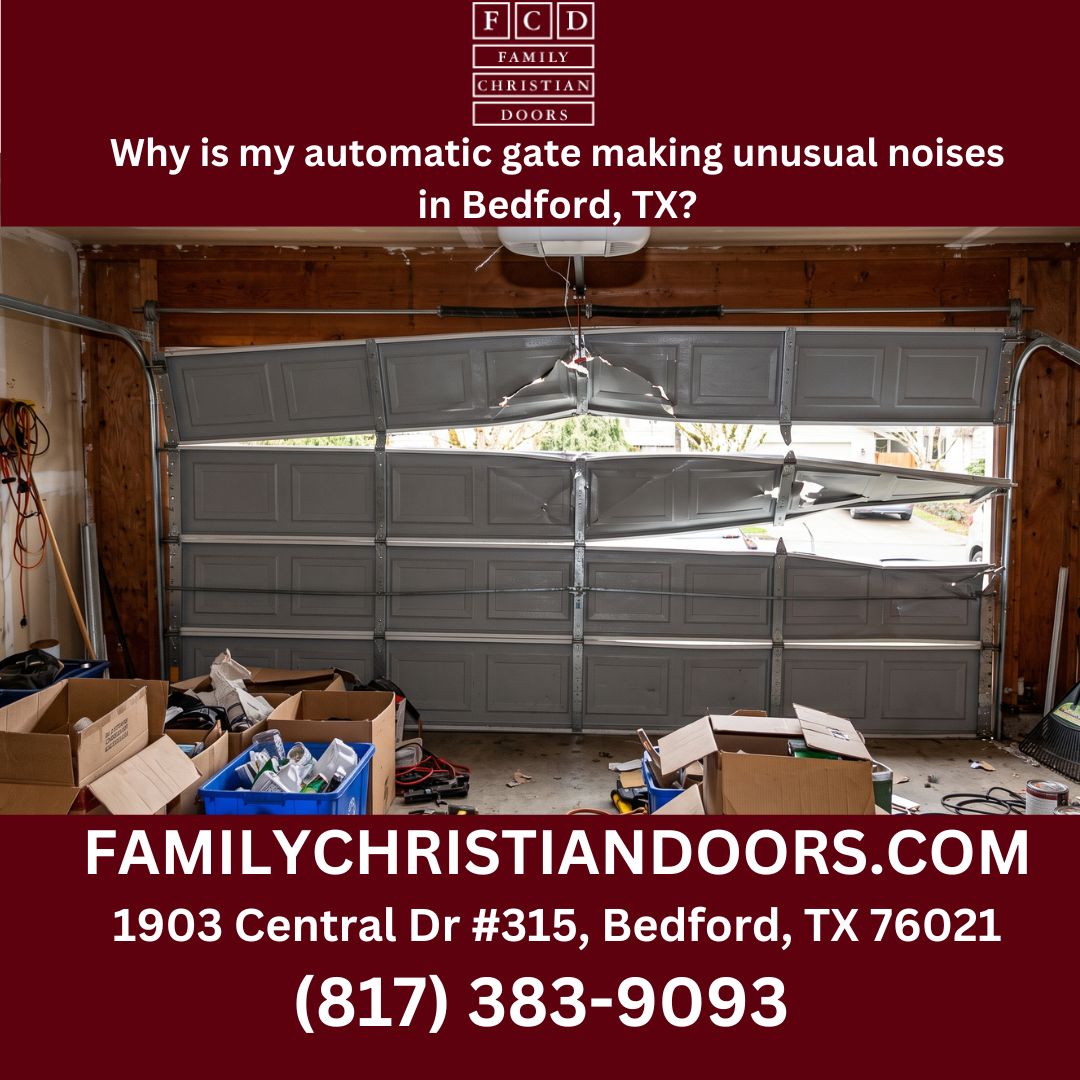
An automatic gate that has started making unusual sounds is giving you an early, fixable warning. Grinding tends to point to gears or a straining motor, squealing to dry rollers and hinges, and clicking or buzzing to the electrical and safety system, all of it made worse by the heat and clay soil that define this part of Texas. Reading the noise correctly is the difference between a simple adjustment and a gate that quits at the worst possible time. If your gate is telling you something is wrong, the team at Family Christian Doors can pinpoint the cause and get it running quietly again. Reach out to schedule a look, or learn more at familychristiandoors.com/garage-door-repair-bedford.