

If your automatic garage door has started opening more slowly than usual, the most common cause is added friction from dried out lubrication, weakening springs, or a Dallas temperature swing that thickens the grease inside your system. A door that once glided open in a smooth 12 to 15 seconds and now crawls is telling you that something has changed. Many Dallas homeowners first notice this on a cold February morning or after a long, hot summer of heavy daily use. The reassuring news is that a slow door is usually an early warning rather than a full breakdown, which means you still have time to act before a small issue turns into a costly garage door repair or a safety hazard. This guide walks you through what counts as slow, why it happens, and when it is time to bring in a trained technician.
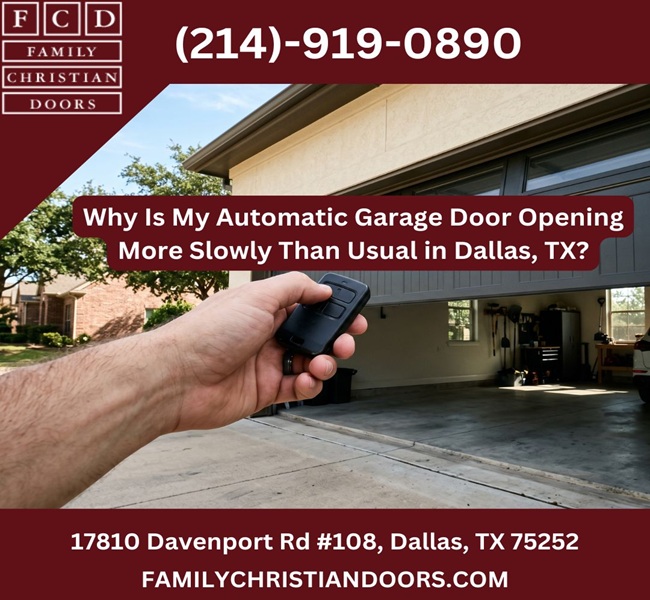
What Counts as a Slow Garage Door?
Before you worry about a repair, it helps to know what normal actually looks like. Speed alone is not the whole story. The real signal is a change in the rhythm you are used to.
Normal Opening Speed vs. a Door That Is Slowing Down
A healthy residential garage door usually takes about 12 to 15 seconds to open or close fully, moving at roughly seven inches per second. If your door now takes 20 seconds or longer, or if it hesitates partway through, it is officially running slow. You do not need a stopwatch to notice this. If the door used to glide and now drags, something has shifted inside the system.
How Fast Should a Garage Door Open in a Dallas Home?
Opening speed can vary slightly by opener model and door weight. A heavier insulated door built to handle Texas summers may move a touch slower than a lightweight single panel, and that is perfectly normal. What matters is consistency. A door that suddenly loses two or three seconds compared with last month is worth a closer look, especially if the motor sounds like it is straining to keep up.
Common Reasons a Garage Door Opens Slowly
A slow door almost always traces back to friction, weight, or a setting. Here are the causes technicians see most often.
Dried Out or Worn Lubrication
This is the single most common reason a door slows down. Over months of daily cycles, the factory grease on rollers, hinges, and springs dries out and creates friction. When the moving parts have to fight that resistance, the whole system slows. A fresh application of the right lubricant often restores most of the lost speed.
Weak or Failing Springs
Your springs do the heavy lifting, not the motor. When a torsion spring loses tension or begins to fail, the opener is left straining to raise a door that may weigh well over one hundred pounds. That extra load shows up as slow, labored movement.
Signs a Spring Is Losing Tension
- The door feels noticeably heavier when you lift it by hand.
- You can see a visible gap in the coils of the spring.
- You heard a loud bang from the garage a few days earlier.
Worn Rollers, Bent Tracks, and Loose Hinges
Rollers wear down, tracks can bend after a bump from a vehicle, and hinges loosen over time. Any of these can make the door catch and drag as it travels. You may notice uneven movement or a grinding sound as the rollers fight the track. When worn rollers are the issue, a professional Garage Door Roller Repair can restore smooth and quiet travel.
Opener Speed or Force Settings
Many modern openers have adjustable speed and force settings. If the door has always felt slow, or if someone recently reset the unit, the setting may simply be low. Manufacturers often ship openers on a conservative setting for safety.
Where the Speed Adjustment Is Usually Located
On most units the adjustment dial or digital menu sits beneath the motor housing above your parking area. Every model differs, so check your owner manual before changing anything.
Chain or Belt Drive Slack
A chain or belt drive can develop slack after years of use. When the chain sags, the opener wastes motion before the door even begins to move, which reads as slow or jerky operation.
Power and Electrical Supply Issues
An opener that is not getting steady power may run below its normal pace. A loose outlet, low voltage, or worn wiring can all sap the motor. If the opener light flickers while the door runs, an electrical issue may be the reason.
An Aging Opener or Motor
Motors lose horsepower as they age. A unit that is fifteen or twenty years old may no longer have the strength to move the door at full speed. Inside an aging unit, a worn Garage Door Gear and Sprocket can strip and leave the motor spinning without pulling the door up at its normal pace. In that situation, a repair may buy time, but replacement is often the smarter long term choice.
| The door drags and moves slower overall | Dried out lubrication on rollers, hinges, and springs |
| The door feels heavy and the motor strains | A spring losing tension or beginning to fail |
| The door catches or moves unevenly along the track | Worn rollers, a bent track, or loose hinges |
| The door has been slow since setup or a recent reset | A low speed or force setting on the opener |
| The door only crawls on a cold Dallas morning | Thickened grease and contracted metal from the freeze |
How Dallas Weather Affects Your Garage Door Speed
North Texas puts garage doors through a wide range of conditions in a single year, and both ends of that range can slow a door down.
Summer Heat, Humidity, and Metal Expansion
Dallas summers are long and demanding. High heat causes metal components to expand, which can create friction or slight misalignment in the tracks and hardware. Humidity adds another layer by encouraging rust on rollers, hinges, and sensor brackets. Together these conditions can make a well used door feel sluggish by late summer.
Winter Freezes and Thickened Lubricant
When a cold front pushes through the region, temperatures can drop fast. In the cold, standard petroleum based grease thickens and metal parts contract, so the opener has to work harder to move the door. This is why many Dallas homeowners notice their door crawling on a freezing morning, then moving normally by the afternoon.
What to Check After a Dallas Cold Snap
After a hard freeze, give the door a few minutes and watch how it moves as the day warms. If it returns to normal speed once temperatures rise, cold thickened lubricant was likely the culprit. Switching to a silicone based lubricant that holds up in low temperatures can help prevent the problem next time.
Simple Checks Before You Call a Pro
A few safe checks can help you understand what is happening and whether the fix is something you can handle. Never work on the springs or cables yourself.
Run a Manual Balance Test
With the door closed, pull the release cord to disconnect the opener, then lift the door by hand to about halfway. A balanced door should stay roughly in place. If it slams down or feels very heavy, the springs are likely the problem, and that is a job for a professional.
Inspect the Tracks, Rollers, and Springs
Look along the tracks for dents or bends, check the rollers for wear or debris, and glance at the springs for any visible gap in the coils. Do not touch or adjust the springs. You are only looking, not fixing.
Clean the Safety Sensors
The photo eye sensors near the bottom of the tracks can gather dust and cobwebs, which can cause hesitation or reversing. A Safety Sensor Out of Adjustment can also make the door pause partway, so wipe them gently with a soft cloth and make sure they face each other squarely.
Lubricate the Moving Parts
Apply a garage door lubricant to the rollers, hinges, springs, and tracks. This simple step resolves a large share of slow door complaints. Avoid heavy grease that attracts dust, and never use cooking oil or an all purpose spray.
Choosing the Right Lubricant for Texas Heat
In our climate a silicone based or garage door specific lubricant works best because it resists both summer heat and winter cold. It stays effective across the wide temperature swings that Dallas can see in a single week.
When a Slow Garage Door Needs a Professional
Some slow door causes are simple to address, but others carry real risk. Knowing the difference protects both your safety and your wallet.
Spring Problems You Should Never Handle Yourself
Garage door springs are under extreme tension and can cause serious injury if they release suddenly. A Broken Garage Door Spring is never a safe do it yourself job. If your balance test points to the springs, or you see a gap in the coils, stop and call a trained technician. This is not a task for household tools.
The Door Stops Partway, Hums, or Reverses
A door that lifts a foot and then stops, hums without moving, or reverses on its own is signaling a deeper issue with the motor, springs, or sensors. Continuing to force it can cause more damage.
An Unbalanced or Crooked Door
If the panels look crooked or the door moves unevenly, the system is out of balance. An unbalanced door puts strain on every part and shortens the life of the opener. A professional can realign and rebalance it safely.
Get Your Slow Garage Door Fixed in Dallas, TX
A slow door rarely fixes itself, and the longer it strains, the more wear it puts on the springs, cables, and motor. Family Christian Doors serves homeowners across Dallas and the surrounding communities with honest diagnostics and dependable repairs. Our technicians understand how North Texas heat and cold affect these systems, so you get answers built for local conditions rather than generic guesses.
What to Expect From a Professional Diagnosis
A qualified technician works through the whole system so nothing gets missed:
- A hands on balance test to check spring health.
- A close inspection of the springs, cables, tracks, and rollers.
- A review of the opener speed and force settings.
- A clear explanation of the problem and your options.
From there you can make an informed decision without pressure.
Preventive Maintenance That Keeps Your Door Moving Smoothly
Routine maintenance is the easiest way to avoid surprise breakdowns. A yearly tune up that includes lubrication, hardware tightening, and a balance check keeps your door moving at full speed and extends the life of every part. For a door that runs many cycles a day, that small habit pays off over the years.
Frequently Asked Questions
Why is my garage door suddenly opening slowly?
A sudden slowdown usually points to dried out lubrication, a spring that is losing tension, or a cold snap that thickened the grease. If the change was abrupt and the motor sounds strained, have the springs checked promptly.
Can I make my garage door open faster?
Sometimes. If the cause is a low speed setting, your opener may allow a safe adjustment through its dial or menu. If the door is slow because of a mechanical problem, forcing more speed only adds strain and leads to bigger repairs.
How long should a garage door take to open?
Most residential doors open in about 12 to 15 seconds, or roughly seven inches per second. Anything noticeably longer than your door’s usual pace is worth investigating.
Is it safe to keep using a slow garage door?
A slightly slow door is not always dangerous, but it is a warning sign. If the door strains, stops partway, or feels heavy by hand, using it further can be risky. Have it inspected before a small issue becomes a failure.
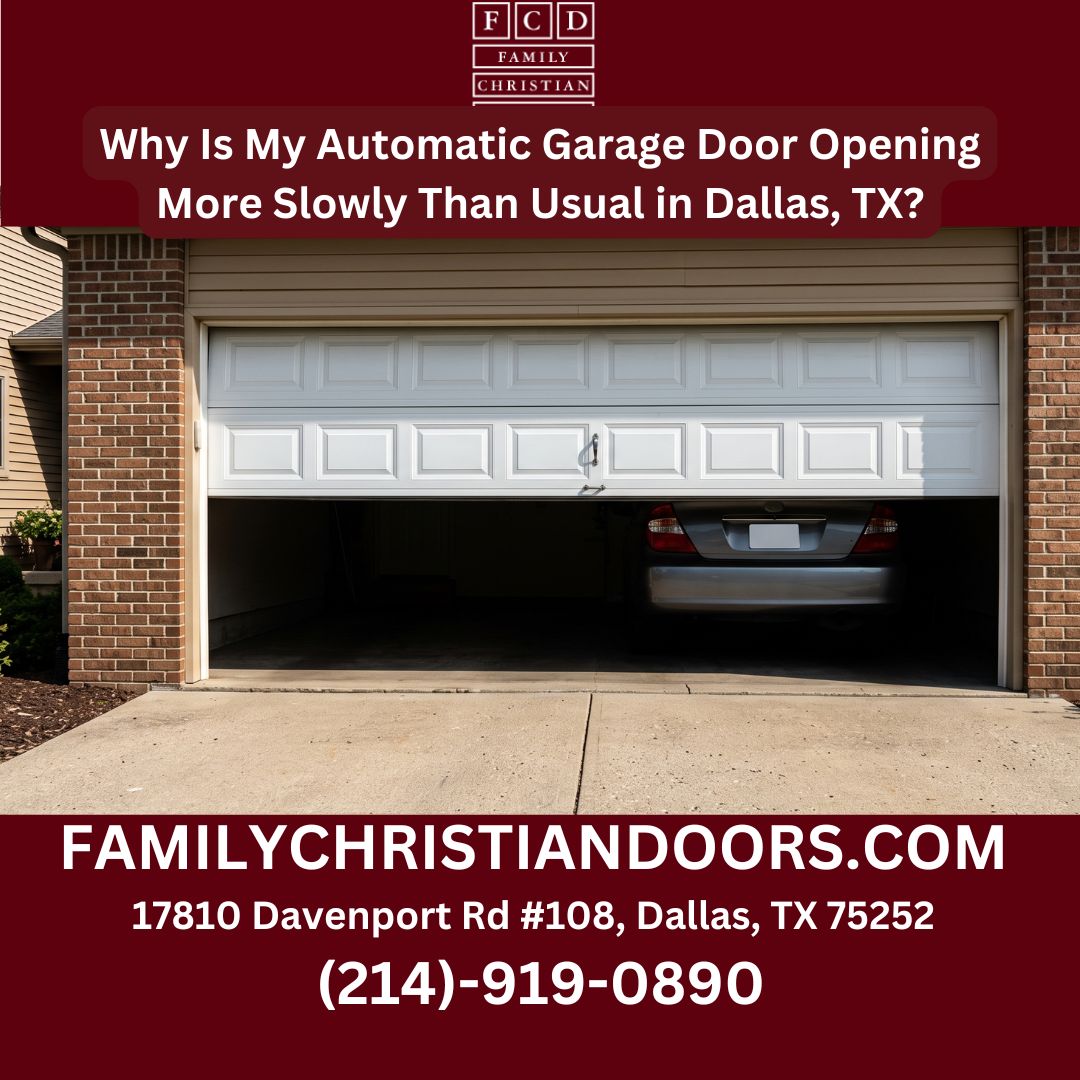
Is your automatic garage door opening slower than usual in Dallas, TX? Discover common causes and expert solutions to restore smooth operation.
Conclusion
A garage door that opens more slowly than it used to is almost always trying to tell you something, whether that is dried out lubrication, tired springs, or the effect of a Dallas temperature swing. Most causes are manageable when you catch them early, and a few simple checks can often reveal what is going on. When the problem points to the springs, the opener, or an unbalanced door, that is the moment to bring in a professional. If you are wondering why your automatic garage door has slowed down and you want a trustworthy answer, the team at Family Christian Doors is ready to help homeowners across Dallas keep their doors running safely and smoothly. Reach out to their team or explore their Dallas garage door repair resources to learn more.