


What Is Actually Causing the Slow or Uneven Movement?
Slow or uneven movement rarely has a single cause, but it almost always traces back to one of four component areas. Each one plays a specific role in how a door or gate travels along its path, and when any one of them degrades, the imbalance shows up as sluggish or lopsided motion.
Spring Tension Problems
Torsion springs and extension springs are the primary counterbalance mechanism for any residential or commercial garage door. Their job is to offset the dead weight of the door so the opener does not have to work against the full panel load. When a spring loses tension through normal wear, or begins to degrade unevenly between the left and right side, the door will open slower than normal and may visibly tilt to one side as it travels up the track.
A fully functional spring system makes the door feel nearly weightless when lifted manually. If you disconnect the opener and the door feels heavy or only rises partway before stopping, the springs are no longer carrying the load they were calibrated for. In a dual-spring setup, one spring can weaken ahead of the other, which is a common reason a door rises faster on one side than the other. A Broken Garage Door Spring is one of the leading causes of sudden imbalance and should be inspected by a qualified technician rather than operated further.
Cable Wear and Slack
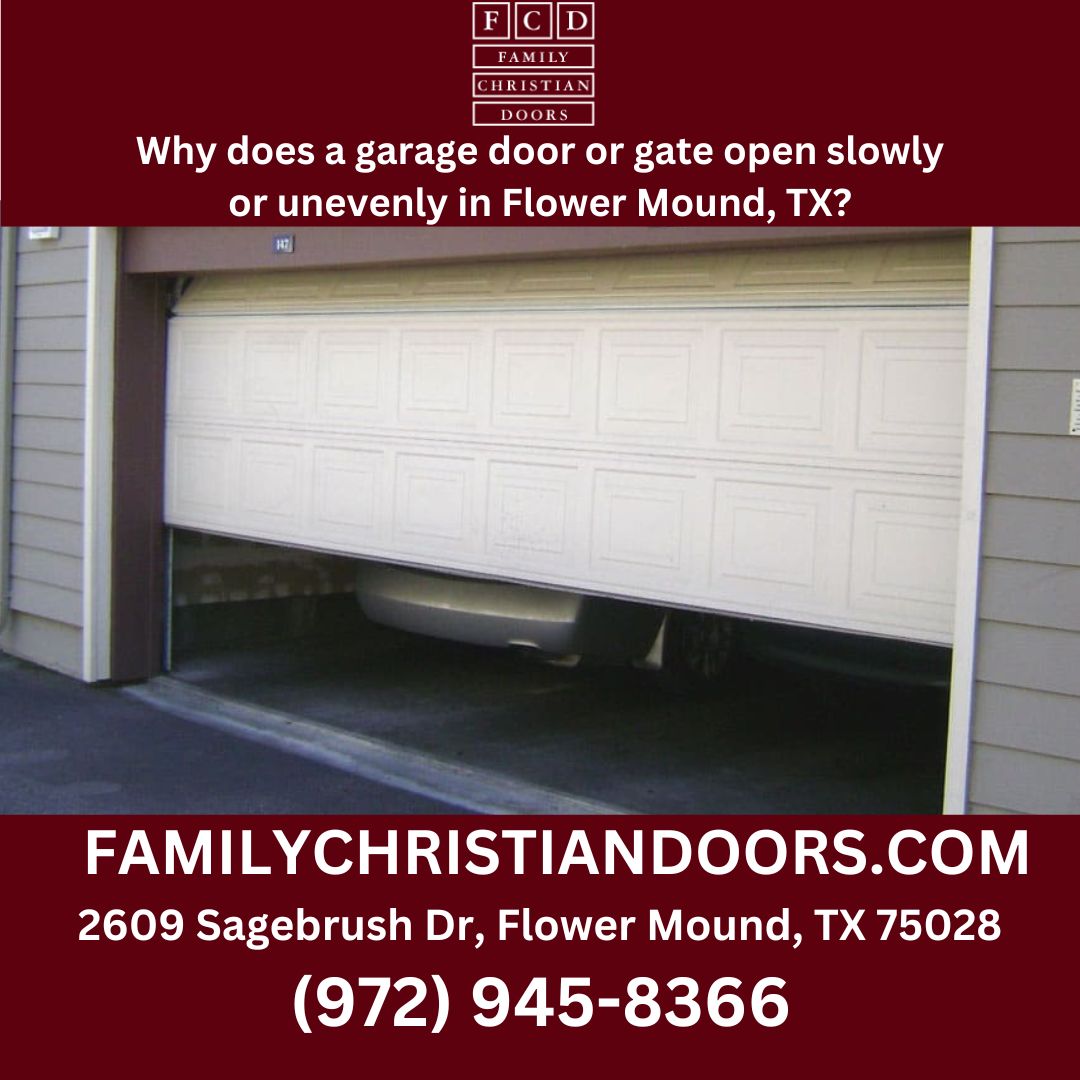
The lift cables work alongside the springs to guide the door evenly as it moves. A cable that has frayed, stretched, or slipped from its drum will create an immediate imbalance. On the side where the cable has gone slack, the door drops lower during travel. On the other side, it holds its position. The result is a door that appears to twist or sag as it opens, which is a clear indicator that the cables are no longer in sync.
Cable problems are particularly common in older systems that have accumulated years of use without inspection. Even a cable that looks intact from a distance may have internal fraying near the drum or at the bottom bracket attachment point. A Cable off Garage Door is one of the most frequently misread symptoms because homeowners often assume the opener is underpowered when the actual issue is an uneven mechanical load caused by a compromised cable.
Roller and Track Deterioration
Rollers are the contact points between the door panels and the vertical and horizontal tracks. When rollers wear down, crack, or seize, the door drags rather than glides. The friction created by a damaged roller puts extra load on the opener motor and forces the door to slow noticeably mid-travel. In some cases, the drag is intermittent, which makes the symptom harder to diagnose without a close visual inspection of each roller as the door cycles. Scheduling a Garage Door Roller Repair at the first sign of dragging or grinding is the most effective way to prevent the problem from spreading to the track or opener.
Track alignment is equally important. A track that has shifted even a fraction of an inch from its original position will cause the rollers to bind as the door reaches that section. The door may slow, stutter, or momentarily stop before pushing through. This is a common pattern on older installations where the track mounting hardware has loosened over time, or where the door frame itself has shifted due to settling or storm-related stress.
Opener or Gate Operator Performance
The opener or gate operator is the motorized drive unit that initiates and controls movement. When the mechanical components are in good shape but the door or gate still moves sluggishly, the operator unit itself may be under-powered for the load, running on worn drive components internally, or operating on settings that have been miscalibrated over time. Most modern openers have force and speed adjustments built in. If those settings have drifted or been manually altered without a corresponding mechanical inspection, the door will behave erratically even on a system that looks mechanically sound.
For automatic gates, the operator faces additional variables including hinge friction on swing gates, wheel bearing wear on slide gates, and soil movement that can shift gate posts out of alignment. A gate that opens faster in the morning than the afternoon is often reacting to temperature-driven changes in metal expansion rather than an electrical fault.
Component-by-Component Diagnostic Reference
| Component | What Slow or Uneven Movement Indicates |
|---|---|
| Springs | Loss of tension or uneven tension between left and right spring; door feels heavy when manually lifted |
| Cables | Slack, fraying, or drum misalignment causing one side of the door to lag or sag during travel |
| Rollers and Tracks | Worn or seized rollers creating friction drag; bent or misaligned track causing stuttering mid-travel |
| Opener or Gate Operator | Underpowered motor, worn drive gear, or miscalibrated force settings; consistent slowness with no visible mechanical cause |
| Hinges and Hardware | Loose, rusted, or bent hinges causing panel flex or binding; most visible at the joint between panels during travel |
Why Flower Mound’s Climate Accelerates the Problem
Garage door and gate hardware in North Texas ages differently than it does in moderate climates. The combination of summer heat, humidity, and sharp seasonal temperature swings creates mechanical stress that compounds wear faster than most manufacturers’ service interval estimates account for.
DFW Heat, Thermal Cycling, and Metal Fatigue
In Flower Mound and across the broader DFW area, summer temperatures regularly push well past 100 degrees Fahrenheit. That heat causes metal components to expand during the day and contract overnight. For springs, cables, and tracks, this constant thermal cycling means the material is never truly at rest. Over time, repeated expansion and contraction accelerates fatigue in steel components, particularly at points of stress concentration like cable drum edges and spring coil ends.
Lubricant breakdown is another direct effect of sustained heat exposure. Grease and oil-based lubricants on rollers, hinges, and spring shafts thin out and eventually burn off under prolonged heat. Without proper lubrication, metal-on-metal contact increases, friction rises, and the door slows down. A door that operates smoothly in February may drag noticeably by July if lubrication has not been refreshed before the heat season begins.
Humidity and Storm Season Hardware Stress
North Texas also carries significant humidity through spring and fall, and severe storm seasons that bring sudden temperature drops, high winds, and moisture infiltration into garage structures. Humidity accelerates surface oxidation on cables and springs, which weakens their cross-section over time and increases the risk of sudden failure. After a significant storm, it is not uncommon for doors in the Flower Mound area to begin showing symptoms of binding or uneven travel, particularly if wind load or debris contact shifted the door frame or bent a track section.
Residential Doors, Commercial Doors, and Gates: Does the Cause Change?
The root causes of slow or uneven movement are the same across residential, commercial, and gate applications. What changes is the scale of the forces involved and how quickly component stress accumulates.
Heavier Doors and Higher Load on Every Component
Commercial garage doors are significantly heavier than standard residential panels. A sectional steel door used in a warehouse or auto shop may weigh several times more than a typical residential door. That additional weight places proportionally higher demands on springs, cables, and the opener motor. When a commercial door begins to slow or open unevenly, the urgency is higher because the forces at play are larger and the risk of sudden hardware failure is greater. Unscheduled downtime on a commercial bay door has direct operational consequences beyond the inconvenience factor a homeowner would experience.
Gate Operators and the Unique Variables They Introduce
Automatic driveway and entry gates add variables that overhead doors do not have. Swing gates rely on hinge integrity and precise motor arm calibration. Slide gates depend on wheel bearing condition, track levelness, and the physical grade of the driveway or surface the gate travels across. For properties in Flower Mound where landscaping, drainage grading, and soil settlement are active factors, gate operators can develop slow or erratic movement simply because the mechanical environment around the gate has shifted, not because the operator unit itself has failed.
Temperature affects gate operators differently as well. Battery backup systems used in some gate operators lose charge capacity faster in extreme heat, and hydraulic operators can develop sluggish performance when fluid viscosity changes with temperature swings common to North Texas summers.
When Slow or Uneven Movement Becomes a Safety Warning
A door or gate that moves slowly is inconvenient. A door that moves unevenly is a safety concern that warrants prompt attention. An unbalanced door places asymmetric stress on every hardware component in the system. The cable or spring on the side carrying the extra load is now working well beyond its intended design parameters. This accelerates failure and, in some cases, means the component gives way without further warning.
Uneven doors also present a direct physical hazard. A door that tilts during travel can come off track, and a Garage Door Off-Track situation mid-cycle can cause the door to drop or shift suddenly. For households with children or pets, or for commercial properties with daily foot and vehicle traffic through the bay, this is not a risk worth deferring while waiting to see if the problem resolves on its own.
Additional warning signs that indicate a system has moved from slow to potentially dangerous include:
- A loud bang or snap sound followed by a sudden loss of door balance
- One side of the door visibly lower than the other at rest
- Cable hanging loose or coiled at the bottom of the door
- The opener motor straining audibly before the door begins to move
- Door reversing immediately after it starts to open
Any of these conditions indicates that continued operation could worsen the damage or create a hazard. The system should not be operated until a qualified technician has inspected it.
Conclusion
Slow or uneven movement in a garage door or gate in Flower Mound is the system communicating that something mechanical is no longer working as it should. The cause almost always involves springs, cables, rollers, tracks, the opener, or some combination of these components, and the DFW climate makes those issues develop faster than in cooler, drier regions. Whether the system in question is a residential door, a commercial bay door, or an automated gate, the diagnostic logic is the same: find the component that is out of balance, and correct it before the load transfers further down the system.
Family Christian Doors has served Flower Mound and the surrounding DFW area with the kind of hands-on diagnostic work that actually identifies the root cause rather than just addressing the visible symptom. If your door or gate is moving slowly, dragging on one side, or showing any of the warning signs described above, reach out to the team at Family Christian Doors or visit familychristiandoors.com/garage-door-repair-flower-mound/ to schedule a service call.