

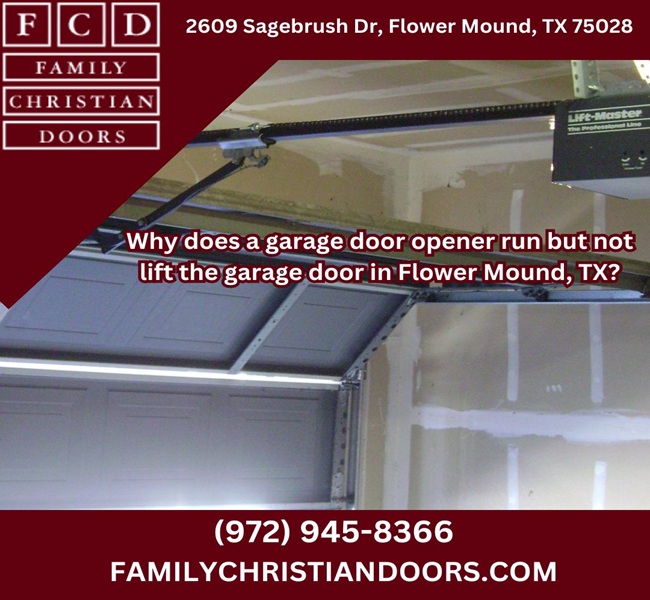
If your garage door opener is running but the door will not lift, the most common reason is that the door has lost the lifting support it depends on, often from a broken spring, a disengaged release, or a mechanical failure inside the opener. In other words, the motor can still “do its job,” but the door system is not able to move the weight of the door safely. This matters for Flower Mound homeowners because a stuck garage door is more than an inconvenience. It can trap vehicles, compromise home security, and lead to bigger damage if the opener keeps straining against a door that will not move. When you need garage door repair, getting the root cause identified early helps prevent avoidable wear to the door and the opener.
What Does It Mean When the Opener Runs but the Door Does Not Move?
When an opener runs but the garage door stays put, you are seeing a mismatch between the motor’s movement and the door’s ability to travel. Many homeowners describe it like this:
- The motor hums or runs, but the door does not lift.
- The chain or belt moves a little, then stops, or it moves while the door stays down.
- You may hear a grinding sound, a clicking sound, or repeated attempts to start.
- The wall button works, but the door acts like it is stuck or extremely heavy.
This is common in North Texas because garage doors live through temperature swings, humidity changes, and shifting soil. These conditions can speed up wear on springs, rollers, and alignment. It should not be ignored because repeated attempts can turn a manageable repair into a bigger one by stressing the opener motor, gears, and rail system.
Common Reasons Your Garage Door Opener Runs but Doesn’t Lift the Door
Broken Garage Door Springs
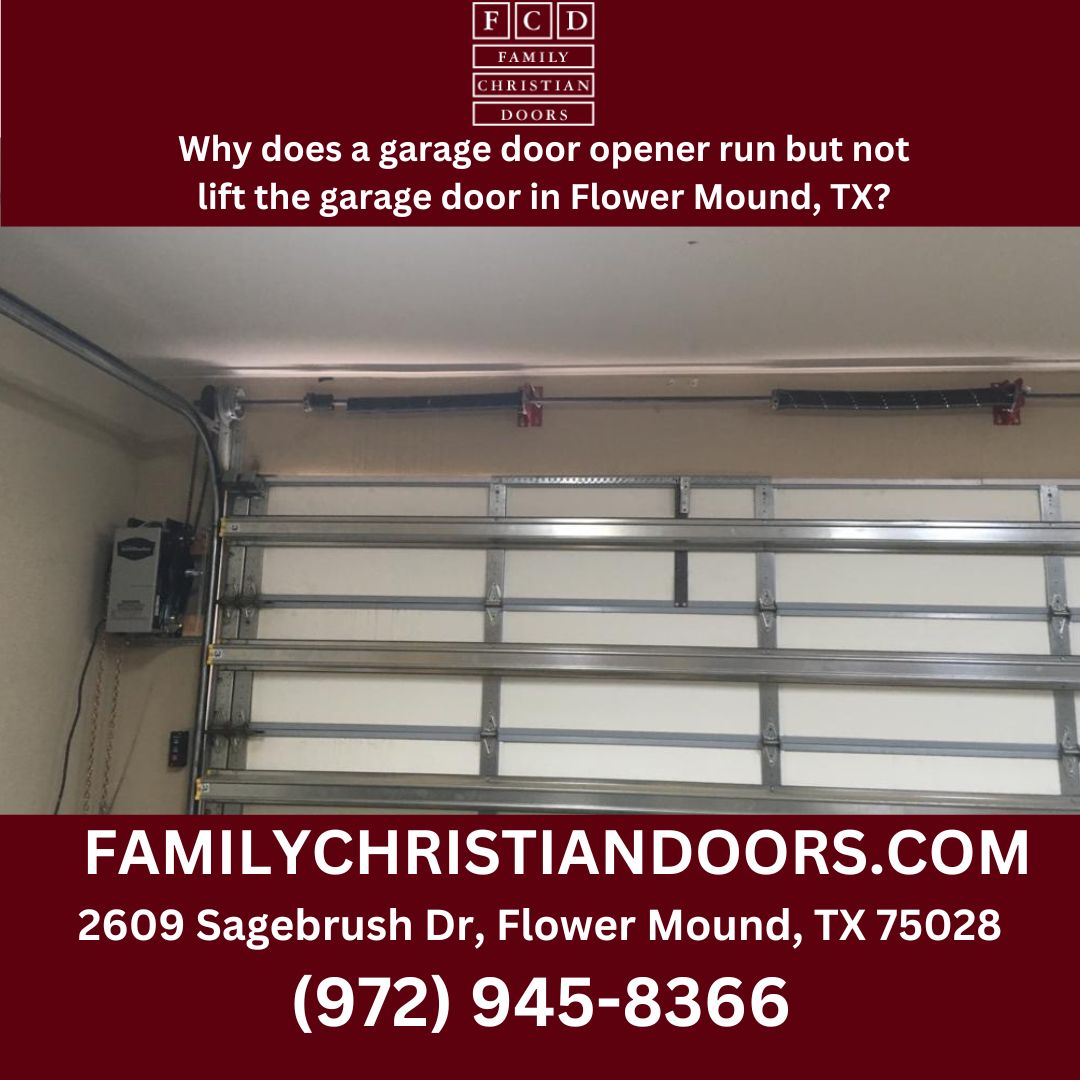
Springs do the heavy lifting. The opener does not actually “lift” the full weight of your door by itself. A properly balanced garage door feels surprisingly light when lifted manually because the springs are counterbalancing the door’s weight, and when a Broken Garage Door Spring occurs, that balance disappears quickly.
When a spring breaks, the opener can still run, but it is suddenly trying to move a door that may weigh as much as a large appliance. That is when the opener struggles, stops, or runs without lifting the door.
Signs you may have a broken spring include:
- A loud bang from the garage that sounded like something dropped or snapped.
- The door feels extremely heavy when you try to lift it manually.
- The door lifts a few inches and stops, or it will not lift at all.
- A visible gap in a torsion spring above the door.
- Slack or loose cables near the sides of the door.
In Flower Mound, seasonal shifts can put extra stress on older springs. Cold snaps make metal less flexible, and repeated cycles of opening and closing during changing weather can accelerate fatigue over time.
Why You Should Never Try to Open a Door with a Broken Spring
A broken spring changes the safety equation instantly. Trying to force the door up can cause the door to slam down unexpectedly, pull cables off their drums, or bend the top section. It can also burn out the opener because the motor and gears are not designed to lift a dead-weight door repeatedly. If you suspect a spring issue, the safest move is to stop operating the door and have the system inspected.
Disconnected Emergency Release Cord
Your opener connects to the door using a trolley mechanism. The emergency release cord disconnects that trolley so you can operate the door manually during a power outage. If the release has been pulled, the opener can run normally while the door does not move because the opener is no longer attached to the door.
This often happens after:
- A power outage where someone manually opened the door and forgot to re-engage it.
- Moving storage items around the garage and catching the cord accidentally.
- Trying to fix a stuck door quickly without realizing what the release does.
A real-world example: homeowners sometimes pull the release after a storm knocks power out, then later hit the remote once power returns. The opener runs, but the door stays down. It can look like the opener is broken when it is simply disengaged.
Stripped Gears Inside the Opener
Inside many openers, plastic or composite gears transfer power from the motor to the drive system. Over time, those gears wear down, especially if the door has been running unbalanced due to tight rollers, track friction, or weak springs, which is why issues related to a Garage Door Gear and Sprocket can show up as an opener that runs without lifting the door.
Clues that point to gear wear include:
- Grinding noises when the opener runs.
- The motor runs but the chain or belt does not move consistently.
- The opener works intermittently, then fails again.
In plain terms, it is like pedaling a bike with a worn-out gear. Your legs are moving, but the chain slips and you do not go anywhere.
When Gear Replacement Is Possible vs. Full Opener Replacement
In many cases, gear replacement is possible when the opener is otherwise in good shape and replacement parts are available. Full replacement becomes more practical when the opener is older, has multiple failing components, or lacks modern safety and reliability features. A professional diagnosis helps you avoid replacing an opener when the real issue is actually the door system.
Broken or Loose Garage Door Cables
Cables work with the springs to lift the door evenly. If a cable has slipped, frayed, or snapped, the door can become uneven and bind in the tracks. The opener might try to lift, but the door jams or twists, preventing movement, and a situation like Cable off Garage Door can turn a normal lift into a sudden stop.
What you might notice:
- One side of the door looks higher than the other.
- The door appears crooked in the opening.
- You see slack cable on one side near the drum.
- The door starts to lift, then stops abruptly.
Because cables are under high tension, this is not a do-it-yourself situation. The safest approach is to stop using the door and have a trained technician inspect the full lift system.
Bent or Damaged Tracks
Tracks guide the rollers and keep the door traveling smoothly. If a track is bent or misaligned, rollers can bind and prevent the door from lifting. In that case, the opener may run but fail to move the door because the door is physically stuck.
Common causes include:
- Minor impacts from vehicles, bikes, or stored items.
- Loose track hardware that gradually shifts out of position.
- Foundation movement that changes alignment over time.
Flower Mound’s soil conditions can contribute to subtle shifts over time. Even small alignment changes can increase friction enough to cause a “runs but will not lift” symptom, especially if other components are already worn.
Quick Symptom-to-Cause Guide
| What You Notice | Likely Cause |
| Opener runs, door feels extremely heavy by hand | Broken spring or spring system failure |
| Opener runs, door does not move, trolley looks disconnected | Emergency release cord disengaged |
| Grinding noises, inconsistent chain or belt movement | Stripped opener gears or internal drive wear |
| Door looks crooked or lifts unevenly | Loose, frayed, or off-drum cables |
| Door starts to move, then stops at the same spot | Track alignment issue or roller binding |
Can Texas Weather Affect Garage Door Performance?
Seasonal Temperature Swings in Flower Mound
Texas weather can be tough on moving mechanical systems. When temperatures swing, metal components expand and contract. That affects spring tension, track alignment, and even lubrication performance.
For example, a spring that is near the end of its cycle life may hold on during mild weather, then fail when a cold snap hits. Homeowners sometimes discover spring problems the morning after a sharp temperature drop because the door suddenly will not lift even though it worked the day before.
Humidity and Component Wear
Humidity can also play a role. It can contribute to surface rust on springs and hardware, and it can cause wood doors to swell slightly, increasing friction. Increased friction forces the opener to work harder, which can speed up wear on gears and motor components.
Is It Safe to Keep Running the Opener?
If your opener runs but the door will not lift, it is best to stop repeated attempts. Here is why:
- Repeated strain can overheat the motor and shorten its lifespan.
- Worn gears can strip further, turning a minor internal repair into a larger failure.
- If the door is jammed, forcing movement can bend the rail or damage the top section of the door.
- If a spring is broken, the opener is pulling against a load it was never designed to handle.
A helpful analogy is a vehicle stuck in mud. Pressing the gas harder does not fix the problem. It usually creates more damage. The smarter move is to diagnose why the system is stuck before pushing it further.
How Professionals Diagnose the Problem
Inspecting the Spring System
Technicians start by confirming whether the door is properly balanced and whether the springs are intact. They look for gaps in torsion springs, check cable tension, and evaluate whether the door can be lifted safely by hand in a controlled way.
Checking the Opener Drive Mechanism
Next, they inspect the opener trolley, chain or belt tension, and internal gear condition. If the motor runs but movement is inconsistent, the issue may be inside the opener housing. They also check mounting stability, rail alignment, and wear at connection points.
Evaluating Door Balance and Alignment
Even if the opener is fine, a door that is binding due to track alignment, worn rollers, or a warped section can create the same symptom. A proper diagnosis looks at the entire system, not just the opener.
Repair or Replace? What Flower Mound Homeowners Should Know
When a Simple Repair Solves the Issue
Some problems can be resolved without replacing major components, such as re-engaging the release mechanism, tightening loose hardware, replacing worn rollers, or correcting track alignment. In these cases, the goal is to restore smooth door travel and reduce strain on the opener.
When It Makes More Sense to Replace the Opener
Replacement can be the better route when the opener has significant internal wear, has a history of breakdowns, or lacks reliability due to age. If the opener is failing and the door system is already in good shape, updating the opener can improve daily performance and reduce unexpected interruptions, especially when Garage Door Opener Replacement is the most reliable long-term fix for recurring drive issues.
Signs Your Opener Is Near the End of Its Lifespan
- Frequent stalling or inconsistent operation.
- Unusual noises that persist after basic maintenance.
- Slow response even when the door is balanced and tracks are clear.
- Recurring gear or drive issues.
- Electrical problems that come and go.
Preventing Future Garage Door Lifting Problems
Routine Maintenance Tips
Many “runs but will not lift” situations begin as small friction and balance issues that build over time. A few habits help:
- Keep tracks clear of debris and check for obvious bends.
- Listen for new sounds like grinding, popping, or squealing.
- Watch for uneven lifting or jerky movement.
- Use appropriate lubrication on moving metal components as recommended by a professional.
Annual Professional Inspections
An annual inspection can catch early signs of spring fatigue, cable wear, and track alignment problems before they show up as a stuck door. In Flower Mound, many homeowners schedule checks around seasonal changes, especially before hotter months when garages can feel like ovens and components experience more stress.
Early Warning Signs to Watch For
- The door feels heavier than normal.
- The opener strains, pauses, or reverses unexpectedly.
- The door shakes or shimmies during travel.
- Cables look frayed or uneven.
- Rollers appear worn or noisy.
Need Garage Door Opener Repair in Flower Mound, TX?
If your garage door opener runs but the door will not lift, the safest next step is a professional inspection to identify whether the problem is spring-related, cable-related, track-related, or inside the opener itself. Flower Mound homeowners often discover that what looks like an opener problem is actually a door balance or lift system issue, and diagnosing it correctly prevents repeat failures.
Family Christian Doors helps homeowners in Flower Mound and nearby North Texas communities troubleshoot garage door problems safely and restore smooth, reliable operation. If your door is stuck, feels unusually heavy, or is making new noises, reaching out early can help prevent avoidable damage and get your garage back to normal use.
Conclusion
So why does a garage door opener run but not lift the garage door? In most cases, the opener is working, but the door system cannot move because of a broken spring, a disengaged release, worn internal gears, cable issues, or track problems. For Flower Mound homeowners, weather swings and everyday wear can speed up these issues, which is why it is important not to keep forcing the opener when the door is not moving. The best path forward is a clear diagnosis of the entire system, not just the motor. If you want the issue handled safely and correctly, Family Christian Doors can inspect the door and opener, explain the cause in plain language, and get your garage door lifting smoothly again.
