

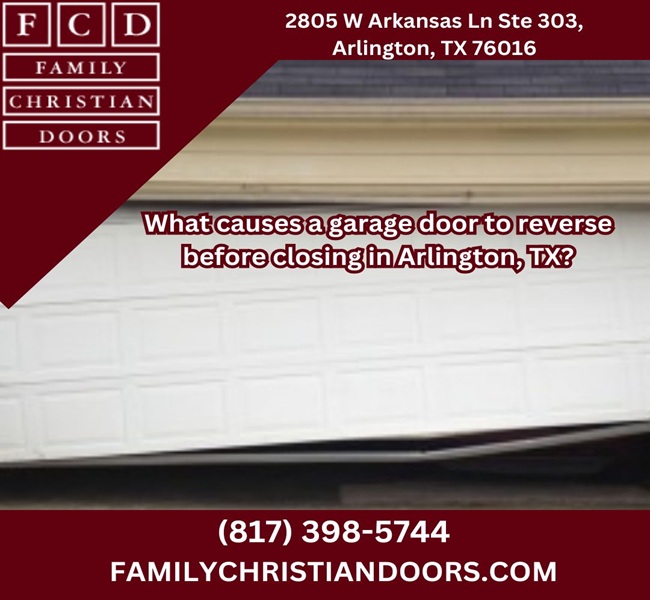
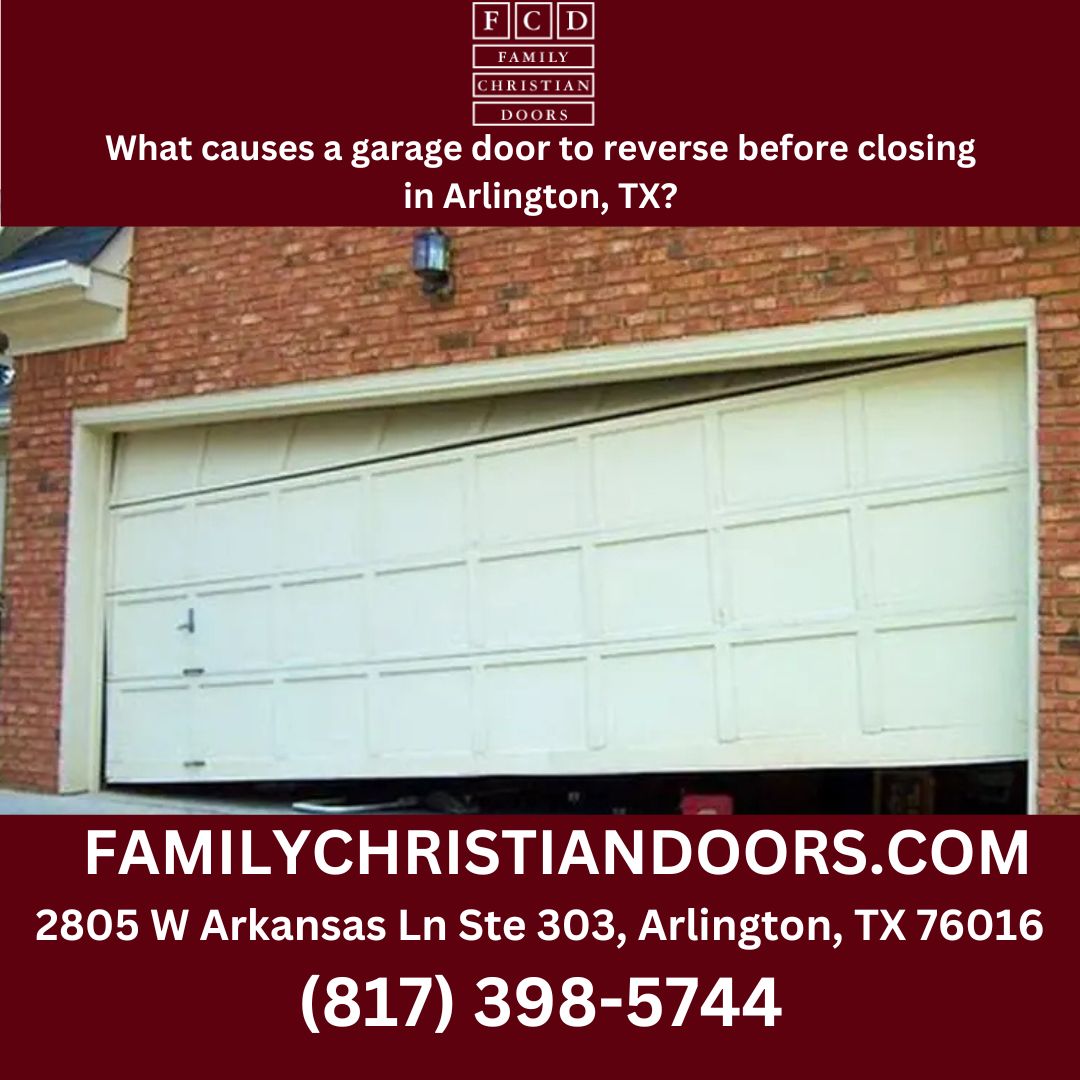
A garage door that reverses before closing is typically caused by misaligned safety sensors, incorrect force settings, obstructions in the track, or worn components. This frustrating issue affects many Arlington homeowners, especially during extreme Texas weather conditions that can interfere with your garage door’s sensitive safety mechanisms. Understanding why your door reverses mid-cycle helps you identify whether you need a simple adjustment or professional garage door repair to restore safe, reliable operation. This safety feature is designed to protect your family and property, but when it malfunctions, it can leave your home vulnerable and your daily routine disrupted.
Understanding Why Your Garage Door Reverses Before Closing
How Garage Door Safety Mechanisms Work
Modern garage door openers include multiple safety features that automatically reverse the door when they detect potential hazards. The primary system uses photo eye sensors mounted on each side of your garage door opening, positioned about six inches above the ground. These sensors create an invisible infrared beam across the doorway. When something breaks this beam during the closing cycle, the opener immediately reverses direction to prevent injury or property damage.
Your garage door opener also monitors the force required to move the door. If the opener detects excessive resistance, suggesting the door has encountered an obstacle, it triggers an automatic reversal. This force sensitivity feature works alongside travel limit settings that tell the opener exactly how far the door should move before stopping. When any of these safety mechanisms detect an abnormality, your door reverses as a protective measure.
Common Symptoms of Reversal Issues in Arlington Homes
Arlington homeowners typically notice their garage door reversing in specific patterns. The door may close halfway before suddenly reversing back to the open position. In other cases, the door reaches within inches of the ground before popping back up. Some doors reverse immediately after you press the close button, while others complete most of the closing cycle before reversing.
You might also observe warning signs like flashing lights on your wall button or sensors, unusual grinding sounds during operation, or inconsistent behavior where the door sometimes closes successfully but reverses randomly on other attempts. These symptoms often worsen during Arlington’s hottest months when temperatures exceed 100 degrees, or after severe storms that can affect sensor alignment and electrical connections.
Misaligned or Blocked Safety Sensors
How to Tell If Your Garage Door Sensors Are Malfunctioning
Sensor problems account for approximately 70 percent of garage door reversal issues. Each sensor housing contains a small LED light that provides diagnostic information. When sensors function properly, both lights remain solid, typically green or red depending on your opener brand. If one sensor light is off completely, that sensor is not receiving power. A blinking light indicates the sensors cannot see each other, meaning they are misaligned or something is blocking the beam.
Test your sensors by placing an object like a cardboard box in the doorway while closing the door. The door should immediately reverse when the beam breaks. If the door continues closing despite the obstruction, your sensors require immediate professional attention because they are not providing adequate safety protection for your family.
Arlington Climate Impact on Photo Eye Sensors
Heat and Direct Sunlight Interference
Arlington’s intense summer sun creates unique challenges for garage door sensors. When direct sunlight hits the sensor lens at certain angles, particularly during morning and late afternoon hours, it can overwhelm the infrared signal between the two sensors. The receiving sensor interprets this interference as a misalignment, triggering the reversal mechanism even though the beam path is actually clear.
Prolonged exposure to temperatures above 95 degrees can also cause sensor housings to expand slightly, shifting the precise alignment required for proper operation. Garage doors facing west or south experience this problem most frequently during Arlington’s extended summer season from May through September.
Humidity and Sensor Lens Condensation
Texas humidity levels, especially during spring and fall transitions, create condensation on sensor lenses. This moisture film distorts the infrared beam, preventing sensors from communicating effectively. Morning dew accumulation is particularly problematic when overnight temperatures drop into the 50s or 60s, then rise rapidly after sunrise.
Condensation issues become more severe in garages with poor ventilation or those attached to climate controlled homes where temperature differentials between the garage and outside air promote moisture buildup on sensor components.
Quick DIY Sensor Alignment Check
Begin by cleaning both sensor lenses with a soft, dry cloth to remove dust, cobwebs, or moisture. Inspect the sensors to ensure they face each other directly across the door opening. Each sensor should point straight toward its partner without any upward or downward angle.
Gently adjust the sensors by loosening the mounting bracket wingnut and repositioning the sensor until both indicator lights show solid. The sensors must align within a very narrow tolerance, typically requiring precision down to millimeter accuracy. After adjustment, tighten the mounting hardware and test the door through several complete cycles to confirm consistent operation.
| Reversal Cause | Typical Indicators |
| Sensor Misalignment | Blinking sensor lights, inconsistent reversals, works some cycles but not others |
| Incorrect Force Settings | Door closes then immediately reopens, happens consistently in same spot |
| Track Obstruction | Grinding sounds, visible debris, door sticks at specific points during travel |
| Worn Components | Gradual worsening over time, uneven door movement, visible wear on rollers |
| Limit Setting Issues | Door reverses at same distance every time, seasonal changes affect operation |
When Sensor Issues Require Professional Repair
If cleaning and realignment do not resolve the reversal problem, the sensors themselves may have failed internally. Water damage, physical impact, or component degradation can compromise sensor function without visible external signs. Attempting to bypass or disable safety sensors creates serious liability and safety risks.
Professional technicians have specialized diagnostic equipment to test sensor output, verify beam strength, and identify electrical issues that prevent proper sensor operation. They can also detect problems with sensor wiring that runs through your garage walls, which may have been damaged by rodents or deteriorated due to age. When sensor problems persist despite basic troubleshooting, safety sensor out of adjustment service restores proper function and ensures your door provides the protection your family deserves.
Incorrect Force or Travel Limit Settings
Why Does My Garage Door Close Then Open Back Up?
When your garage door touches the ground then immediately reverses upward, the close force setting is likely too sensitive. The opener interprets the normal resistance of the door meeting the ground as an unexpected obstruction, triggering the safety reversal. This creates a frustrating cycle where the door appears to work correctly but never actually latches closed.
Travel limit settings control how far the door moves before the opener stops applying force. If the down limit is set too high, the opener thinks the door has reached the ground before it actually has, stopping the motor prematurely. The door’s weight then causes it to settle slightly, which the opener misinterprets as an obstruction, triggering a reversal.
How Texas Heat Affects Opener Force Calibration
Arlington’s temperature extremes cause metal garage door components to expand and contract throughout the year. A door that operates perfectly in October may require force adjustments by July when sustained triple digit heat causes metal panels to expand. This expansion changes the weight distribution and friction characteristics of your door, affecting how much force the opener needs to move it smoothly.
Garage door springs also lose tension gradually as temperatures fluctuate, which changes the counterbalance force supporting your door. When spring tension decreases, the opener must work harder to lift the door, potentially triggering force limit protection that reverses the closing cycle.
Adjusting Force Settings vs. Professional Recalibration
Most garage door openers have force adjustment controls, typically located on the motor unit and marked with plus and minus symbols or labeled as up force and down force. However, these adjustments require careful calibration because setting the force too high defeats the safety mechanism, while setting it too low causes constant reversals.
Professional recalibration includes testing the door balance, verifying spring tension, and measuring the actual force required for safe operation. Technicians use precise protocols to ensure your door provides adequate safety protection while operating reliably. Improper force adjustment by homeowners often creates new problems or masks underlying mechanical issues that need repair.
Obstructions in the Door Track
Visible vs. Hidden Track Blockages
Obvious obstructions like toys, tools, or storage items sitting in the door’s path cause immediate reversals that are easy to identify and correct. However, hidden blockages within the track system create intermittent problems that are harder to diagnose. Small stones, hardened grease, rust buildup, or bent track sections can catch rollers during operation, creating resistance that triggers the force sensor.
Track obstructions often cause the door to reverse at the same point during each closing cycle. If your door consistently reverses when it reaches a specific height, inspect the tracks carefully at that level for debris accumulation or damage.
Debris Accumulation from Arlington Weather Conditions
Arlington’s spring storms and fall leaf season introduce debris into garage door tracks. Wind driven rain carries dirt and organic material into the garage, where it settles into track channels. This debris combines with lubricant residue to form a paste that interferes with smooth roller movement.
Texas dust storms also deposit fine grit throughout garage door mechanisms. This abrasive material accelerates wear on rollers and creates friction that affects how the opener’s force sensor interprets normal door movement. Regular track cleaning prevents debris accumulation from causing reversal problems.
Track Alignment Problems That Trigger Reversal
Garage door tracks must remain perfectly parallel and properly spaced throughout their entire length. Foundation settling, common in Arlington’s expansive clay soil, can shift track mounting points over time. Even a quarter inch misalignment creates binding that triggers force sensitive reversals.
Impact damage from vehicles or equipment can bend track sections, creating spots where the door binds during travel. These alignment issues typically worsen gradually, with reversal problems becoming more frequent as the misalignment increases.
Damaged or Worn Garage Door Components
Worn Rollers and Their Effect on Door Movement
Garage door rollers deteriorate through normal use, with steel rollers lasting approximately 10,000 cycles and nylon rollers lasting 15,000 to 20,000 cycles. Worn rollers develop flat spots or lose their smooth rolling action, creating jerky door movement that the opener’s sensors interpret as obstruction related resistance.
You can identify worn rollers by observing door movement carefully. Healthy rollers allow smooth, quiet travel through the entire opening and closing cycle. Worn rollers cause visible wobbling, create grinding sounds, or make the door hesitate at certain points during operation. When rollers show these symptoms, garage door roller repair prevents more serious damage to tracks or the door itself.
Spring Tension Issues Causing Premature Reversal
Garage door springs counterbalance the door’s weight, making it easy for the opener to lift and lower the door with minimal force. When springs lose tension, the door becomes effectively heavier from the opener’s perspective. The opener must work harder, and during the closing cycle, increased weight creates more momentum that the force sensor may interpret as hitting an obstruction.
Spring problems develop gradually, often becoming noticeable after seasonal temperature changes. A spring that maintained proper tension during cooler months may lose effectiveness during Arlington’s summer heat, causing reversal issues that disappear when fall temperatures arrive. Addressing broken garage door spring issues promptly prevents the reversal problem from worsening and protects other components from excessive stress.
Safety Risks of DIY Spring Repairs
Garage door springs store tremendous mechanical energy under high tension. Torsion springs, mounted above the door, can cause severe injuries or death if they release suddenly during amateur repair attempts. Extension springs, mounted along the horizontal tracks, present similar dangers.
Professional technicians have specialized tools and training to safely adjust or replace garage door springs. They understand the precise tension requirements for your specific door weight and track configuration. Attempting DIY spring work risks serious personal injury and often causes additional damage that increases repair complexity and expense.
Remote Control and Wiring Malfunctions
Can a Faulty Remote Cause Reversal Issues?
Remote controls typically send simple open or close commands to the opener, making them unlikely culprits for mid cycle reversals. However, a remote with a stuck button or internal short circuit might send conflicting signals that confuse the opener’s logic board. If the opener receives a rapid sequence of open and close commands, it may appear that the door reverses spontaneously.
Test this possibility by operating the door exclusively from the wall button with all remotes removed from the garage. If reversal problems disappear, one of your remotes may be malfunctioning. Remote issues are more common with older units that have experienced physical damage or moisture exposure.
Electrical Interference Common in Arlington Areas
Electrical interference from nearby power lines, radio towers, or even LED light bulbs can disrupt communication between your remote and opener. Arlington’s developed areas have dense electrical infrastructure that occasionally creates signal interference affecting garage door systems.
Some garage door openers use frequencies that overlap with other wireless devices in your home. Wi-Fi routers, cordless phones, and home automation systems may intermittently interfere with garage door operation. Professional diagnosis can identify interference sources and recommend solutions like frequency changes or upgraded receiver boards.
When to Call a Professional for Garage Door Reversal Problems
Safety Red Flags That Require Immediate Attention
Contact a professional garage door technician immediately if your door closes on objects without reversing, indicating failed safety sensors. A door that falls rapidly instead of moving smoothly signals broken springs or cables, which create extreme danger. Strange grinding, scraping, or popping sounds during operation suggest component failure that could cause sudden, complete system breakdown.
Visible damage to cables, bent tracks, or separated panels requires professional evaluation before operating the door further. Continuing to use a damaged garage door system risks injury to family members and can cause additional damage that increases repair complexity. Safety features exist to protect lives and property, so any malfunction deserves immediate professional attention.
What to Expect from Professional Garage Door Diagnosis
Professional garage door technicians begin with comprehensive visual inspection of all components, including springs, cables, rollers, tracks, sensors, and the opener unit. They test door balance manually to verify proper spring tension and check for binding throughout the door’s travel path.
Using diagnostic equipment, technicians measure force requirements, test electrical connections, and verify safety feature operation. They identify wear patterns that indicate developing problems before they cause failure. A thorough professional inspection typically takes 30 to 45 minutes and results in clear explanation of any issues found, recommended repairs, and expected component lifespan. Comprehensive garage door opener service and repairs ensure your system operates reliably with all safety features functioning properly.
Conclusion
A garage door that reverses before closing stems from several potential causes, with misaligned safety sensors being the most common culprit affecting Arlington homeowners. Understanding how Texas weather conditions impact sensor operation, force settings, and component wear helps you identify whether simple adjustments might resolve the issue or professional service is necessary. While some basic troubleshooting like cleaning sensors or removing visible obstructions is appropriate for homeowners, many reversal causes require professional diagnosis and repair to ensure safe operation.
What causes a garage door to reverse before closing in Arlington, TX? The answer depends on your specific circumstances, but the solution always involves restoring the critical safety mechanisms that protect your family and property. Family Christian Doors specializes in diagnosing and resolving garage door reversal issues for Arlington area homeowners, providing expert service that ensures your door operates reliably regardless of Texas weather extremes. Contact Family Christian Doors for professional evaluation when reversal problems persist despite basic troubleshooting, or visit familychristiandoors.com/garage-door-repair-arlington/ to learn more about maintaining your garage door system for safe, dependable performance year round.