

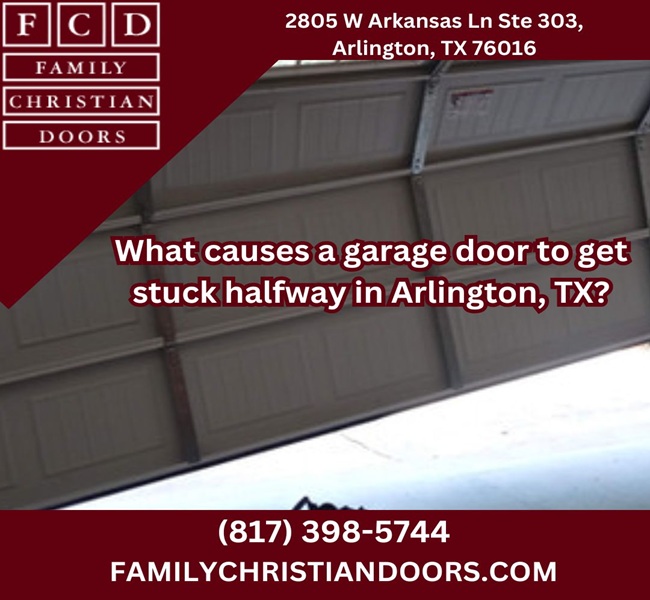
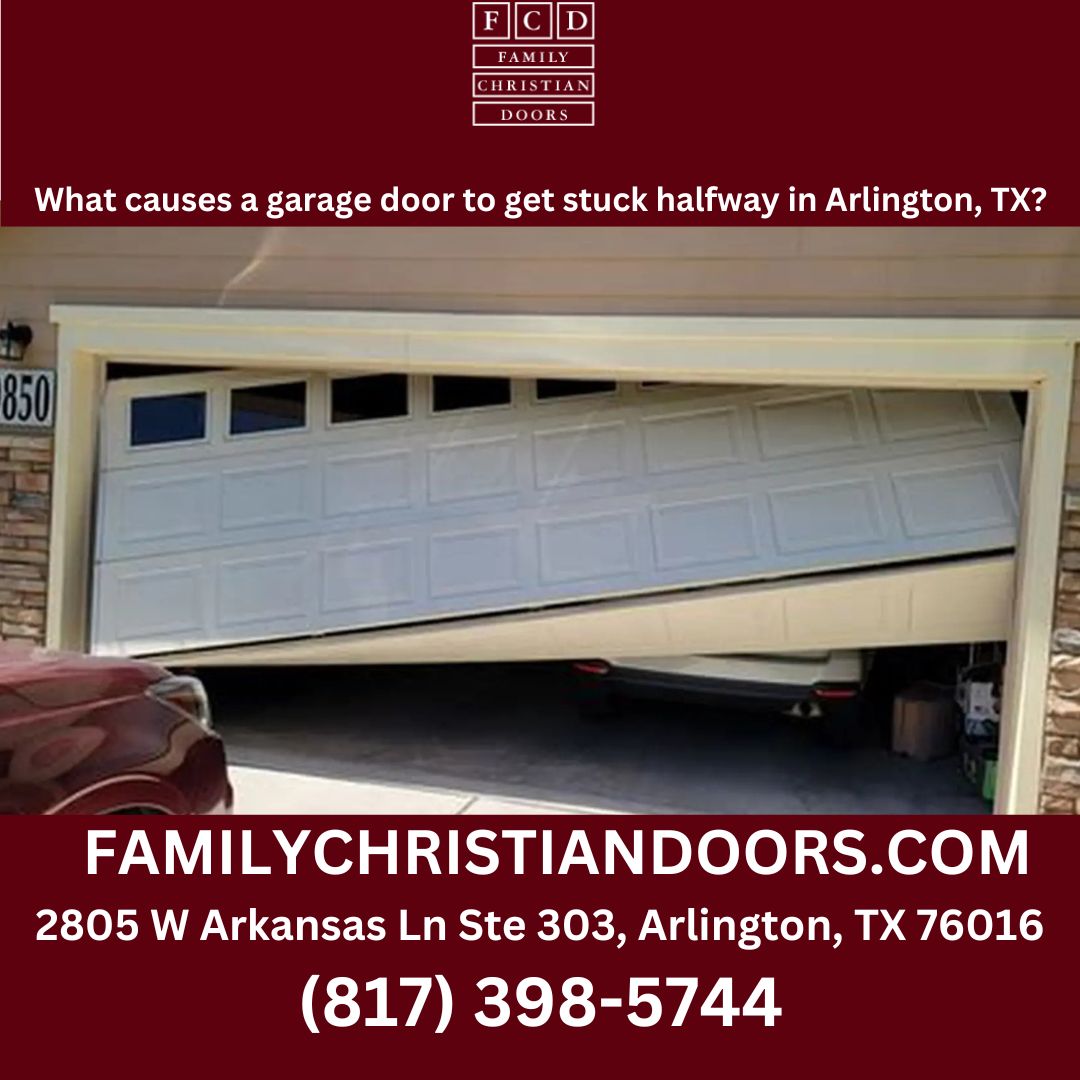
A garage door stuck halfway open is almost always caused by a broken torsion spring, malfunctioning opener, or misaligned track. This common problem affects thousands of Arlington homeowners every year, and understanding what causes it can help you identify when professional garage door repair is necessary. Your home’s security and safety depend on addressing these issues promptly. The good news is that identifying the root cause is the first step toward getting your door working again. This guide will walk you through the most common causes specific to Arlington’s climate and construction patterns, so you can understand what went wrong and why calling a professional technician is often your safest option.
Why Garage Doors Get Stuck Halfway: Common Causes in Arlington
When your garage door gets stuck in the middle of its travel, several mechanical systems have typically already failed or are in the process of failing. A garage door weighs between 300 and 500 pounds, depending on construction and material. This massive weight is carefully balanced by several critical components working in perfect harmony. When even one component fails, the entire system can seize up, often at the worst possible moment.
Arlington’s specific climate and housing patterns create unique challenges for garage door systems. The Texas heat, humidity fluctuations, and foundation settling common in Tarrant County accelerate wear on components that homeowners in other regions might not encounter for years. Understanding which causes are most common in your area helps you recognize warning signs before a complete failure occurs.
Broken or Weakened Springs: The #1 Reason for Stuck Garage Doors
Torsion springs are the primary component that counterbalances your garage door’s weight. When these springs fail, your door becomes immovable. This is the most common reason why garage doors get stuck halfway, and it’s also the most dangerous problem to attempt fixing yourself.
How Springs Counterbalance Your Door
Your garage door system uses one or two torsion springs mounted horizontally above the door opening. These springs are wound extremely tightly and store enormous amounts of mechanical energy. When you push your opener button, the opener only needs to lift approximately 10 pounds of actual weight because the springs handle the other 290 to 490 pounds. This mechanical advantage is what makes electric openers possible. Without functioning springs, your opener cannot lift the door even slightly, and the door becomes completely stuck.
Signs of a Broken Torsion Spring
A broken garage door spring typically produces one or more of these warning signs before complete failure occurs: your door becomes noticeably heavier than usual when opening, the door moves slower than it normally does, you hear a loud bang or snap sound coming from above the door, the door closes unevenly and tilts to one side, or your opener makes a grinding or struggling sound but the door won’t move.
Why Spring Failure Happens Suddenly
Torsion springs in Arlington face unique stress from temperature cycling. Summer heat causes metal to expand, placing additional tension on springs. Winter cooling causes contraction. Over months and years, this constant expansion and contraction creates microscopic stress fractures inside the metal. Eventually, these fractures propagate, and the spring snaps suddenly. Most spring failures happen without warning, even though the spring has been weakening for months. A spring typically lasts 7 to 12 years depending on usage frequency and climate exposure. If your door is over 10 years old and you haven’t replaced springs, failure is increasingly likely.
Opener Malfunction and Garage Door Failure
Your garage door opener is essentially an electric motor connected to a drive system that pulls your door open and closes it. When an opener malfunctions, your door becomes stuck because the motor cannot generate enough force to move the door, or it cannot engage the door properly.
Electrical Failure and Motor Burnout
Garage door openers rely on electric motors that cycle thousands of times per year. Each cycle generates heat. Over time, especially in Arlington’s hot climate, motor windings can overheat and burn out. Once a motor has burned out, it cannot be repaired. A garage door opener replacement becomes the only solution to restore your door to working condition. Electrical failures also occur when capacitors inside the opener unit fail. These components store electrical energy and release it to help the motor start. When a capacitor fails, the motor cannot generate enough torque to move your door.
When the Opener Engages but Door Won’t Move
Sometimes your opener motor runs and engages with the door, but your door still won’t move. This indicates the problem is not the opener itself, but rather the obstruction or damage preventing the door from moving. The opener is trying to do its job, but the door’s mechanical components are preventing movement. This scenario typically points toward spring failure or track problems rather than opener failure.
Track Misalignment and Obstruction Issues
Your garage door slides along a metal track system on both sides. These tracks must be perfectly aligned and completely clear for smooth operation. When tracks become misaligned or blocked, your door cannot roll properly and gets stuck.
Thermal Expansion From Texas Heat
Metal expands when heated and contracts when cooled. In Arlington, summer temperatures regularly exceed 95 degrees Fahrenheit. The metal tracks on your garage door expand significantly in this heat. If tracks were installed without accounting for thermal expansion, the accumulated expansion can cause tracks to bow slightly. Even a slight bow prevents the roller wheels from rolling smoothly. This becomes worse as summer heat peaks. Many track misalignment problems in Arlington are actually thermal expansion problems that worsen as temperatures increase.
Debris and Track Blockages
Dust, leaves, pollen, and debris accumulate in garage door tracks over time. In Arlington’s windy climate, this accumulation happens faster than in other regions. When enough debris piles up, it blocks the roller wheels and prevents smooth operation. Sometimes a piece of debris lodges directly in the track, preventing the door from rolling past a certain point. When your door becomes a garage door off-track situation, professional diagnosis is essential to prevent further damage to your system.
Misaligned Tracks From Foundation Settling
Many Arlington homes are built on clay soil that shifts with moisture content. During dry seasons, clay contracts. During wet seasons, it expands. This natural soil movement causes subtle foundation settling. When your home settles unevenly, the garage door frame settles with it. Even tiny amounts of settling, sometimes just a quarter inch, are enough to throw track alignment off. Once tracks are misaligned, your door can become stuck or difficult to operate.
How Arlington’s Climate Impacts Garage Door Performance
Arlington’s unique climate creates specific challenges for garage door systems that you won’t find in many other regions. Understanding these climate factors helps explain why certain failure patterns occur consistently.
How Summer Heat Warps Metal Components
Garage doors and their hardware are almost entirely metal. Metal warps when exposed to extreme and repeated temperature cycling. Summer heat in Arlington regularly exceeds 95 degrees, and uninsulated metal components can reach surface temperatures exceeding 120 degrees. Each summer cycle causes expansion. Each winter cools and contracts components. After years of this cycling, metal components develop permanent warping and stress patterns. This warping affects springs, tracks, and hinges, causing them to perform poorly or fail entirely.
Humidity and Weather Seal Swelling
Arlington experiences high humidity, especially during spring and early summer. Humidity causes rubber and vinyl components to absorb moisture and swell. Your garage door’s weather seals swell in humidity. When seals swell too much, they create friction that prevents your door from rolling smoothly. This friction places additional stress on springs and openers, accelerating their failure. In winter, when humidity drops, these same seals shrink. This constant swelling and shrinking eventually causes seals to crack and deteriorate.
Seasonal Stress on Moving Parts
Your garage door components experience different stress levels throughout the year. In summer, the door is heavier and harder to move because of thermal expansion. In winter, components are more brittle and prone to cracking. Spring and fall temperature swings create the most stress as components move between expanded and contracted states most rapidly. Understanding these seasonal patterns helps explain why many garage door problems seem to appear suddenly in late spring or early summer.
| Component | Expected Lifespan in Arlington |
|---|---|
| Torsion Springs | 7 to 12 years depending on usage |
| Garage Door Opener Motor | 10 to 15 years with proper maintenance |
| Roller Wheels and Hardware | 15 to 20 years before degradation becomes evident |
| Weather Seals and Gaskets | 5 to 8 years before swelling and deterioration |
| Garage Door Panel (Standard) | 20 to 30 years depending on material and maintenance |
Safety Hazards of a Stuck Garage Door (Why DIY Isn’t Safe Here)
When your garage door gets stuck, your immediate instinct might be to investigate and fix it yourself. However, a stuck garage door presents genuine safety hazards that make professional service strongly recommended.
The torsion springs above your garage door are under extreme tension. These springs store enough energy to cause serious injury or death if they release suddenly while you’re working near them. Even trained technicians treat torsion springs with extreme respect and use specialized equipment when working with them. Attempting to loosen, tighten, or replace these springs without proper training and equipment is genuinely dangerous.
If you try to manually force a stuck door open, you risk damaging the tracks further, breaking hinges, or getting your fingers or hands caught in the door mechanism. The door also poses a crushing risk if springs fail suddenly while you’re underneath it.
Additionally, a stuck garage door leaves your home less secure. An open or partially open garage door provides easy entry for unwanted visitors. Attempting to fix it yourself might take hours, leaving your home exposed during that time. Professional technicians can typically diagnose and repair your door within a few hours, restoring your home security quickly.
Do Your Springs Look Damaged or Coiled?
If you can safely view your garage door springs from a distance (never stand directly under them), look for visible damage. A broken spring often appears loose or coiled, rather than tightly wound. However, even if springs look normal from a distance, they might be internally cracked and ready to fail. Visible inspection is not reliable for diagnosing spring condition.
Is Your Opener Running but Door Stuck?
If you hear your opener motor running but the door doesn’t move, this tells a professional technician that your opener is functioning but something is preventing door movement. This narrows down the problem significantly and helps the technician diagnose the issue faster. Document this symptom when you contact a repair service.
Can You Spot Track Damage Yourself?
You might notice visible dents or bends in your garage door tracks by inspecting them visually. However, minor track issues are often invisible to untrained eyes. Professional technicians use laser alignment tools to detect track problems that aren’t visible to the naked eye.
What You Shouldn’t Try to Fix Alone
Do not attempt to adjust or repair torsion springs under any circumstances. Do not try to manually force a stuck door open. Do not attempt to replace garage door hinges or hardware without professional guidance. Do not try to realign tracks yourself unless you have specific training. These tasks require specialized tools, safety equipment, and technical knowledge.
When to Call a Professional Garage Door Repair Service
You should call a professional garage door technician as soon as your door gets stuck or displays warning signs of problems. The longer you delay, the more additional damage might occur. A broken spring might damage your opener if the door is forced. A misaligned track might bend further if the door is operated repeatedly. A stuck door compromises your home security and creates safety hazards.
Professional technicians at Family Christian Doors have the specialized training, safety equipment, and diagnostic tools needed to identify the exact cause of your stuck garage door. They can safely repair springs, replace openers, realign tracks, and restore your door to full functionality. They understand Arlington’s climate and the specific challenges it creates for garage door systems. Their garage door opener service and repairs are comprehensive and designed to get your system working reliably again.
When you contact a professional service, be prepared to describe your door’s symptoms. Did you hear a loud noise before the door got stuck? Is the opener running but the door won’t move? Did the door become progressively slower before getting stuck? These details help technicians diagnose your problem more efficiently.
Conclusion
A garage door stuck halfway in Arlington is typically caused by broken torsion springs, opener malfunction, or track misalignment. Each of these problems creates serious safety and security concerns that require professional repair. Arlington’s unique climate of extreme summer heat, humidity, and foundation settling accelerates garage door component failure compared to other regions. Understanding what causes these failures helps you recognize warning signs and seek professional help before your door becomes completely stuck.
The diagnostic checkpoints outlined in this guide help you provide accurate information when you contact a repair technician. However, actually fixing these problems requires specialized tools and safety training. Family Christian Doors has the expertise and equipment to diagnose and repair your stuck garage door safely and effectively. Rather than risk injury or further damage by attempting DIY repairs, reaching out to a professional technician is the best way to restore your door’s functionality and protect your home’s security. Contact Family Christian Doors to discuss your garage door repair needs and get your door working properly again.
