

The clearest signs of a worn garage door opener gear are grinding or whirring noises, a motor that runs while the door stays still, sluggish or partial movement, and small plastic shavings collecting beneath the opener unit. If you have noticed any of these while pulling out of your driveway in Plano or Lakewood, your opener is likely telling you that its internal gear is breaking down. This is one of the most common garage door repair issues homeowners across the Dallas area face, and it rarely fixes itself. Understanding what a worn gear sounds like, looks like, and does helps you act before a minor wear issue turns into a door that will not open at all. Below, you will learn how to recognize the warning signs early and what they mean for your home.
How a Garage Door Opener Gear Works
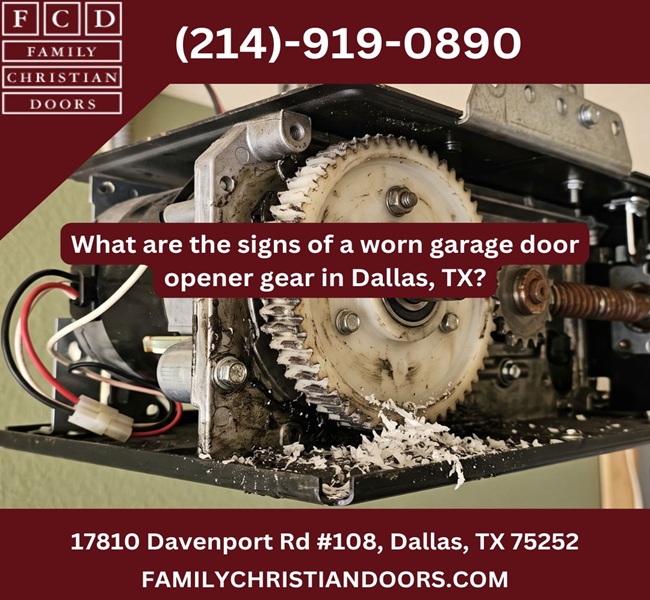
Inside most residential openers sits a small plastic or nylon gear, often paired with a worm drive, that translates the motor’s spin into the pulling force that lifts your door. Manufacturers use nylon on purpose. It runs quietly and it is designed to fail before more expensive metal components do, acting as a built in sacrificial part. That design choice is helpful, but it also means the gear is usually the first thing to wear out.
Every time your door goes up or down, that gear turns under load. A busy Dallas household might cycle the door six, eight, or more times a day between school runs, work commutes, and weekend errands. Multiply that across years of use and the teeth on the gear gradually round off, strip, or crack. Once the teeth can no longer grab, the motor keeps spinning but the door stops responding the way it should.
The Most Common Signs of a Worn Opener Gear
Grinding, Whirring, or Straining Noises
Sound is usually the first clue. A healthy opener runs with a steady, predictable hum. A worn gear produces a grinding, whirring, or high pitched straining noise, almost like the motor is working hard but accomplishing very little. Many homeowners in Richardson and Garland describe it as a sound the door never used to make. If your opener suddenly seems louder or rougher, the gear teeth are likely wearing down and slipping against each other instead of meshing cleanly.
The Motor Runs but the Door Will Not Move
This is the classic signature of a stripped gear. You press the remote, the motor hums to life, you hear it running for several seconds, and yet the door does not budge. What is happening is that the gear teeth have worn so far down that they no longer catch. The motor spins freely with nothing to grip. When the mechanical connection between motor and door is broken this way, the gear has usually reached the end of its life.
The Door Opens Slowly or Stops Partway
A gear that is partially worn may still function, but poorly. The door might crawl upward slower than usual, hesitate, or stop partway before straining to continue. In North Dallas and Carrollton, where summer heat can make everything mechanical work harder, this partial movement often shows up as the first real symptom before a full failure. A door that no longer moves in one smooth motion is a door with a mechanical problem developing underneath.
Plastic Shavings or Debris Beneath the Opener
Look at the floor directly under your opener motor. Small white, gray, or amber colored plastic shavings are a strong physical sign that the nylon gear is grinding itself apart. These flakes are pieces of the gear teeth shedding with each cycle. Some homeowners also notice a fine plastic dust on top of the door or on nearby shelving. When you can physically see the gear wearing away, replacement is almost always needed.
Delayed, Inconsistent, or Unresponsive Operation
A worn gear can also make the opener behave unpredictably. The door might respond to the remote one moment and ignore it the next. It may open fully today and stall tomorrow. This inconsistency happens because the remaining gear teeth are catching intermittently. Residents in Mesquite and Cedar Hill often mistake this stage for a remote or battery problem, when the real issue is the gear losing its grip inside the housing.
Worn Opener Gear vs. Other Garage Door Problems
How to Tell a Gear Issue Apart From a Motor or Spring Failure
Not every unresponsive door points to the gear. A Broken Garage Door Spring, a burned out motor, or a snapped cable can produce similar frustration. The difference is in the symptoms. A spring failure usually leaves a visible gap in the spring above the door and makes the door feel extremely heavy. A dead motor produces no sound at all. A worn gear, by contrast, lets the motor run while the door stays still. The comparison below helps sort out which problem you are likely facing.
| Symptom You Notice | What It Usually Points To |
| Motor runs but door stays still, with grinding noise | Worn or stripped opener gear |
| Loud bang, then door feels very heavy to lift | Broken torsion or extension spring |
| No sound and no movement at all when activated | Failed motor or lost power supply |
| Door moves unevenly, sags, or comes off track | Snapped cable or roller and track problem |
Why Opener Gears Wear Out Faster in Dallas
Heat Cycling, Humidity, and Storm-Related Electrical Wear
Dallas puts a unique set of stresses on garage door openers. Summer heat routinely pushes garage interiors well past comfortable levels, and nylon gears soften slightly under high temperatures. That softening, followed by cooling overnight, creates a repeated heat cycling effect that speeds up wear over the seasons. Humidity adds another layer, contributing to grease breakdown and corrosion on nearby metal components.
North Texas storms bring their own problems. Power surges and electrical fluctuations during severe weather can strain the opener’s motor and control board, forcing the gear to work against inconsistent power delivery. Homes in East Dallas and Lewisville that see frequent storm activity often experience faster component wear as a result. Even the region’s shifting clay soil plays a quiet role, because slight foundation and frame movement can subtly change how the door hangs, adding load the gear has to overcome with every cycle.
Repair or Replace: What a Worn Gear Usually Means
The encouraging news is that a worn gear does not always mean you need a brand new opener. In many cases the gear itself, or a full Garage Door Gear and Sprocket kit, can be replaced while keeping the existing motor and rail. This is often true when the opener is relatively young and the rest of the unit is in good condition.
That said, a full Garage Door Opener Replacement sometimes makes more sense. If the motor is aging, the unit lacks modern safety sensors, or the same opener has needed repeated repairs, investing in a new system can be the smarter long term choice. A qualified technician can inspect the internal components, confirm whether the gear is the only worn part, and recommend the path that gives you reliable operation for years rather than months. The right answer depends on the specific unit, not a one size fits all rule.
Why Opener Gear Work Is Best Left to a Professional
Replacing an opener gear may look straightforward in a video, but the reality involves working around a system under tension and connected to live electrical components. Openers interact with springs, cables, and safety sensors that must all be handled correctly. A mistake during disassembly can lead to injury or to a door that closes unsafely on a vehicle, pet, or person.
Professionals bring the correct replacement parts, the right tools, and the experience to diagnose whether the gear is truly the culprit or whether a deeper motor or spring issue is hiding behind similar symptoms. They also verify that the door is properly balanced and that the safety reversal system functions after the repair. For a component this central to your home’s daily security and convenience, expert Garage Door Opener Service and Repairs protects both your safety and your investment.
Frequently Asked Questions
Can I still use my garage door if the opener gear is worn?
You can often still operate the door manually by pulling the emergency release cord, but continuing to run a worn gear with the motor is not advised. Doing so accelerates the damage and can leave you with a door that fails entirely at an inconvenient moment. It is better to have it inspected promptly.
How long does a garage door opener gear typically last?
With average use, a nylon opener gear commonly lasts many years, though this varies widely based on how often the door cycles and the conditions it operates in. In Dallas, where heat and humidity add stress, some gears wear out sooner than the same part would in a milder climate.
Is a worn gear cheaper to fix than replacing the whole opener?
In many situations, replacing just the gear or gear kit is more economical than installing a completely new opener, especially when the motor and rail are still in good shape. A technician can confirm whether a targeted repair or a full replacement is the better value for your specific unit.
What happens if I ignore a worn opener gear?
Ignoring the problem usually leads to complete failure. The remaining gear teeth eventually strip away entirely, at which point the motor spins with no effect and the door stops responding. Addressing it early keeps a small repair from becoming a larger, more disruptive one.
Conclusion
Recognizing the signs of a worn garage door opener gear early can save you from a door that stops working when you need it most. Grinding noises, a motor that runs without moving the door, sluggish or partial operation, and plastic shavings under the unit all point to a gear nearing the end of its life. Dallas conditions, from summer heat cycling to storm related electrical wear and shifting clay soil, only speed that process along. If you have been asking yourself what a worn opener gear looks and sounds like, the symptoms above give you a clear starting point. When those warning signs appear, the safest step is a professional inspection. Family Christian Doors serves homeowners throughout the Dallas area and can diagnose the issue, replace the worn component, and restore smooth, reliable operation. Reach out to Family Christian Doors to learn more or to schedule a visit.