

A garage door usually needs replacing when it shows repeated mechanical failures, visible structural damage, or safety system malfunctions that repairs no longer resolve. For homeowners in Arlington, these warning signs often appear sooner than expected because of the intense heat and humidity swings common to North Texas. Understanding when a garage door repair is enough and when replacement is the smarter choice can save you from unexpected breakdowns, higher energy costs inside the garage, and safety risks for your family. This guide walks through the clearest indicators that your garage door has reached the end of its useful life, along with the local climate factors that speed up wear in this part of Texas.
Common Signs Your Garage Door May Need Replacing
Most garage doors give clear warning before they fail completely. Paying attention to these early signals helps homeowners avoid being caught off guard by a door that will not open on a hot summer morning.
Excessive Noise During Operation
A healthy garage door should operate with a smooth, consistent hum. Grinding, popping, or metal on metal scraping usually points to worn rollers, loose hardware, or a door that has shifted out of alignment. Occasional noise can often be resolved with maintenance, but a door that grows louder over several months is telling you the internal components are failing faster than they can be repaired.
Visible Sagging or Uneven Movement
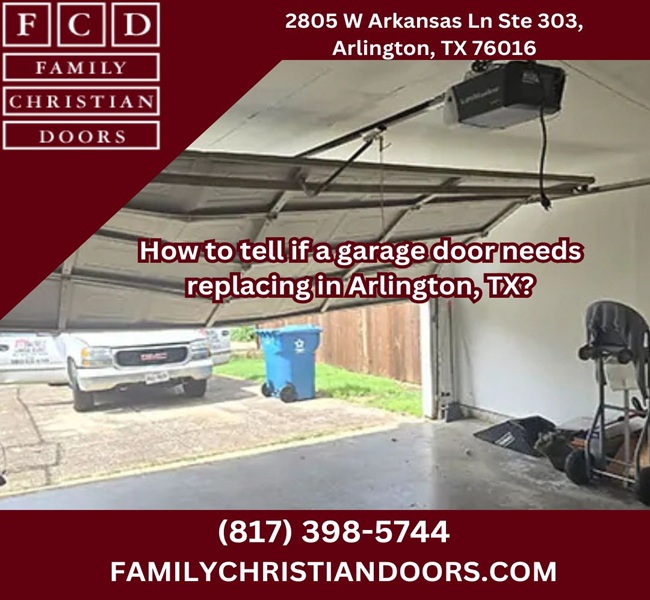
Stand outside and watch the door as it opens and closes. If one side lifts faster than the other, or you notice a Bent Garage Door Panel, the structural integrity of the door is compromised. This is common in older wooden doors that have absorbed years of Texas humidity.
Frequent Breakdowns and Repeated Repairs
If you find yourself calling for service three or four times within a single year, the door is likely nearing the end of its lifespan. Continuing to patch individual parts on an aging system often costs more over time than investing in a new door built to current standards.
Slow Response or Delayed Opening and Closing
A noticeable lag between pressing the remote and the door actually moving can indicate a failing opener motor, worn springs, or a door that has become too heavy for its lifting system to handle efficiently.
How Arlington’s Climate Accelerates Garage Door Wear
Local weather plays a bigger role in garage door lifespan than many homeowners realize. Arlington summers regularly push past one hundred degrees, and the humidity that follows spring storms adds another layer of stress on both wood and metal components.
Heat and Humidity Impact on Panels and Springs
Extreme heat causes metal springs and tracks to expand, while sudden temperature drops in the evening cause them to contract again. Over years, this constant cycle weakens torsion springs and can lead to a Broken Garage Door Spring or warp wooden panels and loosen the seals around them.
Sun Exposure and Material Fatigue Over Time
A garage door facing west or south often absorbs direct sunlight for much of the day. This prolonged exposure fades paint, dries out wood fibers, and can cause steel panels to develop small warps that affect how smoothly the door travels along its tracks.
Replace or Repair? Key Factors Homeowners Should Weigh
Deciding between repair and replacement comes down to a few practical considerations rather than guesswork.
Age of the Garage Door System
Most residential garage doors are built to last between fifteen and twenty years with proper maintenance. If your door is approaching or has passed that range, repairs become less of a long term solution and more of a temporary fix.
Cost of Repeated Repairs Versus Replacement
Every service call adds up. When the combined cost of recent repairs starts approaching what a new door would require, replacement typically offers better long term value along with improved insulation and updated safety features.
When a Single Component Failure Signals a Bigger Problem
Sometimes one major failure, such as a broken spring on an older door, is the sign that the rest of the system is close behind. A technician can evaluate whether the surrounding hardware is likely to fail soon as well.
Structural and Safety Warning Signs to Watch For
Some signs point directly to safety concerns that should never be ignored, regardless of the door’s age.
Cracked, Warped, or Rotting Panels
Visible cracks or soft, rotting sections in wooden panels weaken the overall structure of the door and can eventually cause a full panel failure.
Rust and Corrosion on Tracks or Hardware
Humidity from Texas storms can lead to rust forming on tracks, hinges, and springs. Corroded hardware is more likely to snap under tension, which can cause a Garage Door Off-Track and create a serious hazard.
Balance and Safety Sensor Issues
A door that does not stay in place when partially opened, or safety sensors that fail to detect obstacles, are urgent issues. These systems exist to prevent injury and should be addressed immediately by a professional.
Comparing Repair Versus Replacement at a Glance
| Consider Repair When | Consider Replacement When |
|---|---|
| The door is under ten years old | The door is older than fifteen years |
| Only one part has failed recently | Multiple parts fail within the same year |
| Panels show minor cosmetic wear | Panels are cracked, warped, or rotting |
| Noise is occasional and mild | Noise is constant and growing louder |
| Sensors and balance work correctly | Sensors misfire or the door will not stay balanced |
Why DIY Assessment Only Goes So Far
Homeowners can absolutely take the first look themselves, but a full evaluation of a garage door system requires training that goes beyond a visual check.
What Homeowners Can Safely Check Themselves
You can safely inspect the outside of the door for cracks, listen for unusual sounds during operation, check that the door reverses when it touches an object on the ground, and look for visible rust on hinges and tracks.
When Spring Tension and Cable Issues Require a Professional
Torsion springs hold an enormous amount of tension and can cause severe injury if handled without the right tools and training. Cables under load carry similar risk. Any issue involving springs or cables should be left entirely to a trained technician.
When to Call a Professional for a Full Evaluation
If you notice more than one of the warning signs described above, scheduling a professional evaluation is the safest next step. A trained technician can measure balance, inspect internal hardware, and give an honest recommendation based on the true condition of the door rather than guesswork.
Signs That Point to Immediate Professional Inspection
A door that suddenly falls when opened, a spring that has visibly snapped, or a door that will not close at all are situations that call for same day attention rather than a wait and see approach.
Protecting Your Home With a Reliable Garage Door
Your garage door is one of the largest moving parts of your home and plays a major role in both security and curb appeal. Recognizing the signs of wear early, understanding how Arlington’s climate accelerates that wear, and knowing when a repair is no longer the right answer all help protect your household and your investment.
If you have noticed any of the warning signs covered in this guide, from unusual noises to sagging panels or slow response times, it may be time for a full evaluation. Family Christian Doors has helped Arlington homeowners assess and address these exact concerns for years, offering honest guidance on whether repair or a Residential Garage Door Replacement makes the most sense for your specific situation. Reach out today or visit https://familychristiandoors.com/garage-door-repair-arlington/ to schedule an inspection and keep your home safe and secure.