

“`
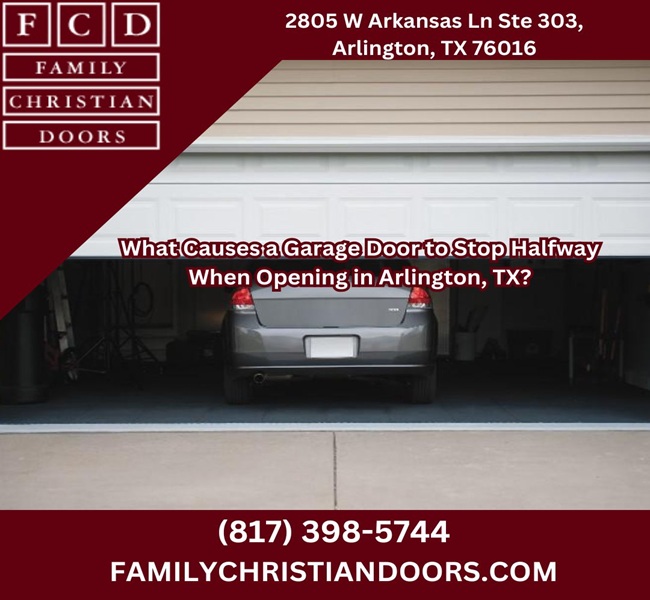
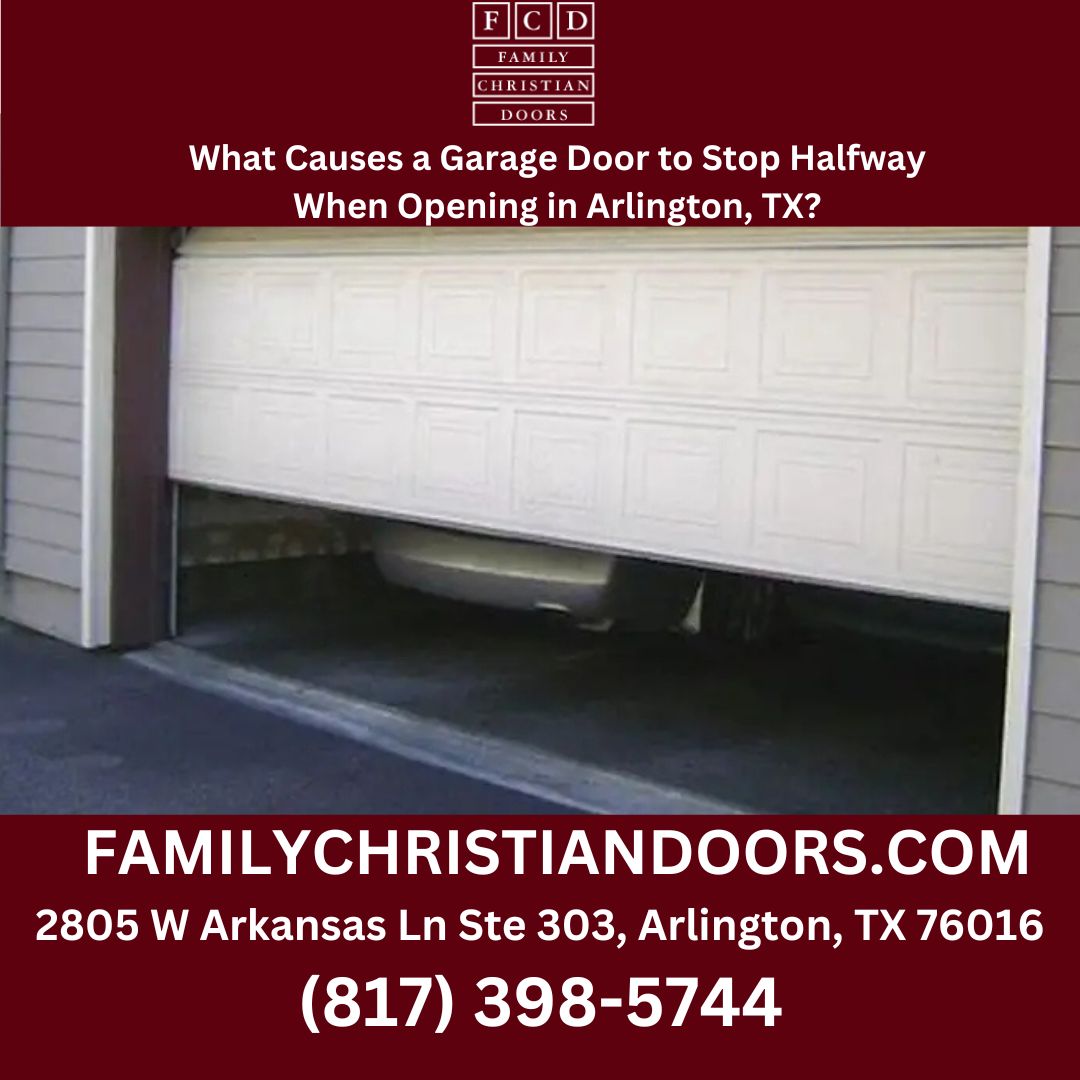
A garage door that stops halfway when opening is almost always telling you that something in the system has reached a limit it cannot safely push past. That limit might be a blocked safety sensor, a worn roller catching in the track, a spring that has lost tension, or an opener that has decided the load is too heavy to continue. The reason this matters is simple. A door frozen halfway is not just an inconvenience on a busy Arlington morning. It is an early warning from a high tension system that lifts well over a hundred pounds several times a day. Reading that warning correctly helps you decide whether you are looking at a five minute reset or a garage door repair that should be handled by a trained technician before anyone gets hurt.
What a Garage Door Stopping Halfway Is Trying to Tell You
Think of a partial stop as a diagnostic signal rather than a random glitch. Your garage door operates as a balanced system. The springs counter the weight of the door, the cables guide it, the rollers keep it tracking, and the opener simply nudges that balanced load up and down. When the door climbs partway and then quits, one of those components has interrupted the cycle on purpose or because it physically cannot continue.
That distinction is the whole point. Some causes are minor and worth a careful look on your own. Others involve parts under extreme tension that can injure you in an instant. Knowing which group you are dealing with is the difference between a quick fix and an emergency room visit, so the goal is to identify the cause before you touch anything.
The Most Common Reasons a Garage Door Stops Partway Up
Most halfway stops in Arlington homes trace back to a short list of culprits. Here are the ones that show up again and again, along with the behavior that usually points to each.
Misaligned or Obstructed Safety Sensors
The two small photo eye sensors near the bottom of your tracks send an invisible beam across the opening. If anything breaks that beam, or if the sensors drift out of alignment, the opener refuses to keep moving and the door reverses before it is fully open. A leaf, a stray box, a spider web, or a bumped bracket is often enough to do it. If your door starts up, then stops and rolls back down, suspect a Safety Sensor Out of Adjustment first.
Debris, Bent Tracks, or Worn Rollers
The door rides up and down on rollers that travel inside metal tracks. When a track gets bent, packs up with dirt, or a roller wears flat, the door reaches the damaged spot and simply cannot pass. You may hear grinding or see the door shudder right before it halts. A door that stops at the same point every single time is frequently fighting a physical obstruction at exactly that height, and a flat or seized roller is a common case where a Garage Door Roller Repair restores smooth travel.
Broken or Stretched Springs
The springs above your door carry the real weight of the system. A Broken Garage Door Spring is one of the more serious causes here. When a torsion spring breaks or loses tension, the opener suddenly faces the full load of the door and gives up partway, because the motor was never built to lift that weight alone. A telltale clue is a loud bang from the garage at some earlier point, followed by a door that now feels extremely heavy or stops a foot or two off the ground. Springs are wound under enormous force and are not a safe component to adjust yourself.
Frayed or Loose Lift Cables
The cables work alongside the springs to raise and lower the door evenly. If one cable frays, slips off its drum, or loosens, the door can rise crooked, bind in the track, and stall midway. You might notice one side sitting higher than the other when it stops. Like springs, cables are under heavy tension and should be inspected by a professional rather than handled in your driveway.
Opener Force and Travel Limit Settings
Every opener has force settings that tell it how hard to push and travel limits that tell it how far to go. Over time, or after a power event, those settings can drift. If the force is set too low, the opener reads normal friction as an obstacle and stops. If the open limit is set short, the door halts before it should and the motor clicks as if it finished the job. These settings explain a lot of the cases where the opener stops then clicks but nothing is physically wrong.
A Worn or Overheating Opener Motor
Openers have a thermal cutoff that pauses the motor when it runs hot, which is common during a long Texas summer or after several quick cycles in a row. An aging motor can also lose the muscle it once had. In both cases the door may climb partway and stall until the unit cools or until the worn gears are serviced. If the problem comes and goes with heavy use, heat and motor fatigue are strong suspects.
How Arlington’s Heat and Humidity Factor In
Local conditions play a bigger role than most homeowners expect. Arlington summers push garage temperatures well past comfortable, and that heat changes how the whole system behaves.
- Metal tracks and door panels expand in extreme heat, which can tighten clearances and make a marginally bent track bind where it used to glide.
- Lubricant on the springs and rollers thickens, dries, or bakes off, so parts that should slide begin to drag and the opener works harder than it should.
- Humidity and the occasional storm season leave moisture on hardware, and over many cycles that invites rust on hinges, rollers, and spring coils.
- Wide temperature swings between scorching afternoons and cool nights fatigue spring steel faster, which shortens spring life across the DFW area.
- Heat soaked motors hit their thermal cutoff sooner, so an opener that runs fine in spring may start stalling during the worst of the summer.
None of this means your door is doomed. It does mean Arlington doors earn their wear faster than doors in milder climates, and a halfway stop in July often has a seasonal fingerprint on it.
Safe Checks Before You Call
There are a handful of things any homeowner can look at safely, and a clear line where the smart move is to stop. The table below sorts the situation at a glance.
| Safe to Check Yourself | Needs a Professional |
| Wipe the photo eye sensors and confirm both indicator lights are steady | Any broken, stretched, or unbalanced torsion or extension spring |
| Clear leaves, boxes, or debris from the tracks and the door path | Frayed, loose, or derailed lift cables on either side |
| Look for an obvious bent spot in the track or a visibly flat roller | Bent tracks or rollers that require removing the door from the system |
| Give the opener time to cool after repeated cycles on a hot day | Force and travel limit adjustments or a motor that is failing |
Quick Visual Checks You Can Do Safely
Start with the easy wins. Clear the doorway, wipe the sensor lenses with a soft cloth, and make sure nothing has fallen into the lower tracks. Watch the door open and note exactly where it stops and whether it reverses or simply quits. Listen for grinding, popping, or a clicking motor. These observations cost you nothing and they give a technician a precise head start if the issue runs deeper.
When to Stop and Step Away
If you see a gap in a coiled spring, a hanging or frayed cable, or a door sitting crooked when it stalls, stop right there. Do not pull the release and force the door, and do not try to wind a spring or reseat a cable on your own. These parts hold enough stored energy to cause serious injury, and a door that drops because of a failed component can do real damage on the way down. This is the moment to call rather than to improvise.
When to Call a Professional in Arlington
A door that stops halfway is rarely a problem that fixes itself, and the safe causes are usually the ones you can rule out in a few minutes. When the sensors are clean, the tracks are clear, and the door still refuses to finish opening, the remaining suspects are springs, a Cable off Garage Door, force settings, and the opener itself. Those belong in the hands of a trained technician who can release the tension, test the balance, and correct the settings without putting anyone at risk.
Family Christian Doors works on Arlington garage doors every day and knows how local heat and humidity wear these systems down. If your door keeps stalling, reach out by phone, send a message through the contact form, or schedule a service visit so a technician can diagnose the exact cause and get your door moving again safely. Acting early on a partial stop often prevents a small adjustment from turning into a larger repair down the road.
Conclusion
When a garage door climbs partway and quits, it is pointing straight at the component that gave out, whether that is a blocked sensor, a worn roller, a tired spring, a loose cable, a drifted force setting, or an overheated motor. Arlington’s climate speeds that wear along, so a stall during a brutal summer week is more common than you might think. You can safely clear the tracks, clean the sensors, and let a hot motor rest, but anything involving springs, cables, or internal settings is a safety call rather than a project. So when you find yourself wondering why your door keeps stopping short, let Family Christian Doors take a look. Reach out today by phone or contact form, or explore the Arlington garage door repair page on the Family Christian Doors website, and keep your door opening fully, reliably, and safely.