

A garage door that refuses to open properly is almost always the result of one of five mechanical or electrical failures: a broken torsion spring, a misaligned track, a failing opener motor, malfunctioning safety sensors, or damaged lift cables. If you are a Dallas homeowner dealing with this right now, the problem is usually identifiable with a basic visual check. That said, identifying the cause and safely resolving it are two very different things. Understanding what is happening inside the system, and why these failures occur more frequently in DFW than many homeowners expect, will help you make a smarter decision about when to call for garage door repair.
Why Dallas Homeowners Face This Problem More Than They Expect
How DFW’s Climate Puts Extra Stress on Garage Door Components
Dallas weather creates conditions that are particularly hard on garage door hardware. The region experiences temperature swings that can exceed 40 degrees within a single day during spring and fall. Summer heat pushes metal components through repeated thermal expansion cycles that loosen hardware and wear down lubricants faster than in milder climates. Humidity levels spike after storms and accelerate corrosion on springs, cables, and track brackets.
Clay soil, which is widespread across North Dallas, Garland, and Mesquite, expands and contracts significantly with moisture changes. Over time, this ground movement can shift a garage frame slightly out of level, placing uneven stress on tracks and rollers. Power surges from severe DFW storms are another regional factor, quietly damaging opener circuit boards that may continue to appear functional until they stop responding entirely. Homeowners in Plano, Richardson, and Carrollton are seeing this combination of environmental stressors work against their systems year after year.
The Most Common Causes of a Garage Door That Will Not Open Fully
Broken or Worn Torsion Springs
Torsion springs are the mechanical core of any residential garage door system. They store and release energy to counterbalance the full weight of the door, making it possible for the opener motor to lift it without strain. When a spring breaks, the motor loses that counterbalance and either struggles to lift the door or stops moving it entirely. Most homeowners first notice this after hearing a loud bang from inside the garage, which is often mistaken for something falling off a shelf.
How to Tell If a Spring Is the Problem Before You Call
Look at the horizontal metal bar running above the door opening. A Broken Garage Door Spring will have a visible gap in the coil where it snapped. You may also notice that the door feels unusually heavy when you attempt to lift it by hand, or that it rises only a few inches before the opener motor strains and stops. Springs in high-commuter neighborhoods like Carrollton and Lewisville cycle more frequently and tend to reach the end of their lifespan sooner than average.
Misaligned or Damaged Tracks
The vertical and horizontal tracks on both sides of the door must stay parallel and level for the rollers to travel through them smoothly. Bends, gaps, or sections that have pulled away from the wall create friction that causes the door to bind, stop in the middle of its travel, or produce a grinding sound during operation.
What Bent Tracks Look Like and Why They Worsen Fast
Track damage often starts with something minor, such as a vehicle bumper making contact with a vertical rail or a storage rack getting pushed against the lower track section. Once the track deforms at any point, every subsequent open and close cycle applies stress to that same spot. A Garage Door Off-Track situation is especially common in East Dallas and Cedar Hill, where garages frequently double as workshops or storage areas and accidental contact with track rails happens regularly.
Opener Motor Failure or Worn Drive Components
The opener motor drives the door through one of three mechanisms: a belt, a chain, or a screw drive. Each system has its own maintenance requirements and failure patterns, and any one of them can break down independently of the springs or tracks.
Belt, Chain, and Screw Drive: Which Fails First in Texas Heat
Screw drive systems are the most vulnerable to sustained Texas heat. The lubrication inside the drive mechanism breaks down faster at high temperatures, causing the carriage to drag or stall mid-travel. Belt drives are more heat-tolerant but can stretch over time and begin to slip. Chain drives are the most durable mechanically but require regular lubrication, particularly in humid post-storm conditions common across DFW. If the opener hums but the door does not move, the drive mechanism is the first place to investigate.
Safety Sensor Issues Blocking Normal Operation
Every modern garage door opener is equipped with two photo-eye sensors positioned near the base of the door tracks. They emit an invisible beam across the opening. If that beam is blocked or the sensors are out of alignment, the opener interprets it as a safety obstruction and will not allow the door to close, or in some cases, to complete its opening cycle.
Why Sensors Go Out of Alignment and How to Spot It
A Safety Sensor Out of Adjustment is often caused by garden hoses, lawn equipment, or anything stored along the garage wall making contact with the sensor unit. Direct afternoon sunlight in west-facing garages across North Dallas and Plano can also interfere with the beam. A misaligned sensor typically shows a blinking amber or red indicator light rather than a steady green. Wiping the lens with a clean dry cloth and adjusting the unit on its mounting bracket until both lights hold steady often solves the problem without any specialized tools.
Frayed or Snapped Lift Cables
Lift cables work alongside the torsion spring system to guide the door evenly during travel. They run vertically on both sides of the door and connect to the drum that winds them as the spring releases tension. A fraying cable is one of the more visible signs that the system is under stress and approaching failure.
The Risk of Ignoring a Fraying Cable
Once a cable begins to unravel, the remaining strands carry load they were not engineered to handle on their own. When failure happens, it is usually sudden. A Cable off Garage Door causes the door to drop unevenly, jamming it in the track and creating a safety risk for anyone nearby. If you notice any visible fraying, separation, or unusual slack in the cables on either side of the door, stop using the door until a technician has inspected the system.
Mechanical vs. Electrical Failures: How to Tell the Difference
Knowing whether you are dealing with a mechanical or electrical failure helps you describe the problem accurately when you call for service and avoids unnecessary diagnostic time. The table below outlines the five most common failure types with their most recognizable indicators.
| Failure Type | Primary Indicator |
|---|---|
| Broken torsion spring | Loud snap sound, visible gap in coil, door extremely heavy when lifted by hand |
| Misaligned or bent track | Grinding noise during travel, door stops mid-cycle, visible bend or gap in the rail |
| Opener motor or drive failure | Motor runs but door does not move, drive carriage stalls or slips during operation |
| Sensor misalignment or blockage | Blinking sensor light, door reverses immediately after closing begins |
| Frayed or snapped lift cable | Visible fraying along the cable body, door tilts or drops to one side during travel |
DIY Checks You Can Do Before Calling a Technician
Inspect the Tracks and Rollers for Visible Damage
Stand inside the garage with the door in the closed position. Run your eye along both vertical tracks from floor to ceiling, then follow the horizontal sections toward the back of the garage. Look for bends, sections where the track bracket has pulled away from the wall, or rollers that appear cracked or are sitting unevenly inside the rail. Do not attempt to bend a damaged track back into position by hand. Doing so without first relieving the spring tension can cause the door to move unpredictably.
Test the Sensors With a Simple Obstruction Check
Place a cardboard box directly in the path of the sensor beam and attempt to close the door. If it reverses immediately, the sensors are functioning and communicating with the opener. Remove the box and verify that both sensor indicator lights are solid and steady. If one is blinking, loosen the mounting bracket slightly and rotate the sensor unit until the light holds. Check for objects sitting in front of the lens and rule out afternoon sun hitting the sensor directly, which is a recurring issue in west-facing garages throughout DFW.
Listen to the Motor: What the Sounds Mean
The sounds your opener produces during a failed cycle carry useful diagnostic information. A clicking sound with no movement often points to a stripped gear inside the motor housing. A grinding noise that stops before the door completes its travel usually suggests a roller or track obstruction. A motor that runs continuously without any door movement is a sign the drive mechanism has disengaged or failed internally. Noting which sound you are hearing before you call will help the technician arrive prepared.
When the Problem Goes Beyond a Quick Fix
Signs the Repair Requires a Trained Garage Door Technician
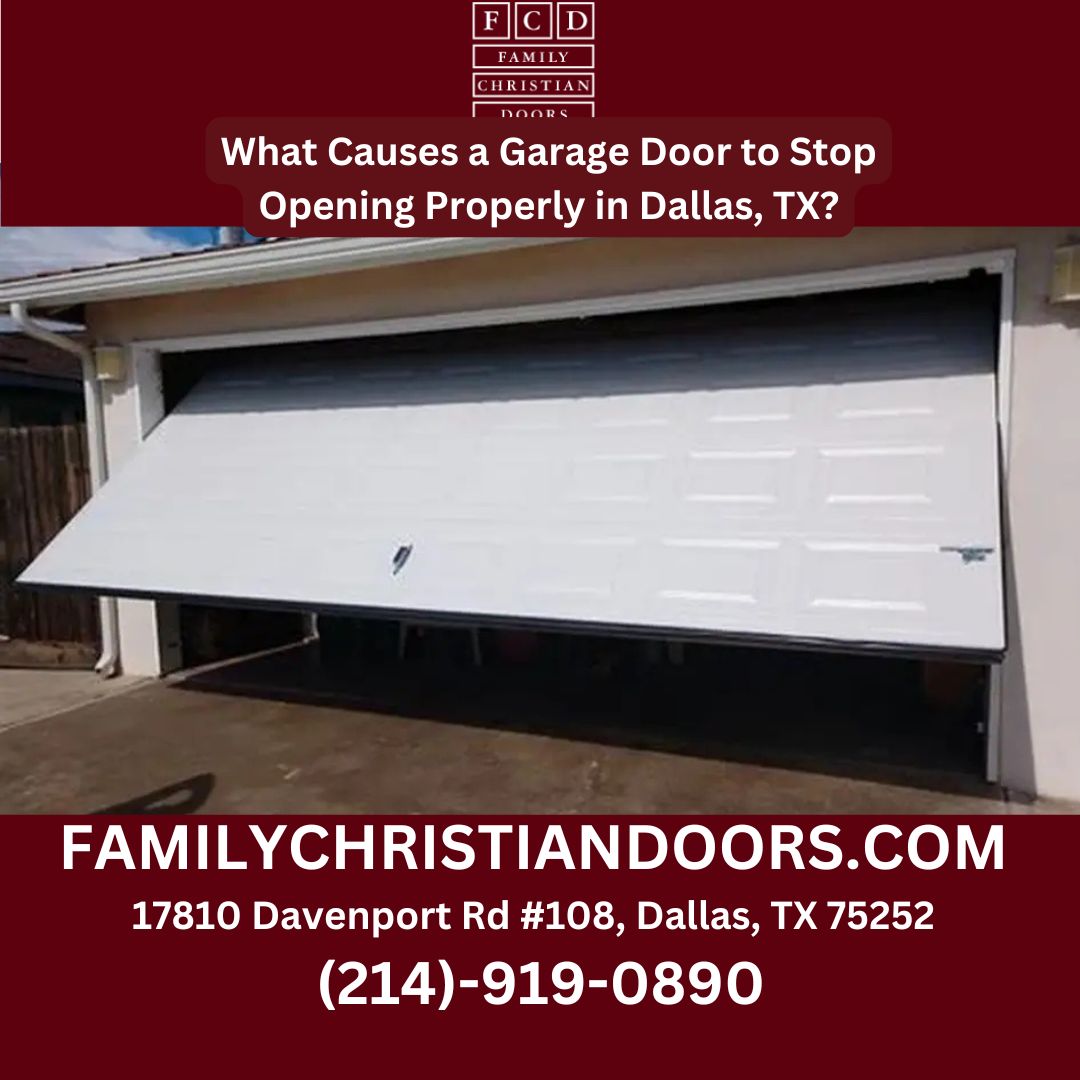
If you hear a loud snap or bang from the garage, if the door is sitting visibly crooked in the frame, if a cable is visibly broken or unwound from its drum, or if the door drops unexpectedly during manual operation, stop using the door immediately. These are signs of structural failure. Continuing to run the opener against a damaged spring or cable system transfers stress to other components and can turn a single repair into a more complex one.
Why Attempting Spring Repairs Without Training Is Dangerous
Torsion springs operate under several hundred pounds of stored mechanical tension. Releasing that tension without the correct winding bars, the proper sequence, and precise safety positioning creates a serious risk of injury. Watching a tutorial video is not an adequate substitute for hands-on training with this type of repair. Technicians who specialize in spring replacement carry specific tools designed for this task because the margin for error is narrow. Across the Dallas area, from Richardson to Lewisville, spring-related injuries represent a consistent share of preventable garage door accidents each year.
Frequently Asked Questions
Why does my garage door go up a few inches and then stop?
This is one of the clearest signs of a broken torsion spring. The opener motor generates enough force to begin lifting the door but cannot sustain the travel without spring-assisted counterbalance. The motor’s internal safety threshold detects excessive resistance and shuts the system down to prevent damage. Do not continue pressing the remote or wall button. Have the spring inspected before attempting further operation.
Can extreme heat cause a garage door to stop working?
Yes. Sustained high temperatures affect garage door systems in several ways. Metal components expand, which can tighten the fit of rollers inside tracks. Lubricants thin out and lose their protective properties. Opener circuit boards and screw drive mechanisms are particularly sensitive to heat. Inside an uninsulated Dallas garage during summer, temperatures can significantly exceed outdoor air temperatures, compounding stress on every component in the system.
How do I know if my garage door opener or the spring is the problem?
Pull the red emergency release cord that hangs from the trolley on the opener rail. This disconnects the door from the motor. Then try lifting the door manually by hand. If the door feels extremely heavy or will not move upward, the spring system is the likely cause. If the door lifts smoothly by hand but the opener fails to drive it, the issue is with the motor or drive components. This simple test gives you a reliable starting point before calling for service.
Is it safe to manually open a garage door with a broken spring?
It is not recommended. A door without functioning springs carries its full unassisted weight, which on most residential doors falls between 150 and 400 pounds depending on panel material and door size. Attempting to hold or prop that weight while passing under the door creates a serious safety risk. If you need access to the garage and the spring is broken, contact a technician rather than attempting manual operation.
Conclusion
A garage door that stops opening properly in Dallas is most often the result of a broken torsion spring, misaligned track, failing opener motor, sensor misalignment, or damaged lift cable. DFW’s heat cycles, humidity levels, clay soil movement, and storm-related power surges accelerate wear on all of these components at a pace that surprises most homeowners. Simple visual checks and basic sensor tests can help you identify the problem quickly. For anything involving springs, cables, or signs of structural failure, a professional inspection is the right next step.
If your door has stopped opening correctly and you are in the Dallas area, Family Christian Doors has the experience to diagnose the issue accurately and complete the repair safely. Visit the garage door repair Dallas page to learn more or reach out to schedule a service call.