

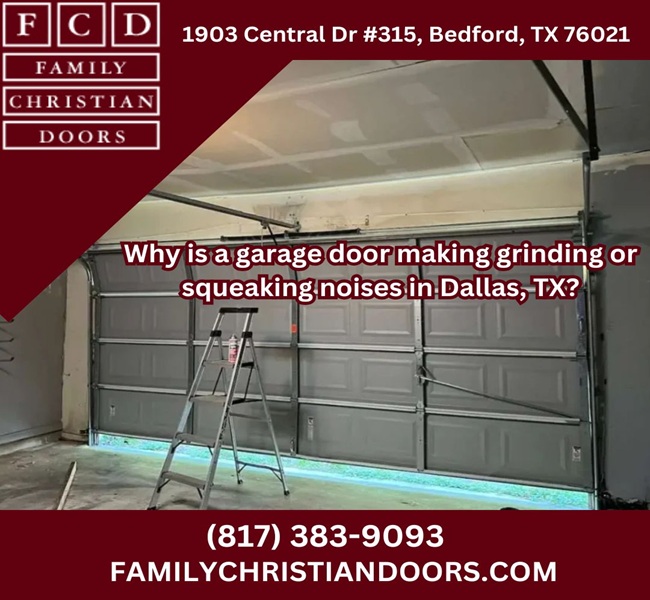
A garage door making grinding or squeaking noises is almost always a sign that one or more mechanical components are under stress, starved of lubrication, or beginning to wear out. While the occasional soft squeak after a cold night may seem minor, persistent or worsening noise is the door communicating that something needs attention. For homeowners in Dallas and surrounding communities, scheduling a professional garage door repair is the most reliable way to protect both the door and everyone who uses it. Catching the problem early can mean the difference between a simple maintenance fix and a more involved repair.
What Those Noises Are Actually Telling You
Not all garage door noises carry the same meaning. A grinding sound and a squeaking sound point to different problems, and confusing the two can lead to treating the wrong component. Before reaching for a lubricant or calling for service, it helps to listen carefully and match what you hear to what is most likely happening inside the door system.
Grinding vs. Squeaking: Recognizing the Difference
The table below outlines the most common noise types and the components they tend to point toward.
| Sound Type | What It Likely Indicates |
|---|---|
| Grinding during opening or closing | Worn opener gear and sprocket, or debris lodged in the track |
| High-pitched squeaking throughout movement | Dry or corroded hinges and rollers in need of lubrication |
| Rattling or banging at startup | Loose hardware, worn torsion spring, or failing roller bearings |
| Scraping sound along one side | Misaligned track or a roller that has slipped out of position |
| Popping or clicking near the spring area | Spring tension imbalance or coil damage requiring professional inspection |
Paying attention to when the noise occurs, whether at startup, midway through travel, or at the point of closing, can help narrow the diagnosis before a technician arrives.
Common Causes of Garage Door Grinding and Squeaking in Dallas
Garage doors are mechanical systems with dozens of interdependent parts. When any one of them degrades, the rest of the system compensates, and noise is often the earliest warning sign that compensation is happening.
Worn or Damaged Rollers
Rollers guide the door along the track with every cycle. Steel rollers without nylon coating are especially prone to wear and will develop a rough, grinding quality as the bearing inside breaks down. Nylon rollers are quieter by design but are not immune to cracking or flattening over time, particularly in a climate that cycles through extreme heat and cooler winters the way North Texas does. Once a roller loses its round shape or its bearing seizes, the door begins to drag rather than glide. A professional Garage Door Roller Repair can restore smooth, quiet operation before the worn component damages the track or surrounding hardware.
Dry or Corroded Hinges
Hinges connect each panel of the door and flex with every open and close cycle. When the pivot points dry out, metal rubs against metal and produces a sharp, persistent squeak. In areas like Garland and Richardson where humidity levels fluctuate considerably throughout the year, hinges that are not maintained regularly can develop surface rust that amplifies friction and accelerates wear.
Loose or Worn Springs
Torsion and extension springs counterbalance the weight of the door, making it possible for the opener motor to do its job without strain. When a spring stretches beyond its rated tension or develops a worn coil, the imbalance puts uneven pressure on the other components. This often produces a popping or vibrating noise. A Broken Garage Door Spring is one of the more serious conditions that can develop from ignored spring noise, and it is a repair that requires trained hands given the tension these components carry at all times.
Opener Gear and Sprocket Wear
The gear and sprocket assembly inside a chain or belt drive opener is responsible for converting the motor’s rotation into the linear movement that lifts and lowers the door. Over time, the plastic or nylon gear teeth grind down, and the resulting sound is a distinct mechanical grinding that tends to worsen progressively. Homeowners in Plano and Frisco who use their garage door multiple times daily often see accelerated wear on this component compared to lower-use households. Addressing Garage Door Gear and Sprocket wear early prevents the damaged assembly from placing added strain on the opener motor itself.
Misaligned or Debris-Filled Tracks
Tracks that are even slightly out of vertical or horizontal alignment force rollers to scrape against the inner rail as the door travels. Dirt, dried grease, and small debris that accumulate inside the track channel compound the problem. A door that scrapes along one side or jerks during travel is showing a track-related symptom that should be addressed before it causes the rollers or panels to sustain damage. Left unresolved, progressive misalignment can result in a Garage Door Off-Track situation that stops the door from operating entirely.
Insufficient Lubrication
Many noise complaints trace back to a single, preventable cause: the moving parts of the door have not been lubricated recently enough. Rollers, hinges, springs, and the opener chain or screw drive all require periodic lubrication to operate quietly and efficiently. The correct lubricant matters as much as frequency. A lightweight garage door specific lubricant penetrates effectively without attracting excess dust. General purpose oil or WD-40 is not a substitute and can actually draw more debris into the mechanism over time.
How Dallas Heat, Humidity, and Clay Soil Accelerate the Problem
Dallas sits in a climate zone that is hard on mechanical systems. Summers regularly push temperatures above 100 degrees Fahrenheit, and the combination of intense heat followed by cooler fall and winter temperatures creates thermal cycling that causes metal components to expand and contract repeatedly. This expansion and contraction loosens hardware, wears down bearing surfaces faster than in milder climates, and causes lubricants to thin out or evaporate more quickly.
Humidity adds another layer of stress. Moisture accelerates surface corrosion on steel hinges, tracks, and springs, especially in neighborhoods closer to low-lying areas around East Dallas and Mesquite where humidity tends to linger. Even a thin layer of rust on a hinge pivot or roller bearing is enough to introduce friction that generates noise.
The expansive clay soil common throughout the DFW region is an additional factor that often goes overlooked. As clay soil absorbs and releases moisture throughout the year, it shifts. This shifting can alter the level of the garage floor and the plumb of the door frame over time. Even a subtle change in frame alignment is enough to throw off the track geometry, causing the door to bind, scrape, or produce irregular grinding during travel. Homeowners in areas like Carrollton, Lewisville, and Cedar Hill, where clay content in the soil is particularly high, should factor seasonal soil movement into their maintenance awareness.
When a Noisy Garage Door Becomes a Safety Risk
A common question homeowners have is whether a noisy garage door is actually dangerous, or simply annoying. The honest answer is that it depends on the cause and how long the problem has been ignored. A door that squeaks due to dry hinges is not an immediate hazard. A door that grinds because a spring is failing or a cable is fraying is a different situation entirely.
Garage doors are among the heaviest moving objects in a home, often weighing between 150 and 400 pounds. Springs and cables bear that load during every cycle. When these components are compromised, a sudden failure can cause the door to drop without warning. Grinding that originates from the spring area, or a door that feels heavy and sluggish despite the opener running, should not be treated as a minor inconvenience. These are indicators that load-bearing components may be at or near failure.
Safety sensors, opener motor housings, and cable drums can also be involved when noise patterns become irregular. A door that hesitates, reverses unexpectedly, or produces a grinding sound only on one side during closing should be inspected promptly. Using a door in this condition risks accelerating the damage and creating a more serious safety exposure for your household.
Frequently Asked Questions About Garage Door Noise
Can I fix a squeaking garage door myself?
Some squeaking issues are within reach for a careful homeowner. Applying a proper garage door lubricant to rollers, hinges, and the opener chain or screw is a reasonable DIY step. Tightening loose bolts on the track brackets or door panels is also manageable with basic tools. However, anything involving spring tension, cable adjustment, or track realignment carries real risk and is best left to a trained technician. Attempting spring repairs without the proper tools and experience is one of the most common causes of serious injury in residential garage door work.
Is it safe to keep using a garage door that grinds?
Continued use of a grinding garage door is not advisable, especially if the sound is coming from the spring, cable, or opener gear area. Grinding indicates active mechanical wear, and every cycle adds to the deterioration. What begins as a worn gear or a coil under stress can escalate into a complete failure. The safer approach is to limit use and schedule an inspection as soon as possible.
How often should a garage door be lubricated in the Dallas climate?
Given the heat cycling, humidity exposure, and high dust levels common across the Dallas area, a lubrication interval of every six months is a reasonable baseline for most residential doors. Doors that see heavy use, four or more cycles per day, benefit from attention every three to four months. Spring and fall are natural checkpoints, as the transition between seasons is when thermal expansion effects are most pronounced and when previously hidden wear tends to become audible.
Conclusion
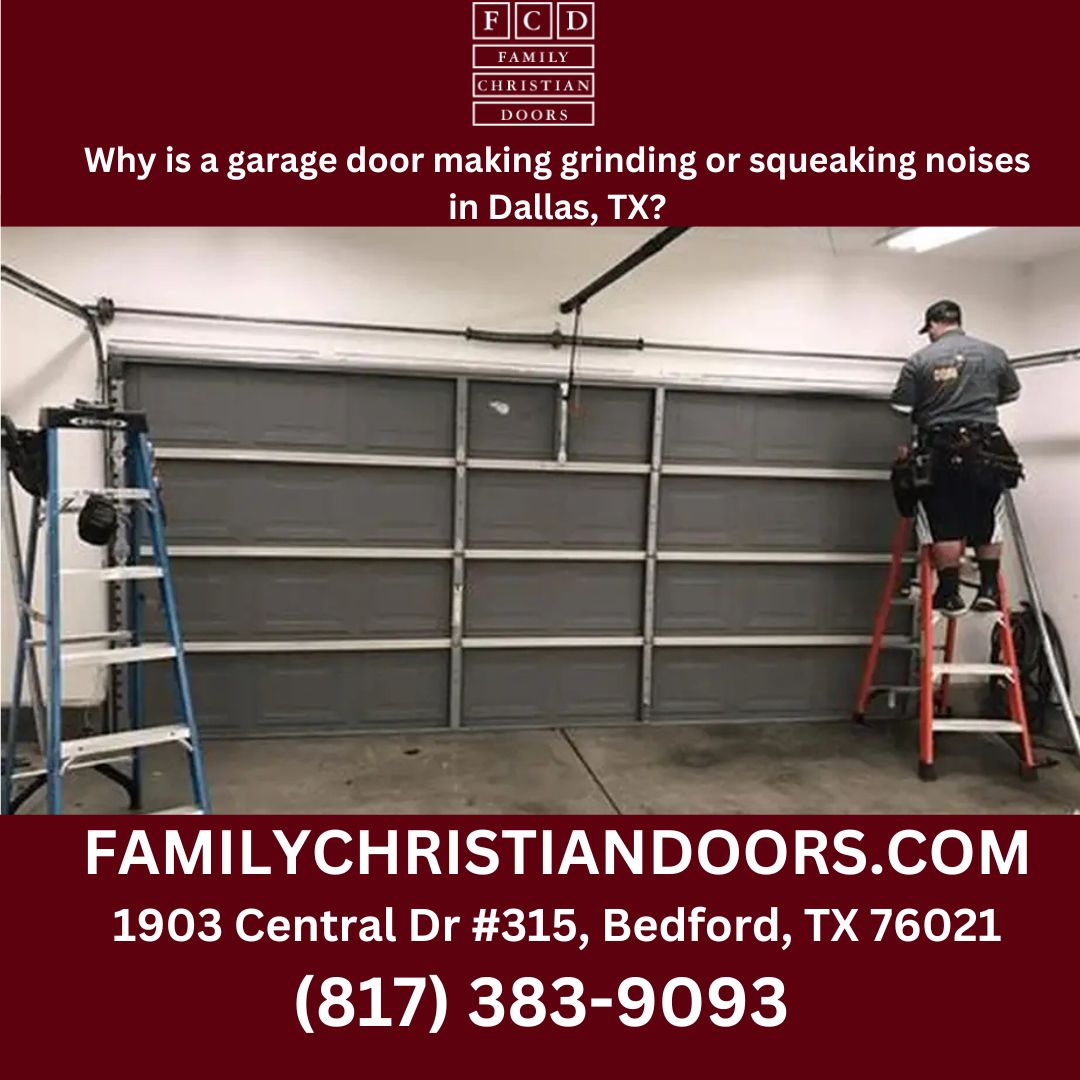
A garage door that grinds or squeaks is not a problem to wait out. The noise is a signal from the mechanical system that something is wearing, drying out, misaligning, or failing. For homeowners throughout the Dallas area, the combination of intense summer heat, seasonal humidity, and expansive clay soil creates conditions that put garage door components under greater stress than many homeowners realize.
The most important takeaway is to treat unusual noise as diagnostic information rather than background nuisance. Identify when the sound occurs, which part of the door it comes from, and whether the door’s movement has changed alongside the noise. That information will guide whether a lubrication service, a hardware adjustment, or a more involved component repair is the right next step.
Family Christian Doors serves homeowners across the Dallas area with honest, experience-driven garage door repair and maintenance. If your door has started making sounds that concern you, reaching out for a professional assessment is the most reliable way to protect your investment and keep your household safe.
