

Structural damage in a garage door shows up as bent or cracked panels, warped sections, gaps along the door frame, doors that move unevenly, and components that grind, scrape, or jump off track during operation. If you are a homeowner in Flower Mound and something about your garage door looks or sounds wrong, there is a reasonable chance the issue is structural and warrants professional garage door repair rather than a simple mechanical fix. This matters because a structurally compromised door does not just look bad. It can fail unexpectedly, create security vulnerabilities, and place unnecessary strain on every other component in the system. Understanding what to look for early gives you the information you need to act before a manageable problem becomes a much larger one.
Why Structural Damage Is a Safety Issue, Not Just a Cosmetic One
It is easy to dismiss a dented panel or a slightly crooked door as a cosmetic annoyance, something you will deal with eventually. But structural damage in a garage door works differently than a scratch on a car door or a scuff on a wall. The door itself is one of the largest moving parts on your entire home, and its structural integrity directly affects how safely it operates every single day.
A garage door that has lost its structural shape no longer distributes weight and tension the way it was engineered to. That imbalance puts extra stress on the springs, cables, rollers, and opener. These components are already under significant load during normal operation. When the door’s structure is compromised, the entire system works harder to compensate, and wear accelerates across the board.
Beyond the mechanical risk, a structurally damaged door is often a security risk. Bent panels, warped frames, and doors that no longer seal properly create gaps that can be exploited. For homeowners in Flower Mound, where the garage frequently serves as the primary entry point to the home, that is not a risk worth carrying.
And then there is the safety risk to people. If a Broken Garage Door Spring or a cable frays because it has been overworked due to structural imbalance, the consequences can be serious. Treating structural damage as a cosmetic problem leads to delays that make all of these outcomes more likely.
Visual Signs Your Garage Door Has Structural Damage
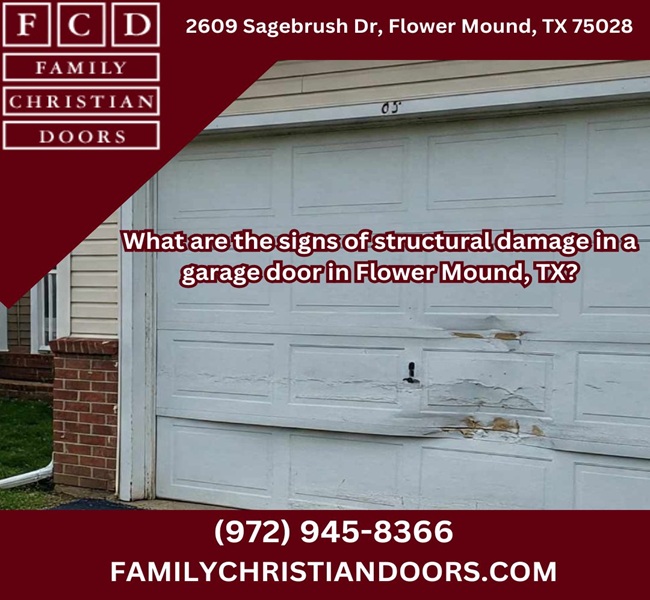
Bent, Dented, or Cracked Door Panels
Panel damage is the most visible form of structural compromise, and it is also one of the most commonly underestimated. A single dented panel from a backing-in incident may look minor, but it can affect the alignment of the entire door. Sectional garage doors are designed to flex and articulate at the joints between panels. When one panel is bent or deformed, it disrupts that articulation. The door may bind, travel unevenly, or place abnormal stress on the hinges connecting the sections.
Cracked panels are a more serious version of the same problem. Steel panels that have cracked along a seam or corner have lost their load-bearing capacity in that section. Wood panel doors can crack due to moisture intrusion, which is particularly relevant given the humidity fluctuations in the North Texas climate. Either way, a Bent Garage Door Panel is not something that can be patched and forgotten. It needs to be evaluated to determine whether the section can be replaced or whether the damage has affected the structural integrity of adjacent sections.
Warping, Bowing, or Gaps Along the Door Frame
A well-functioning garage door sits flush against the door frame on all four sides when closed. If you notice visible gaps along the sides, top, or bottom, or if the door appears to bow outward or inward in the middle, those are structural red flags.
Warping happens gradually and is especially common with wood doors exposed to Texas heat and seasonal humidity swings. A door that bowed slightly over one summer may not seem alarming, but the warping tends to worsen with each heat cycle. Once a door is significantly bowed, it can no longer close squarely, which means the weatherstripping fails, the lock does not engage properly, and the door may not seal at all in some spots.
Steel and aluminum doors can also develop bowing, typically after impact or when the internal reinforcement bracing is damaged. If you can see daylight around the perimeter of your closed door, the structural geometry of that door has been compromised.
Visible Rust, Rot, or Deterioration on Door Sections
Surface rust on a steel door is an aesthetic issue. Rust that has penetrated through the panel or has developed along joints and seams is a structural one. Once oxidation works its way into the internal structure of a steel panel, the metal thins and weakens. Panels in that condition are far more likely to buckle, crack, or fail under normal operating stress.
Wood doors in the Flower Mound area face their own version of this problem in the form of rot. Rot typically begins at the bottom sections of the door, where moisture collects and wood-to-ground proximity allows prolonged exposure. By the time rot is visible on the surface, it has usually been working through the interior of the panel for some time. Rotted sections cannot support the load of a garage door in operation, and they create attachment points for insects and further moisture intrusion.
Performance Signs That Often Point to Structural Problems
Uneven Movement, Sticking, or Hesitation When Operating
A properly aligned and structurally sound garage door moves smoothly, without jerking, sticking, or pausing mid-travel. When a door hesitates or moves unevenly from one side to the other, the cause is frequently structural rather than purely mechanical.
Think of it this way: the opener and spring system are designed for a door of a specific weight and shape. When the door’s structure is distorted, even slightly, it no longer moves the way the system expects. One side may drag while the other travels freely, causing the door to appear to “wag” side to side. Over time, this uneven movement damages the tracks, rollers, and hinges, compounding the original structural problem.
Grinding, Scraping, or Popping Sounds During Operation
Sound is one of the most reliable early-warning indicators homeowners have. A garage door that has always operated quietly and begins making grinding, scraping, or sharp popping sounds is communicating that something has changed. Structural misalignment is a frequent cause of all three.
Grinding and scraping sounds often mean that part of the door is contacting a surface it should not, either because a panel has shifted or because the door is no longer tracking squarely. Popping sounds can indicate that a panel joint is flexing beyond its designed range of motion, which happens when the structural geometry of the door has been altered. These are not sounds to ignore or attribute to the door “just being old.”
A Door That Has Come Off Its Tracks
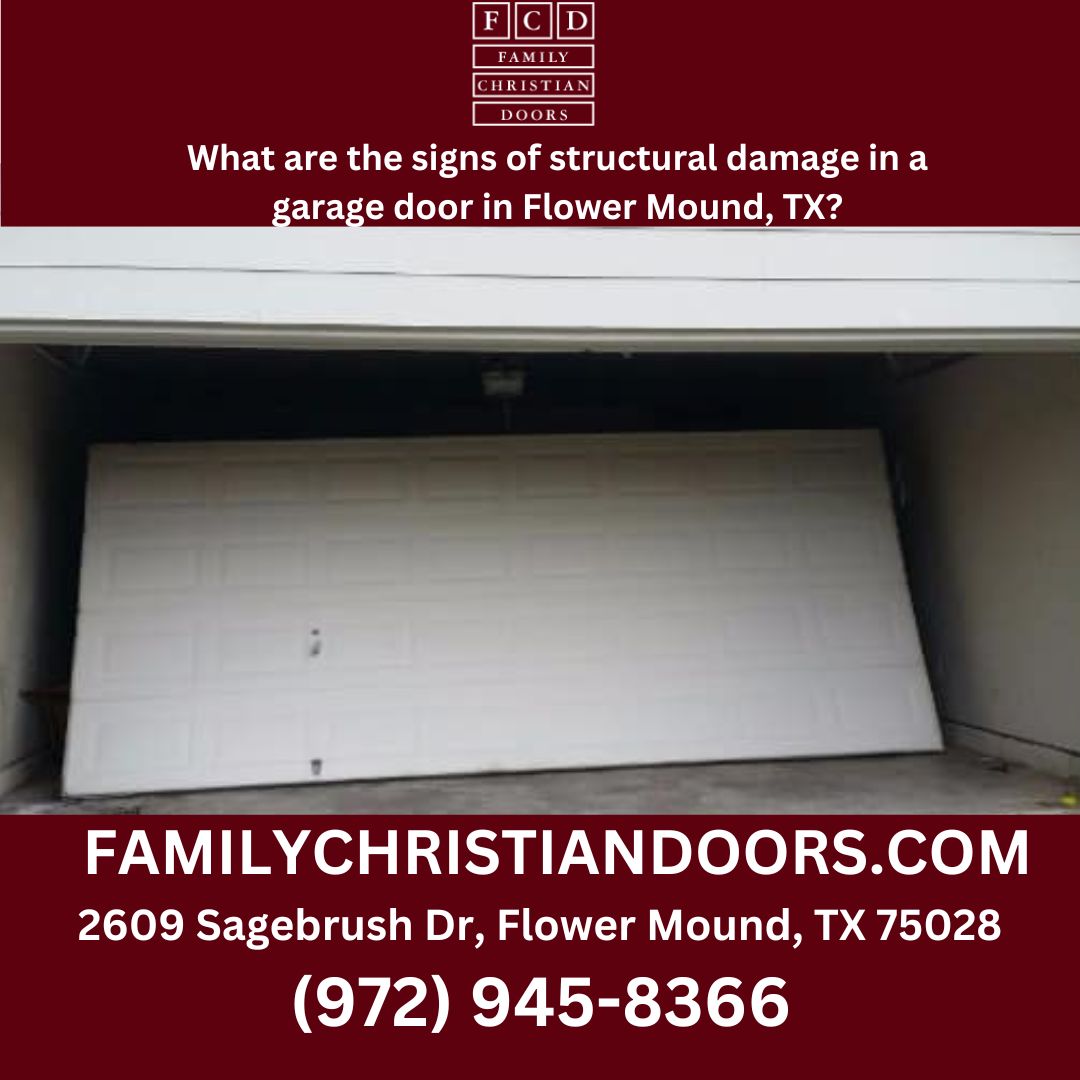
A Garage Door Off-Track situation is one of the clearest signs that structural forces are at play. While tracks can be knocked out of alignment from a direct impact, a door that repeatedly comes off its tracks, or that sits visibly askew within the track system, usually has an underlying structural cause.
When a panel is bent or the door is warped, it exerts lateral pressure on the tracks as it travels. That pressure eventually forces the rollers out of the channel. A door in this condition should not be forced back into operation without a proper evaluation. Running a structurally compromised door repeatedly can damage the tracks, the opener carriage, and the spring hardware.
How North Texas Weather Conditions Accelerate Structural Wear
Flower Mound and the broader DFW area present a climate that is genuinely hard on garage doors. The combination of intense summer heat, unpredictable spring storms, and periodic freezing temperatures in winter creates a cycle of expansion and contraction that few building materials handle without some cost over time.
Steel doors expand in high heat and contract when temperatures drop. In a North Texas summer where temperatures regularly exceed 100 degrees Fahrenheit, that thermal movement is significant. Over multiple seasons, repeated expansion and contraction can loosen panel joints, fatigue the metal around hinge attachment points, and cause gradual distortion in the door’s overall shape.
Spring hailstorms in this part of Texas are another major contributor to structural damage. Large hail can dent steel panels across the entire face of a door in a single storm. The dents may not immediately affect door performance, but they weaken the panel skin and can eventually buckle under the cyclic stress of daily operation.
For wood doors, the humidity swings between a wet spring and a dry summer are particularly damaging. Wood absorbs moisture and expands, then dries and contracts. Each cycle stresses the joinery, the finish, and the structural integrity of the panel itself. Homeowners who have wood garage doors in this area need to inspect them more frequently than those in more stable climates.
Structural Damage Warning Signs by Component
| Component | Warning Sign |
|---|---|
| Door Panels | Visible dents, cracks, bowing, or sections that no longer sit flush with adjacent panels |
| Door Frame and Jamb | Gaps between the door and frame when closed, warped framing, or sections that have separated from the wall |
| Hinges and Panel Joints | Loose or cracked hinges, joints that flex visibly during operation, or sections that appear to shift independently |
| Bottom Seal and Panel | Rotting or deteriorating bottom section, seal that no longer contacts the ground evenly, or visible daylight under a closed door |
| Track and Roller System | Rollers that jump or bind during travel, tracks that are bent or pulled away from the wall, or a door that visibly lists to one side |
When Structural Damage Requires a Professional in Flower Mound
Some garage door issues fall within the range of DIY maintenance, but structural damage is not one of them. The reason is straightforward: structural problems in a garage door involve forces and load dynamics that are difficult to evaluate without hands-on experience. What looks like a single bent panel may actually reflect a larger issue with the door’s balance, the frame, or the spring tension that has been altered by the structural shift.
A trained technician evaluates the entire system, not just the visible symptom. They can determine whether a damaged panel has affected the door’s weight distribution, whether the tracks need to be realigned, and whether any components have been prematurely worn by the structural problem. That comprehensive view is what separates an accurate diagnosis from a repair that addresses the surface issue while leaving the underlying cause unresolved.
For homeowners in Flower Mound, the practical threshold is this: if you see any of the visual or performance warning signs described in this post, and especially if you see more than one of them at the same time, schedule an evaluation. Do not continue to operate the door normally and wait for it to get worse. Structural issues tend to escalate, not stabilize on their own.
A door that grinds through structural damage today is a door that may fail entirely in the near future. Part of that evaluation includes checking whether Garage Door Roller Repair is needed, since rollers bear direct consequences when a door has been operating out of structural alignment. The evaluation itself is the most valuable step you can take, because it gives you accurate information about the actual condition of your door rather than guesswork.
Conclusion
Structural damage in a garage door takes more than one form, and it rarely announces itself all at once. Bent panels, warped frames, uneven travel, scraping sounds, and doors that leave the track are all signs that the door’s structural integrity has been compromised in some way. In a climate like Flower Mound’s, where heat, hail, and humidity place consistent stress on every part of the door system, these issues are more common than most homeowners expect.
The key takeaway is this: structural damage affects safety, security, and the long-term health of every component connected to the door. Catching it early and getting an accurate evaluation from a qualified technician is the most effective way to protect both your family and your home.
Family Christian Doors serves homeowners throughout Flower Mound and the surrounding North Texas area. If your garage door is showing any of the warning signs covered in this post, the right next step is an honest, professional assessment from a technician who knows this market and understands how Texas conditions affect garage door systems. Reach out to Family Christian Doors or visit the Flower Mound service page to learn more about how the team can help.