

When your garage door won’t open, the culprit usually comes down to one of five main issues: broken springs, opener failure, sensor problems, track misalignment, or weather interference. For homeowners in Flower Mound, a malfunctioning garage door isn’t just an inconvenience—it affects your daily routine, security, and home safety. Understanding what causes these failures helps you know whether you can troubleshoot the issue yourself or when professional help for garage door repair is necessary. In this guide, we’ll walk you through the most common reasons your garage door may be stuck and what you should do about it.
Broken Garage Door Springs
How Springs Affect Opening Ability
Garage door springs carry nearly all of the weight of your door (typically 300 to 500 pounds). These springs work by storing and releasing tension that makes it possible for your opener motor to lift the door smoothly. When a spring breaks, the entire weight suddenly transfers to the opener motor, which wasn’t designed to handle that load alone. The result is a door that won’t budge or moves only partially.
Signs Your Spring Is Damaged
A broken spring often announces itself loudly. Homeowners frequently report hearing a sharp snapping or popping noise coming from the garage, followed by the door refusing to open. Additional signs include the door sagging on one side, the door closing too quickly, or visible gaps in the spring itself. If you look at your springs and see a visible break or separation, you’re dealing with a spring failure.
Why DIY Isn’t Safe Here
Garage door springs are under extreme tension. Attempting to replace them without proper training and tools can result in serious injury or even death. These springs store enough energy to cause a spring to whip violently or the door to drop without warning. This is one situation where calling a professional isn’t optional. It’s essential for your safety.
Garage Door Opener Problems
Motor Issues That Prevent Opening
Your garage door opener is a motorized device that pulls or pushes the door up and down along a track system. When the motor fails, your remote or wall button becomes ineffective. Common motor problems include burnt-out connections, internal gear damage, or simply reaching the end of the opener’s lifespan. Older openers (10+ years) are more prone to motor failure, especially in Texas where heat can accelerate wear.
Remote Control and Battery Failures
Before assuming your opener motor is dead, check the simplest culprit: dead batteries in your remote. Many homeowners overlook this first step. If your remote has multiple buttons, test a button that previously worked. If the wall button inside your garage operates the door but the remote doesn’t, replace the batteries. If neither works, the issue likely lies with the opener itself or its wiring.
Opener Misalignment
Sometimes the opener mechanism itself falls out of alignment. This can happen due to vibration over time, accidents, or loose components within the opener assembly. You might notice the door moves but jerks or strains during operation. This misalignment prevents smooth door movement and eventually can stop the door from opening entirely.
Sensor and Safety Reverse Issues
Blocked or Misaligned Sensors
Modern garage doors have safety sensors positioned near the floor on both sides of the door opening. These infrared sensors communicate with each other, and if the beam is broken or blocked, the door won’t open as a safety measure. A single spiderweb, dust, or a parked vehicle blocking the sensor’s path can trigger this protection. Sometimes sensors become misaligned due to impact or vibration, causing them to point in slightly different directions so the beams don’t meet properly.
How Safety Sensors Work
The safety reverse system prevents garage doors from closing on people, pets, or objects. When the sensors detect an obstruction, they send a signal to the opener to stop or reverse the door. However, this same system can prevent the door from opening if the sensors aren’t communicating correctly. A simple test involves waving your hand between the sensors while attempting to open the door. If the door refuses to move, sensor problems are likely at play.
Sensor Replacement Timing
Sensors typically last 5 to 10 years before degrading or failing. If your garage is older, sensor failure could be your issue. Many newer sensor problems stem from wiring corrosion in Flower Mound’s humidity, loose connections, or sensors that have been knocked out of alignment by door vibration or accidental contact.
Other Common Culprits
Weather-Related Jamming
Texas weather can be extreme. Intense heat causes metal components to expand, while humidity can lead to rust and corrosion. Heavy rain can swell wooden door panels, making them stick in their tracks. In rare cases of ice storms, frozen tracks can temporarily lock up your door. Many Flower Mound homeowners find their doors stick during the summer heat or after heavy rains.
Off-Track Doors
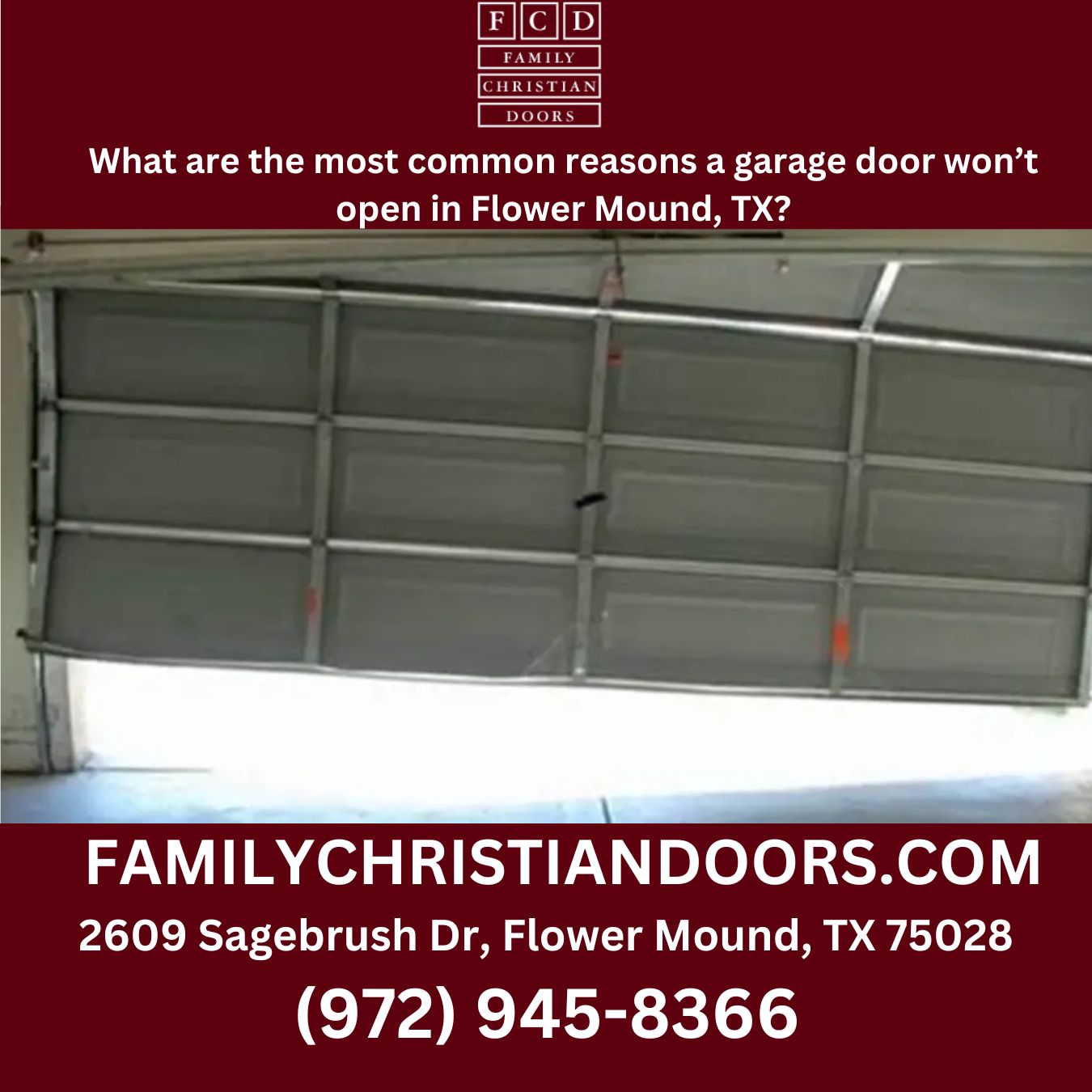
Garage door tracks guide the door’s movement. If the door becomes derailed or the tracks bend, the door won’t open smoothly or at all. This can result from impact, poor maintenance, or accumulated debris in the tracks. You might see the door visibly misaligned in its frame or hear grinding noises during operation.
Lock Engagement Problems
Some garage doors have manual locks or deadbolts that need to be disengaged before the door can open. If you’ve recently locked your door and forgot to unlock it, this could be your issue. Check that the lock lever is in the “unlock” position. Additionally, stuck locks due to rust or corrosion can prevent opening.
| Issue Type | Details |
| Broken Springs | Account for roughly 40% of all garage door failures and require professional replacement for safety |
| Sensor Problems | Misalignment or blockage is the second most common issue, often fixable by clearing debris or realigning |
| Opener Motor Failure | Garage door openers typically fail after 10 to 15 years of regular use due to motor wear and tear |
| Weather and Corrosion | Texas heat and humidity accelerate corrosion in garage door hardware and track systems over time |
| Preventative Maintenance | Regular maintenance extends garage door lifespan by 5 to 10 years and prevents emergency breakdowns |
What to Do When Your Garage Door Won’t Open
Safe Steps Homeowners Can Take
If your garage door won’t open, start with these safe troubleshooting steps. First, check the wall button and remote for power issues. Verify that nothing is blocking the safety sensors, and wipe them clean with a dry cloth. Look at your springs visually from a safe distance to check for visible breaks. Test the manual release handle on the opener to see if you can manually move the door. Never attempt to force the door open by pulling or pushing, as this can cause injury or further damage. If the door is completely immobilized and you need access to your garage, the manual release is your safest option, though it requires careful handling.
When to Call a Professional
Call a professional repair service immediately if you notice broken springs, your opener motor has failed, the door is off its tracks, or you’re uncomfortable troubleshooting on your own. A professional technician has the expertise, tools, and insurance to handle dangerous components like springs safely. In Flower Mound, professional garage door repair typically addresses these issues quickly, restoring your door to full functionality and ensuring your home remains secure.
Conclusion
A garage door that won’t open can stem from broken springs, opener failure, sensor problems, weather-related jamming, or track misalignment. While some issues like dead remote batteries or blocked sensors are quick fixes, others like broken springs require professional intervention for safety reasons. Understanding the root cause helps you decide whether to troubleshoot yourself or call in an expert. Family Christian Doors serves Flower Mound homeowners with reliable garage door repair and maintenance services. If you’re dealing with a garage door that won’t open, reach out to Family Christian Doors to schedule a service appointment and get your door working safely again. Visit their website to learn more about their services and how they can help restore your garage door to proper working condition.