

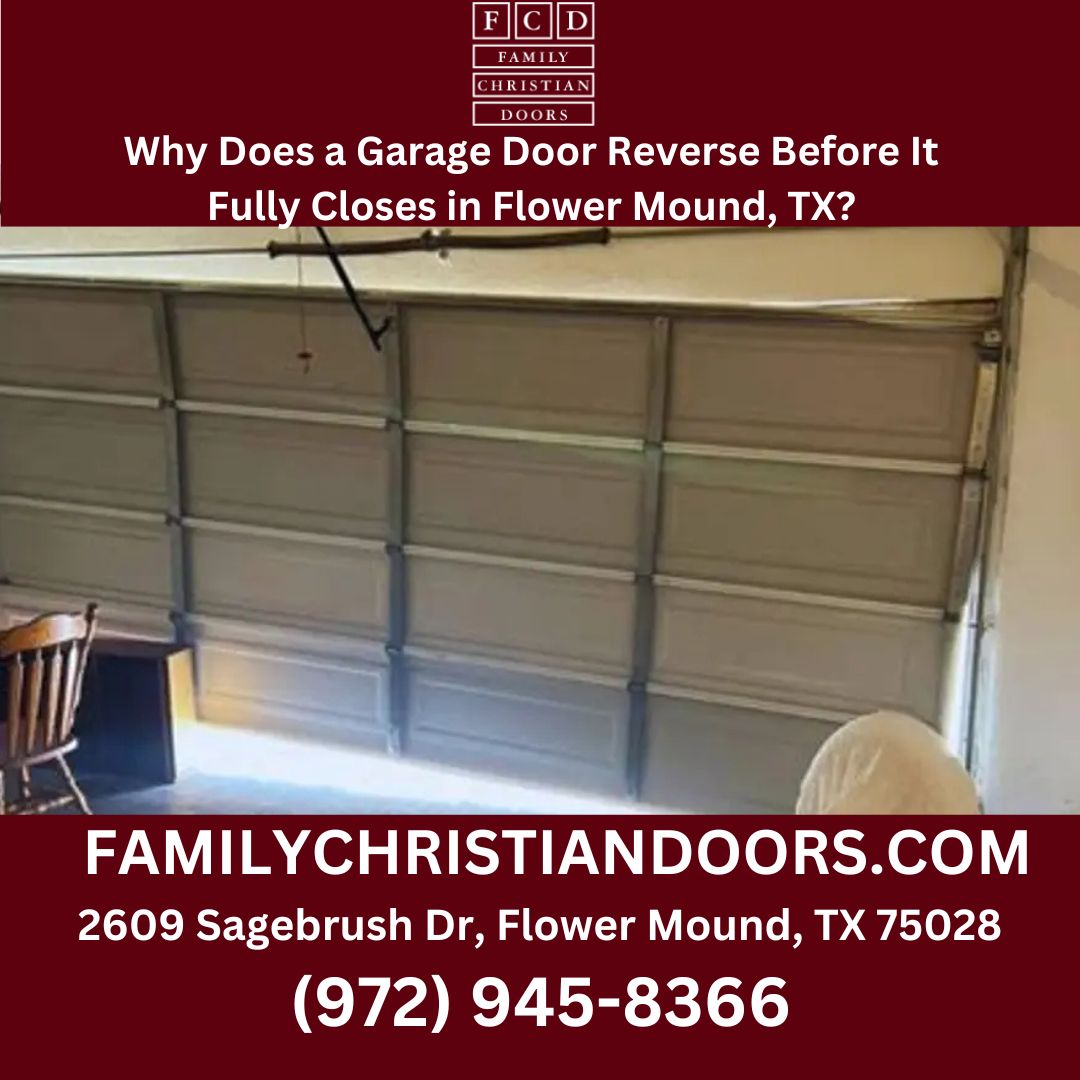
A garage door most often reverses before fully closing because its safety system detects something it interprets as an obstruction, whether that is a misaligned photo eye sensor, an incorrect limit setting, or a worn mechanical part like a roller or spring. This built in response is designed to protect people, pets, and vehicles from being struck by a closing door. The problem is that the system cannot always tell the difference between a real obstruction and a false signal caused by a component that needs attention. For Flower Mound homeowners and business owners, this is one of the most common service calls, and it tends to show up more often during seasonal temperature swings that affect sensor alignment and metal hardware. If your door will not close all the way, calling for professional garage door repair sooner rather than later helps avoid a security gap and prevents added strain on the opener motor.

What Causes a Garage Door to Reverse Before Closing
Several distinct issues can trigger a reversal, and each one leaves its own set of clues. Identifying which component is responsible is the first step toward a lasting fix rather than a temporary workaround.
Misaligned or Blocked Safety Sensors
Two small photo eye sensors sit near the bottom of the garage door tracks, sending an invisible beam across the opening. If that beam is interrupted or the sensors have drifted out of alignment, even slightly, the opener assumes something is in the door’s path and reverses. Dust, spider webs, and small vibrations from daily use are common culprits in Flower Mound garages. When cleaning and realignment do not resolve the issue, a Safety Sensor Out of Adjustment often needs a technician’s attention to correct the wiring and calibration.
Worn Rollers, Tracks, or Cables
As rollers wear down or tracks accumulate debris and minor damage, the door travels less smoothly and creates resistance the opener reads as an obstruction. A cable that has slipped or frayed can produce a similar effect by pulling the door unevenly through the last few inches of travel. Regular Garage Door Roller Repair keeps this friction from building up and triggering false reversals.
Opener Force and Limit Settings Out of Adjustment
Every opener has a limit setting that tells it exactly how far the door should travel before stopping, along with a force setting that determines how much resistance the motor will tolerate before reversing. When either setting drifts out of calibration, often after years of use or a recent repair, the door can reverse at the same point every time even though nothing is physically blocking it.
Spring Tension Problems
Torsion springs counterbalance the weight of the door so the opener can guide it rather than lift it entirely on its own. When a spring loses tension, the opener has to work harder than it is rated for, and the force sensor interprets that extra strain as an obstruction. A Broken Garage Door Spring is not something to test or adjust without training, since these components carry significant tension.
How Flower Mound’s Climate Adds to the Problem
North Texas weather patterns place extra stress on garage door components throughout the year, and that stress often shows up first as a reversal problem.
Thermal Cycling and Sensor Alignment
Flower Mound summers bring long stretches of intense heat followed by cooler evenings, and that daily thermal cycling causes metal brackets and mounting hardware to expand and contract. Over time, this movement can nudge sensor brackets out of true alignment even when nothing appears visibly wrong.
Storm Season Debris and Track Obstructions
Spring storm season across the DFW area brings wind driven debris, leaves, and grit that can settle into the door tracks. Combined with the clay soil common to the region, which shifts slightly with moisture changes and can affect slab and foundation alignment near the garage opening, tracks can drift just enough to interfere with smooth travel.
When to DIY vs. When to Call a Professional
Some checks are safe for a homeowner or facility manager to perform, while others involve tensioned components or calibrated settings best left to a trained technician.
| Safe to Check Yourself | Call a Professional For |
|---|---|
| Wipe sensor lenses and confirm alignment | Sensor replacement or wiring repair |
| Clear visible debris from the tracks | Bent or damaged track realignment |
| Note the exact point where reversal happens | Force and limit switch adjustment |
| Visually inspect rollers for wear or cracking | Roller or cable replacement |
| Listen for grinding or straining during travel | Spring tension inspection or replacement |
Residential and Commercial Considerations
Homeowner Safety Priorities
For residential properties, a reversing door is often the first sign that a safety system is doing its job, but persistent reversal without an obstruction should not be ignored. Families with children or pets moving through the garage benefit most from having the actual cause diagnosed quickly rather than adjusting settings by trial and error.
Commercial Door Reliability and Downtime Risk
Commercial garage doors cycle far more often than residential doors and typically carry more weight, which means worn components reach failure faster. A door that will not close at a business location creates a security and liability concern until it is resolved, making prompt diagnosis a priority rather than something to defer.
Preventing Reversal Issues Going Forward
Routine attention to sensors, tracks, and hardware goes a long way toward preventing reversal problems before they start. Seasonal inspections timed around Flower Mound’s heat and storm patterns catch small issues while they are still simple to correct. For openers that are older or have needed repeated adjustments, a Garage Door Opener Replacement can offer more reliable force and sensor calibration than continuing to patch an aging unit.
A garage door that reverses before fully closing is almost always communicating a specific, identifiable issue, whether that is a sensor, a mechanical component, or a calibration setting. Matching the symptom to its actual cause prevents unnecessary guesswork and protects both the door and the people who rely on it every day. If the cause is not obvious after a basic inspection, the team at Family Christian Doors is ready to help diagnose and correct the issue for homes and businesses throughout Flower Mound. Visit familychristiandoors.com/garage-door-repair-flower-mound/ to learn more or schedule a visit.