

Yes, worn rollers can damage a garage door, and the damage rarely stays confined to the rollers themselves. If your door has started grinding, shuddering, or hesitating partway through its travel, the rollers are among the first components a garage door repair technician will inspect. They carry the entire weight of the door through every cycle. When the bearings dry out or the stems begin to wobble, that stress transfers into the tracks, lift cables, hinges, and eventually the opener. Homeowners in Flower Mound usually notice the sound long before they understand what it is costing them. Knowing what worn rollers do to the rest of the system helps you act while a small correction is still a small correction.
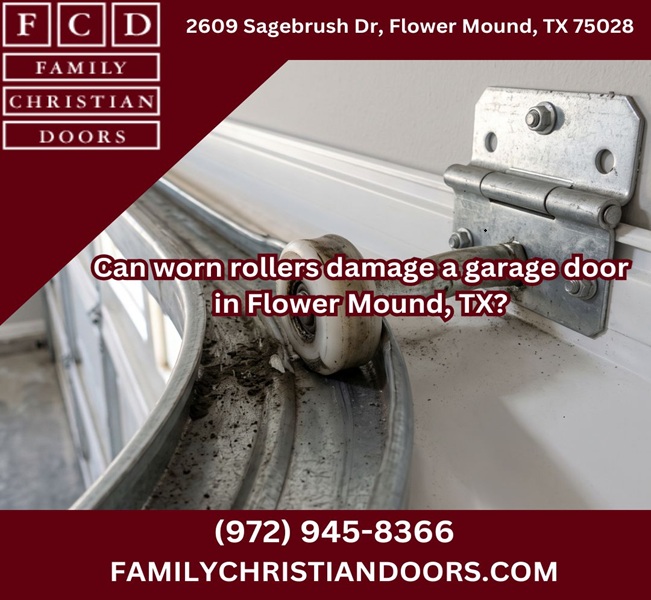
How Worn Rollers Damage the Rest of the Garage Door System
A residential garage door weighs between one hundred thirty and three hundred fifty pounds, and ten rollers typically carry that load. When two or three stop rotating cleanly, the rest absorb the difference and the door no longer moves as a balanced unit.
The Chain Reaction: Roller to Track to Cable to Opener
The sequence is predictable. A roller with a failing bearing drags rather than rolls, scoring the inside face of the track and creating a rough surface that accelerates wear on every roller passing over it. As friction climbs, one side of the door lags behind the other. That imbalance puts uneven tension on the lift cables and allows slack to develop on the drum, which is how a Cable off Garage Door usually begins. Meanwhile the opener compensates, pulling harder than it was engineered to pull.
Why Roller Damage Accelerates Instead of Staying Contained
Garage door systems have little tolerance for asymmetry. A door out of balance by even a small margin loads the hinges and end bearing plates in ways they were never designed for. This is why rollers that seemed merely noisy in March can produce a bent panel by August. Failure compounds, because each damaged component makes the next work harder.
Why Rollers Wear Out Faster in Flower Mound’s Climate
North Texas is hard on garage door hardware. Rollers here reach the end of their service life sooner than identical rollers in a milder climate.
Summer Attic Heat and Lubricant Breakdown
An attached garage in Flower Mound can hold interior temperatures well above one hundred twenty degrees on a July afternoon, and the space above the door track runs hotter still. Bearing grease thins under sustained heat and migrates away from the races where it is needed. Once that film is gone, steel contacts steel. Thermal cycling compounds it, since metal expanding through the afternoon and contracting overnight works lubricant out of the assembly faster than most homeowners expect.
Humidity, Storm Debris, and Corrosion Inside the Bearing Race
Spring storm season brings a different problem. Humid air carries moisture into the bearing housing, and moisture against unprotected steel produces surface corrosion. Add the fine grit North Texas wind drives under the door during a storm and you have an abrasive paste working into the bearing. Homes near open land or active construction see this accelerate noticeably.
Nylon vs. Steel Rollers in North Texas Conditions
Steel rollers handle load well and tolerate heat, but they transmit noise and corrode once the sealed bearing fails. Nylon rollers with sealed bearings run quieter and resist humidity, though lower grade nylon turns brittle after years of heat exposure. For an attached garage sharing a wall with living space, sealed nylon on a ten or thirteen ball bearing stem is the specification most often chosen during Garage Door Roller Repair here.
Roller Wear Stages and the Damage Each Stage Causes
Roller failure moves through recognizable stages, and identifying yours tells you how urgent the situation is.
| Roller Wear Stage | Damage It Causes |
|---|---|
| Stage 1: Early bearing dryness | Squealing on travel, minor drag, slightly uneven movement |
| Stage 2: Flat spots and stem play | Track scoring, jerky operation, visible wobble at the hinge |
| Stage 3: Seized or cracked roller | Cable slack on the drum, opener strain, door binding mid travel |
| Stage 4: Roller leaves the track | Off track door, bent panel, damaged track flange |
| Stage 5: System level failure | Multi component damage, unsafe door, motor or gear failure |
Warning Signs Homeowners Notice Before Major Damage Shows Up
Most doors give clear notice, but the signals arrive gradually and are easy to dismiss.
What a Failing Roller Sounds Like
- A high pitched squeal repeating at the same point in the door’s travel
- Grinding or scraping that changes pitch as the door speeds up
- Rhythmic thumping, which usually indicates a flat spot on a nylon roller
- Sudden pops as a bound roller releases and catches up
What a Failing Roller Looks Like on the Track
Bright metal streaks inside the track indicate a roller sliding rather than rotating. Check whether any stem sits at an angle instead of square to the hinge. Cracked nylon, a missing bearing cap, or loose ball bearings at the bottom of the track are late stage indicators needing prompt attention.
A Two-Minute Roller Check You Can Do From the Ground
With the door closed and the opener disconnected, check that each roller sits fully seated and square where it meets the track. Gently rock one by hand; noticeable side to side play means the stem or bearing is worn. Never work near the bottom brackets, which are under spring tension and belong to a trained technician.
What Happens When Worn Rollers Go Unaddressed
Off-Track Doors and Panel Distortion
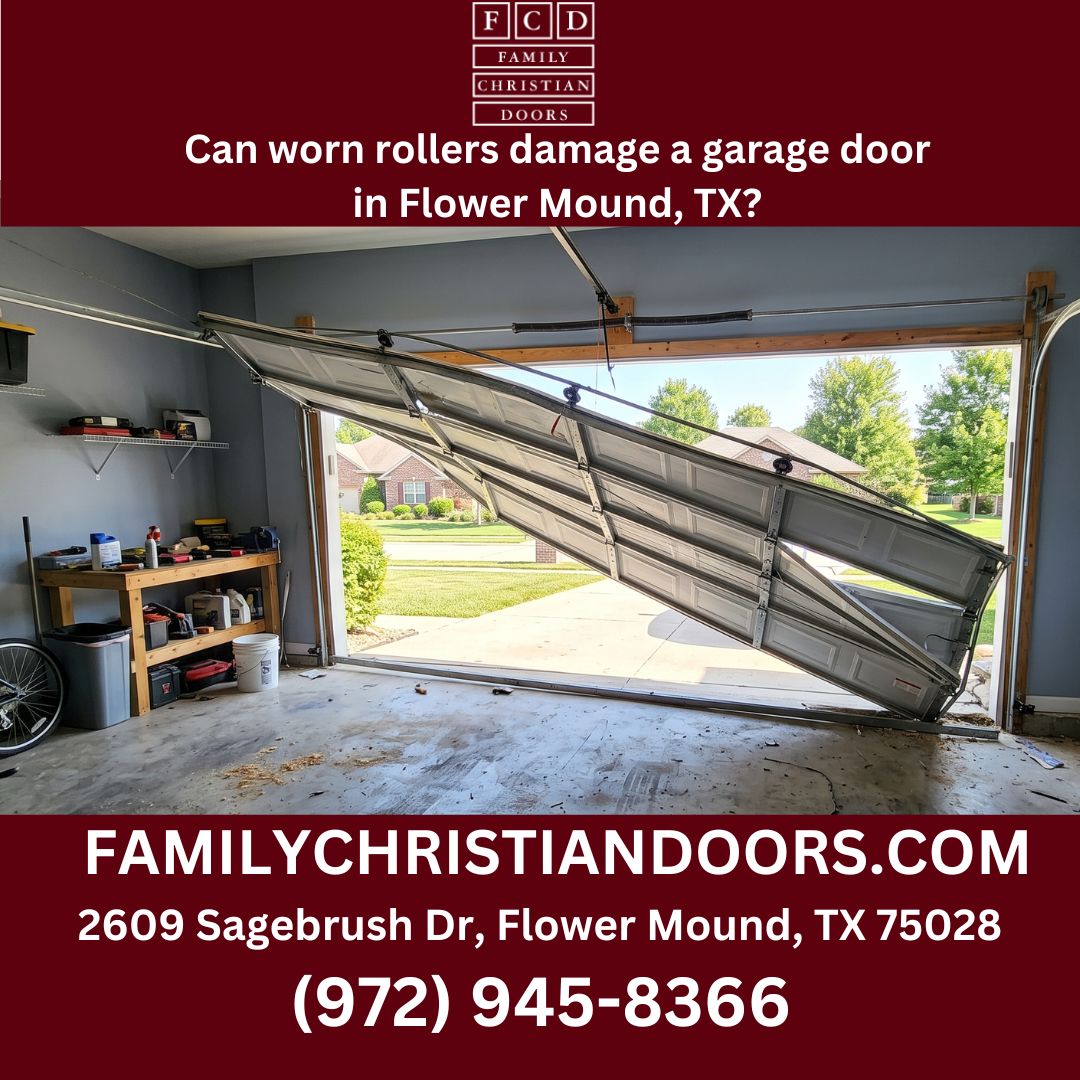
When a roller exits the track, the door’s weight shifts to whatever is left holding it. Panels twist, hinges tear out of the steel skin, and the track often bends beyond reuse. What began as worn rollers becomes a repair spanning a Bent Garage Door Panel, hardware, and track.
Opener Strain and Premature Motor Wear
Openers are sized to move a balanced door, not to overcome friction. Sustained resistance wears the drive gear, overheats the motor, and repeatedly trips the safety reverse. Many opener replacements here trace back to months of the unit fighting hardware that should have been serviced.
Overhead Doors at Flower Mound Businesses
Commercial doors compound the problem through cycle volume. A warehouse door cycling forty times daily accumulates wear in months rather than years, and a stuck door at a loading dock stops the operation entirely.
Protecting Your Rollers Through North Texas Heat and Storm Season
Maintenance Habits That Extend Roller Life
- Lubricate rollers and hinges twice yearly with a lithium or silicone based product, before summer and before winter
- Never lubricate the track itself, since it attracts grit and accelerates wear
- Clear debris from the bottom track after storms
- Address changes in operating sound early
When Wear Has Moved Beyond the Rollers Themselves
If the door binds, sits crooked, or shows slack cable, replacing rollers alone will not resolve it. Tracks, cables, balance, and any Garage Door Off-Track damage need evaluation together. A professional inspection identifies what remains serviceable and what has been compromised.
The Bottom Line on Worn Rollers in Flower Mound
Worn rollers can absolutely damage a garage door, and in this climate they tend to do so faster than homeowners anticipate. Heat breaks down bearing lubricant, humidity and storm grit finish the job, and the resulting friction spreads into tracks, cables, and the opener. Rollers do announce themselves clearly, and a noise that was not there last season is worth acting on. If your door has started sounding or moving differently, Family Christian Doors can inspect the full system and tell you where things stand. Visit familychristiandoors.com/garage-door-repair-flower-mound to arrange an inspection.