

Yes, replacing a garage door can meaningfully lower your maintenance needs, especially once the existing system has aged past the point where individual repairs keep piling up. In Flower Mound, TX, where summer heat, humidity, and sudden storm swings put constant stress on moving parts, an older door often reaches a stage where the springs, rollers, cables, and opener all begin wearing out around the same time. Homeowners then schedule garage door repair more often, not because of one bad part, but because the whole system is tired. Knowing whether ongoing upkeep or a full replacement is the smarter path matters, since the right choice affects your time, your safety, and how reliably the door works. Family Christian Doors sees this pattern often across North Texas homes.

The short answer for Flower Mound homeowners
For most aging doors, the honest answer is a qualified yes. A new garage door lowers maintenance because it replaces every worn part at once with factory-balanced components rather than patching one failing piece at a time. Upkeep is rarely a single dramatic breakdown. It is the slow buildup of wear across dozens of moving parts that have cycled open and closed thousands of times. Replace the door, and you reset that clock with a system built to work as a balanced whole.
Why aging garage doors demand more upkeep over time
A garage door is among the largest and most-used moving systems in your home, and over a decade of daily use, its demands quietly climb.
Wear compounds across springs, rollers, cables, and the opener
No single part of a garage door wears in isolation. Springs lose tension gradually, which forces the opener to work harder. As the opener strains, the gears and sprocket wear faster, and rollers that have flattened or seized create friction that stresses the tracks and cables, a frequent trigger for Garage Door Roller Repair. This chain reaction is why older doors need attention so often. Fixing one worn component shifts the load onto the next weakest part, and a few months later something else gives out. That game of whack-a-mole is a genuine symptom of a system nearing the end of its service life.
How North Texas heat cycling and humidity accelerate fatigue
The climate in Flower Mound is hard on hardware. Long summers push attached garage temperatures well past comfortable levels, causing metal to expand and lubricants to thin, while winter cold snaps contract those same parts. This repeated expansion and contraction loosens fasteners, dries out rollers, and stresses spring coils. Add the humidity that rolls across North Texas and you introduce corrosion on cables, hinges, and springs, and rusted metal loses the strength and flexibility that keeps those parts serviceable.
What a new garage door actually changes
Replacing the door does more than swap the panels you see from the street. It renews the mechanical system behind them.
Factory-balanced systems and modern materials
A Residential Garage Door Replacement arrives as an engineered set of matched components. The springs are sized to the exact weight of the door, the tracks are straight, and the rollers, hinges, and cables are new at once. That balance matters, because a properly counterweighted door places far less strain on the opener and every supporting part. Modern materials help too, with weather seals, insulation, and corrosion-resistant hardware made for the temperature swings and moisture of a North Texas year.
Fewer failure points from day one
The maintenance-reduction benefit comes down to simple math. An aging door has many parts near the end of their usefulness at once, so any one of them can fail at any time. A new door resets all of those parts to zero wear together. For the first several years, fewer components are likely to fail, which means fewer service calls. You are not eliminating upkeep entirely, but you are sharply reducing how often something goes wrong.
Repair-and-maintain vs. replace: reading the signals
How do you know which stage your door is in? The signals below help you read whether you are facing a routine repair or a door at the end of its dependable life. Treat it as a starting point, since a hands-on inspection tells the full story:
| Maintenance Signal You Are Seeing | What It Typically Points Toward |
|---|---|
| Repeated repairs on different parts within a single year | A system-wide decline that often favors replacement |
| Rising noise, shaking, or jerky movement during operation | Worn rollers and strained hardware nearing end of life |
| A single isolated fault, such as one broken spring | A targeted repair that keeps the current door viable |
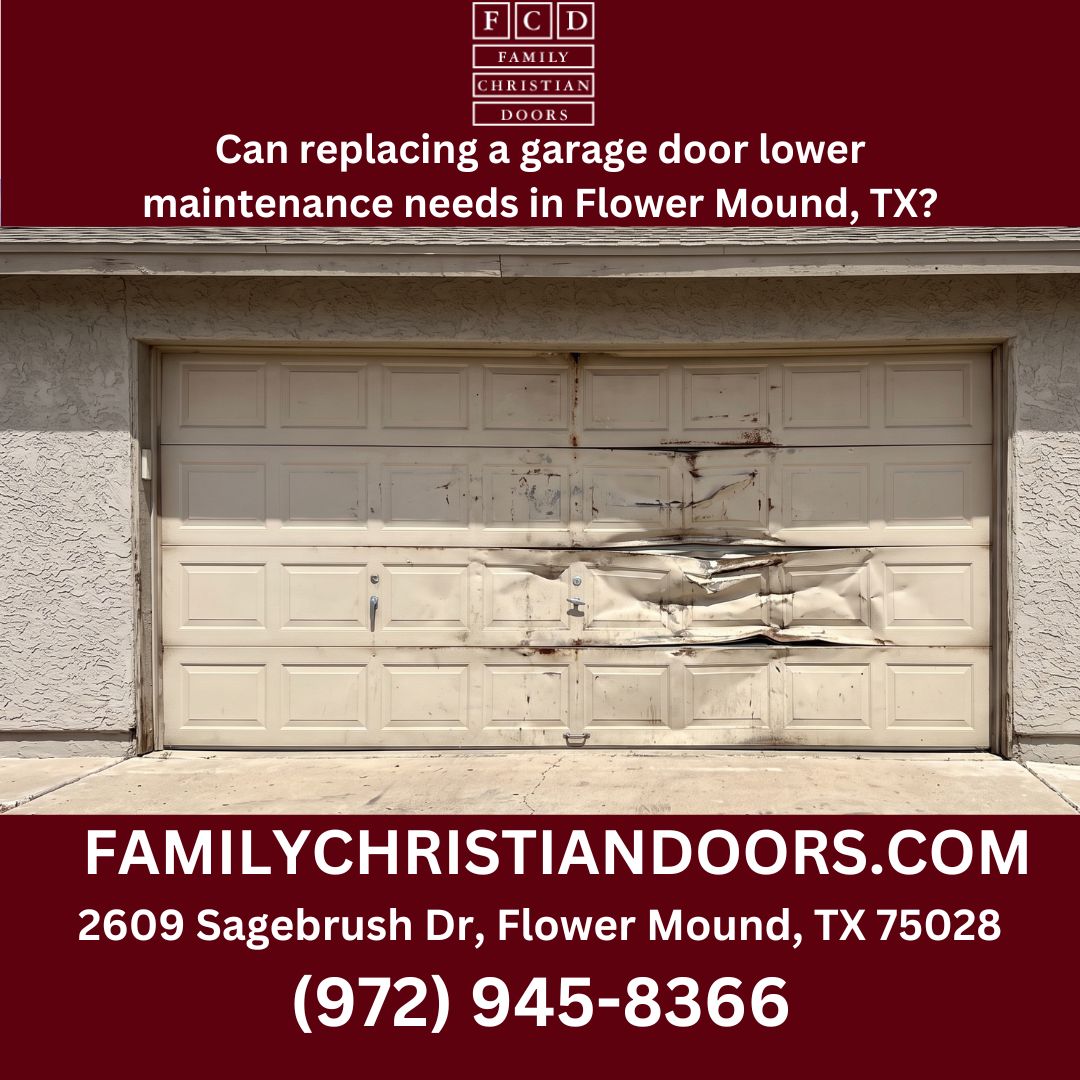
| Visible rust, rot, or dents across multiple panels | Structural and cosmetic decline pointing toward a new door |
| Door is roughly fifteen years or older with heavy use | Replacement worth serious consideration for reliability |
The Flower Mound climate factor
Maintenance frequency in Flower Mound is shaped by the DFW climate. Our seasons swing widely, from triple-digit summer afternoons to the occasional hard freeze, and each swing forces metal to expand and contract, loosening what was once tight. Spring and early summer bring severe storms, and high winds and pressure changes load a garage door in ways daily use never does. A door already weakened by age is more likely to bend, misalign, or lose a cable under that stress, so storm season exposes weaknesses a newer door would shrug off.
When replacement makes sense, and when repair still does
Replacement is not always the answer, and a trustworthy provider will tell you so. The right call depends on the pattern you are seeing rather than any single event.
Repair and routine service usually make the most sense when:
- The door is relatively young and generally reliable
- You face one isolated issue, such as a broken spring or misaligned sensor
- The panels and structure are still sound
- Regular tune-ups keep the system running quietly
Replacement tends to be the smarter investment when:
- Repairs stack up across different parts month after month
- The door shows widespread rust, rot, or dented panels
- The system is well past a decade of heavy daily use
- Safety features are outdated or the door struggles to stay balanced
Matching the fix, whether routine Garage Door Opener Service and Repairs or a full replacement, to the true condition of the door is where experience matters most, and it separates a smart repair from repeated spending on a door that will not last.
Getting a straight assessment in Flower Mound
The most reliable way to answer the maintenance question for your specific door is a professional inspection. A trained technician can measure spring tension, check track alignment, test the opener to see whether it needs a Garage Door Opener Replacement, and evaluate the panels and hardware. That assessment turns guesswork into a clear recommendation, whether a tune-up, a targeted repair, or a full replacement. Family Christian Doors has worked with North Texas homeowners long enough to recognize when a door has real life left and when replacement will spare you an endless cycle of service calls.
The bottom line for Flower Mound homeowners
So, can replacing a garage door lower maintenance needs in Flower Mound? For an aging, wear-prone door, the answer is a clear yes. A new door replaces every tired component at once, restores factory balance, and adds materials built for a North Texas climate, which together mean fewer breakdowns ahead. For a younger door with an isolated problem, thoughtful repair remains the smarter path, so the key is knowing which stage your door is in. If you are tired of chasing one repair after another, reach out to Family Christian Doors for a straightforward assessment and find out whether upkeep or replacement is the right move for your home.