

Structural damage in your garage door can range from minor cosmetic issues to serious safety hazards that require immediate professional attention. Recognizing these warning signs early can save you from costly repairs and protect your family from potential accidents. As an Arlington homeowner, you face unique challenges from Texas heat, humidity, and severe weather that accelerate wear on garage door components. This guide walks you through the most common structural damage indicators so you know exactly what to look for and when to call a professional. Understanding these signs helps you avoid DIY mistakes and ensures your door receives proper garage door repair evaluation from experienced technicians.
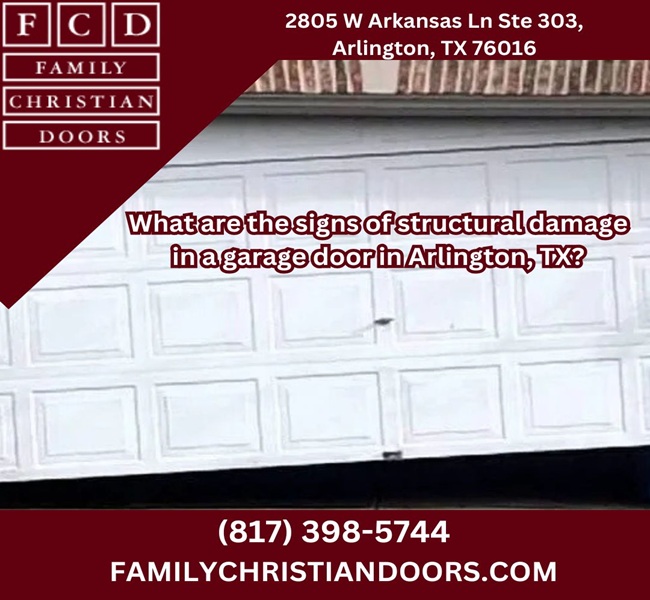
Visible Cracks and Warping in Door Panels
One of the most obvious indicators of structural compromise is visible cracking across your door panels. These cracks tell a story about what is happening inside the door frame and panel structure.
Horizontal and Vertical Panel Cracks
What causes cracking in garage doors
Garage door panels experience constant stress from opening and closing cycles, temperature fluctuations, and impacts. In Arlington, the intense Texas sun heats panels during the day while nighttime cooling creates contraction and expansion. Over months and years, this thermal cycling weakens panel integrity. Panel cracking also results from direct impact, poor installation, or manufacturing defects that create stress points.
Why cracks indicate deeper structural issues
A single horizontal crack suggests the panel is no longer distributing force evenly across its surface. This means adjacent panels and the entire door assembly must compensate by bearing extra load. Vertical cracks, especially those running the full height of a panel, indicate the panel has lost structural integrity and can no longer maintain alignment with other panels. Both types signal that your door is working harder than it should and that professional evaluation is necessary.
Section Bowing or Panel Warping
How to spot warping from the outside
Stand back and look at your closed garage door from the driveway. The surface should appear flat and uniform. If any panel appears to bulge outward or cave inward, that is warping. Run your hand along the door surface (carefully, avoiding sharp edges) to feel for areas that don’t align flush. Warping becomes especially visible on cloudy days when you can see light and shadow play across the door surface.
Why warping compromises door integrity
Warped sections no longer support weight properly and create uneven gaps where weatherstripping no longer seals. This allows pests, dust, and water to enter your garage. More importantly, warped panels force the opener motor to work harder, accelerating wear on springs, cables, and the opener itself. A warped door is a cascading failure waiting to spread to other components.
When panels show these signs of structural compromise, issues like a bent garage door panel can significantly impact how your entire door system functions and requires prompt professional assessment.
Rust and Corrosion from Arlington’s Humidity
Arlington’s subtropical climate with high humidity and occasional coastal air intrusion creates an ideal environment for rust formation on metal garage door components.
Surface Rust vs. Structural Corrosion
How Texas humidity accelerates rust formation
Surface rust appears as orange or reddish discoloration on steel panels and hardware. This develops when moisture sits on bare metal for extended periods. Arlington’s summer humidity regularly exceeds 70 percent, and morning dew leaves water droplets on garage doors overnight. Unlike dry climates where metal can stay exposed without rusting for months, Arlington’s moisture content causes surface rust to appear within weeks on any uncoated steel.
Why corrosion weakens door structure
Surface rust that penetrates deeper becomes structural corrosion, where rust eats through the metal itself. Once corrosion reaches this stage, the metal thickness decreases and the panel loses load-bearing capacity. Corroded metal becomes brittle and prone to cracking. A door that has been corroding internally may look acceptable from the outside while its structural strength has been significantly compromised.
Rust Along Bottom Seals and Track Areas
Why these areas corrode first
The bottom of your garage door and track areas collect standing water, dirt, and debris. Rain runoff flows downward and pools at the bottom seal. This constant wet environment accelerates rust formation. Track areas trap moisture and prevent air circulation. These zones experience the longest water exposure compared to other door sections.
What rust in these zones signals
Heavy rust along the bottom seal indicates water intrusion and poor drainage around your garage foundation. Rust in the tracks signals that moisture has been present for an extended period. These signs suggest your door has been battling environmental moisture for months or longer, and structural damage may be progressing elsewhere on the door that you cannot yet see.
Misalignment and Binding Issues
A properly functioning garage door should operate smoothly from fully open to fully closed. Any hesitation, sticking, or uneven movement indicates structural or mechanical problems.
Door Not Closing Evenly or Sticking
How to identify binding spots
Close your door slowly and listen carefully. If you hear grinding, scraping, or the motor struggling at specific points during the closing cycle, binding is occurring. Watch the top corners of the door as it closes. If one side descends faster than the other, one side is binding and resisting closure. Binding usually occurs at the same point during each cycle, making it predictable.
What structural damage causes binding
Misaligned panels, bent tracks, or warped sections create friction points where the door cannot move freely. The door is literally fighting against itself. This friction generates heat in the tracks and opener system, causing premature wear. Binding indicates that your door’s panel alignment has been compromised by impact, poor installation, or structural failure.
Visible Gaps Between Door and Frame
Measuring gap irregularities
With your door fully closed, examine the gaps between the door and the fixed frame around it. These gaps should be uniform all the way around. Use a ruler or measuring tape to check several points along each side. If gaps vary by more than one quarter inch between the top, sides, and bottom, you have alignment problems. Larger gaps on one side indicate the door is pulling away from that side of the frame.
What uneven gaps indicate
Uneven gaps mean your door is no longer tracking straight in its frame. This results from structural damage to the panels themselves or the supporting frame structure. When the door pulls away on one side, weather sealing fails, and the opener motor compensates by pushing harder. This creates a chain reaction of stress on all connected components.
| Damage Type | Warning Sign to Watch For |
| Panel Cracks | Visible horizontal or vertical fractures running across panels, especially widening cracks that worsen weekly |
| Rust Formation | Orange or brown discoloration on metal surfaces, flaking paint, or pitted metal texture indicating corrosion |
| Track Misalignment | Door sticking at specific points during opening or closing, grinding sounds, or one side moving faster than the other |
| Hardware Failure | Frayed cables, broken springs, bent brackets, visible separation of components, or rattling sounds during operation |
| Weather Impact | Dents from hail, bent panels from vehicle contact, crumpled sections from storm debris, or creasing along seams |
Spring Damage and Hardware Failure
Springs and cables are the hardest working components in your garage door system, and they wear out predictably. Spring damage is one of the most critical safety concerns affecting garage doors.
Broken or Fraying Torsion Springs
Visual signs of spring failure
A broken torsion spring is immediately obvious: you will see a gap in the spring above your door where it should be coiled. A spring that has partially failed may sag or appear unevenly wound. Fraying occurs when the spring coating deteriorates and you can see exposed wire strands. Springs may also show darkening or discoloration from heat stress.
Why spring damage is a safety indicator
Torsion springs counterbalance the weight of your door, usually 300 to 500 pounds. A broken spring means your opener must lift the full weight without assistance. This strains the motor and cable system. More importantly, a partially failed spring can snap suddenly under load, creating a dangerous situation. A broken garage door spring is never something to ignore or attempt to fix yourself, as this is the single most critical safety issue requiring professional attention.
Damaged Brackets and Cable Deterioration
Where to look for bracket damage
Brackets attach the spring and cable system to the door frame. Inspect the metal brackets on either side of the spring assembly above your door. Bent or cracked brackets indicate impact or excessive force. Cables should be smooth and tightly wound. Frayed cables, loose strands, or separation from the drum indicate imminent failure.
How cable fraying signals structural issues
Cable deterioration accelerates when springs are failing because the door is no longer balanced. The remaining spring or opener motor must work harder, creating extra tension on cables. Frayed cables cannot grip the drum properly, leading to slipping and uneven door movement. This creates the binding and misalignment issues described earlier.
Frame and Track Structural Compromise
Your garage door frame and tracks are the skeleton that keeps everything aligned. Damage here affects every other component.
Bent or Misaligned Tracks
How to spot track bending
Look inside your garage at the metal tracks that run vertically on each side of the door opening. They should be perfectly straight. Any visible bends, dents, or flat spots indicate the track has been damaged. Run your finger gently along the track surface. You should feel smooth metal. Bumps or gouges mean the track is no longer uniform.
What bent tracks indicate about door structure
Bent tracks prevent rollers from moving smoothly, causing the binding and sticking described earlier. Tracks bend from direct impact, poor installation, or the door itself warping and pulling the track out of shape. When a track is bent, the entire door structure is being forced into an unnatural position with each opening cycle. If your door is experiencing track problems, issues like a garage door off-track situation can develop quickly and require immediate professional correction.
Cracked or Separating Door Frame
Identifying frame separation from inside and outside
From outside, look at the corners where the door frame meets your house structure. Cracks along these seams indicate the frame is separating. Inside your garage, check for light showing through gaps around the door frame. These gaps should not exist. If visible, the frame is moving or settling.
Why frame damage is critical
Your door frame is attached to your house structure. Frame damage suggests your garage opening itself may have shifted or settled. This is a foundation or structural issue that extends beyond just the door. Professional evaluation becomes essential because frame damage often indicates problems with your garage structure itself.
Impact Damage from Weather Events
Arlington experiences significant weather including hail storms, high winds, and occasional ice damage. These events create impact damage that may not be immediately obvious.
Hail Dents and Structural Indentation
When dents indicate deeper structural damage
Small surface dents from hail are cosmetic and common after severe storms. However, deep indentations that visibly deform the panel shape indicate the impact was severe enough to affect the panel structure. If multiple dents appear in a pattern showing the door flexed or bent during impact, structural compromise has occurred.
Texas storm damage patterns
Arlington’s spring storm season brings hail regularly. Steel garage doors dent but rarely show immediate cracking. Aluminum doors can dent and crease more severely. If your door survived a major hail event without appearing damaged, internal stress damage may still exist. The panel may have lost some structural integrity even though surface damage is minimal.
Collision and Accident Related Damage
Types of impact that compromise structure
Vehicle impacts, falling tree limbs, and wind blown debris all create damage. A vehicle backing into your door creates concentrated force at one point. This typically bends the panel and warps the surrounding structure. Falling branches create linear damage along seams. Wind driven debris creates scattered dents and punctures.
Why some impacts are deceptive
A door that opens and closes after impact may still have hidden structural damage. The frame may have shifted without obvious visible signs. Internal bracing may have cracked. Springs may have been stressed beyond their tolerance. What appears to be a simple dent may actually indicate the door is one impact away from serious failure.
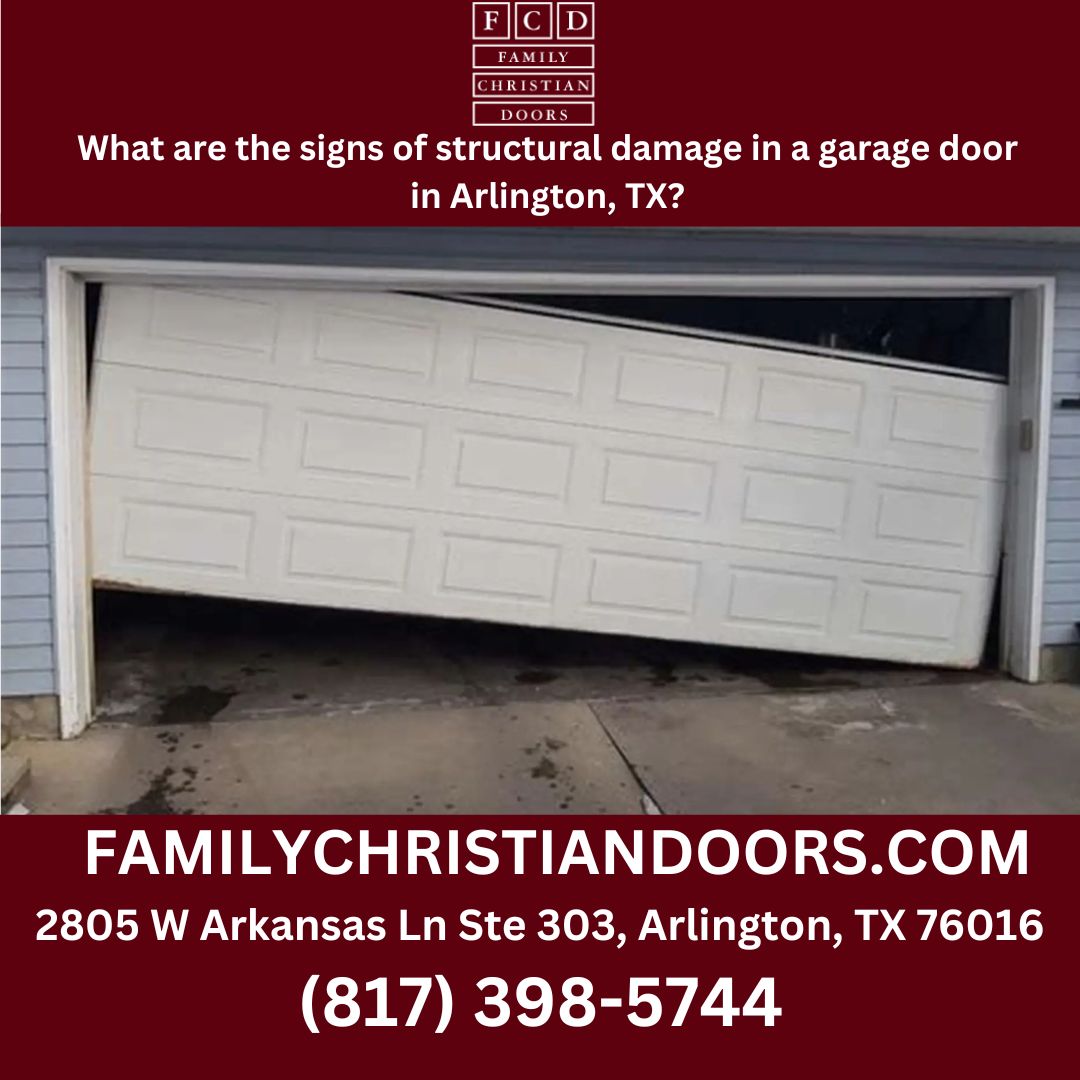
Conclusion
Recognizing the signs of structural damage in your garage door requires knowing what to look for and understanding why each sign matters. Visible cracks, rust, misalignment, spring failure, frame separation, and impact damage all indicate that your door’s structural integrity has been compromised. Arlington’s unique climate of high humidity, extreme heat, and severe weather accelerates damage progression, making early detection and professional repair essential.
Your garage door protects your home, vehicles, and family while operating safely. Structural damage doesn’t improve without intervention. Each cycle that the door operates with compromised structure accelerates additional damage to connected components. The cost of professional evaluation now is far less than the cost of component failures later, plus the safety risks of operating a damaged door are simply not worth the delay.
If you have noticed any of these structural damage signs in your Arlington garage door, the time to act is now. Family Christian Doors specializes in accurate damage assessment and structural repairs that restore your door to safe operation. Our experienced technicians understand how Arlington’s climate affects garage doors and know exactly what to look for during inspection. Whether you need garage door opener service and repairs or comprehensive structural evaluation, contact Family Christian Doors today to schedule a professional assessment of your garage door. You can reach out through the garage door repair section of our website or call directly to speak with a specialist who can answer your questions and arrange a convenient inspection time.