

Structural damage in a garage door can range from subtle frame issues to serious problems that affect your home’s security and safety. The most common signs include visible cracks in the door frame, uneven door movement, warping or bending, and separation between the frame and wall. In Dallas, where temperature swings and humidity levels fluctuate throughout the year, these issues develop more frequently than in other regions. Recognizing these warning signs early can prevent costly repairs and protect your family from potential safety hazards. This guide walks you through what structural damage looks like, how to identify it, and why professional garage door repair is essential for accurate diagnosis.
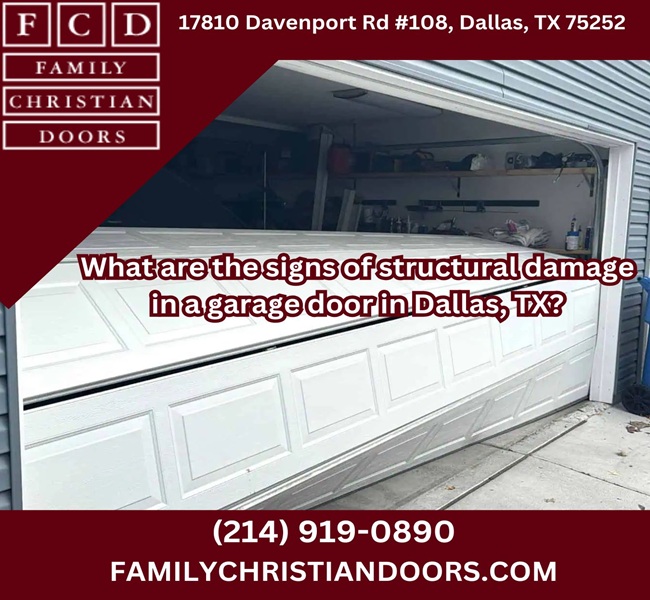
What Are the Signs of Structural Damage in a Garage Door? A Dallas Homeowner’s Guide
Understanding Real Structural Damage vs. Operational Issues
Not every problem that makes your garage door look concerning indicates structural damage. Understanding the difference between genuine structural issues and operational problems helps you respond appropriately. Structural damage affects the integrity of the door frame, walls, foundation, or the door panels themselves. Operational issues are problems with moving parts like springs, cables, rollers, or openers that make the door function poorly but don’t compromise the physical structure.
Actual Structural Problems (Frame, Wall, Foundation Damage)
Real structural damage involves the physical integrity of components. This includes cracks in the door frame that go through multiple inches of material, separation between the frame and surrounding wall, damage to the header (the horizontal support above the door opening), or cracking in the masonry or concrete where the door attaches. Foundation settling can cause the door opening itself to shift, making the frame no longer square. Wall damage around the opening, particularly if your home has experienced settling or impact, compromises the stability of the entire installation. These issues don’t resolve on their own and typically worsen over time.
Issues That Appear Structural But May Not Be
A warped door panel might look like structural failure but often results from a broken spring or cable that pulls the panel unevenly. Rust or corrosion on metal components can appear serious but may not affect structural integrity. A door that doesn’t open evenly or hangs slightly off-center might indicate cable or track problems rather than frame damage. Professional technicians examine the underlying cause before diagnosing structural issues, as addressing the root problem often resolves what appeared to be a structural concern.
Warning Signs That Indicate Structural Damage in Your Dallas Home
Visible Cracks and Warping in the Door Frame
Examine the frame around your garage door opening carefully. Small hairline cracks near corners sometimes appear as wood shifts slightly with seasonal changes, but cracks wider than one-eighth of an inch, particularly those that run at angles or across joints, indicate structural stress. Deep or spreading cracks suggest the frame is bearing pressure it shouldn’t or that the wall behind it has shifted. Warping or bowing of vertical frame members means the wood has absorbed moisture or the frame is bearing uneven load. When panels show damage like a bent garage door panel, it often indicates underlying stress or impact that requires assessment beyond surface-level observation.
Foundation Settlement and Uneven Door Movement
If your garage door moves unevenly during operation, sticking on one side or opening at an angle, this often points to foundation settling that has shifted the opening. Dallas homes built in the 1980s and 1990s sometimes experience settling as soil conditions shift over decades. Newer subdivisions in North Dallas occasionally show settling patterns if construction occurred over areas with clay soil, which contracts and expands with moisture changes. Notice whether the door drags along the bottom on one side or if the top seems misaligned. When your door becomes garage door off-track, it suggests the opening has shifted out of square, compromising the structural alignment of the entire installation.
Water Damage to Wooden Frames (Texas Humidity and Seasonal Swings)
Dallas experiences dramatic temperature changes between seasons, and humidity levels shift substantially throughout the year. These conditions create ideal circumstances for water infiltration and wood deterioration. If the wooden frame shows soft spots when you press it, discoloration, or visible rot, the structural integrity of the frame is compromised. Water damage spreads internally, so surface damage is often only what you can see. East Dallas homes with older garage installations are particularly susceptible because weatherstripping and seals may have degraded. Wood that has absorbed significant moisture loses its load-bearing capacity and requires replacement to restore structural integrity.
Impact Damage from Weather or Collision
Severe weather events, vehicle impacts, or falling branches create obvious damage that needs assessment. A garage door struck by a vehicle or damaged by a storm may show bent frame components, dents that affect the frame’s geometry, or separation at connection points. Even damage that looks isolated requires inspection because impact forces often cause structural stress in areas you cannot see. The frame may have internal cracks or connection points may have failed partially, leaving your door structurally weakened for future operation.
Common Structural Damage Scenarios in Dallas Garage Doors
Foundation Settling in Older East Dallas and North Dallas Homes
Homes in East Dallas dating to the 1970s and 1980s sometimes experience foundation movement as soil conditions change. North Dallas subdivisions built on clay-heavy soil experience similar settling patterns. When a home’s foundation shifts, even slightly, the garage door opening moves with it. This creates misalignment that forces the door to work harder and creates stress on structural components. If your older home has a garage door that’s becoming harder to open or close, or if you notice new cracks around the opening, foundation settling may be involved. This requires professional assessment because structural realignment may be necessary.
Spring Failure Manifesting as Structural Issues
Garage door springs are engineered to support the weight of the door evenly. When a spring breaks, the door’s weight shifts onto the frame and header. Homeowners sometimes misinterpret this as structural damage because the door suddenly seems heavier or moves unevenly. The frame may actually flex or bend temporarily because it’s now bearing weight it wasn’t designed to support by itself. A broken garage door spring must be replaced to relieve stress on the frame and restore proper operation. This doesn’t mean the frame is permanently damaged, but it does mean professional service is essential.
Temperature-Related Expansion and Metal Component Stress
Metal components in garage door systems expand in heat and contract in cold. Dallas summers push temperatures into the high 90s, while winter temperatures sometimes drop below freezing. This expansion and contraction cycle stresses connections, particularly in systems that are decades old. Metal fatigue can cause components to crack or separate at welded or bolted joints. If you notice cracks appearing at corners where metal components meet, or if bolted connections seem loose, temperature cycling may be causing structural stress. This issue worsens gradually but accelerates over time, making early detection important.
Why Professional Assessment Is Essential
Identifying structural damage accurately requires more than visual inspection. Professional technicians understand how forces distribute through door frames, recognize early signs of structural compromise that homeowners miss, and understand how age, material degradation, and settling patterns create vulnerability. They perform hands-on testing to detect hidden damage, assess whether repairs can restore functionality or replacement is necessary, and determine whether the damage extends beyond the door system to surrounding walls or foundations. A professional assessment protects your safety and prevents damage from worsening while you remain unaware.
Getting Your Dallas Garage Door Inspected
Schedule an inspection if you notice any warning signs discussed in this guide. Document changes you observe, such as when the door began moving unevenly or when cracks first appeared. Take photos from different angles to show the technician. During the inspection, ask questions about what the technician finds and understand the recommended repair approach. Structural issues don’t improve without intervention, so addressing them promptly prevents compounding damage and maintains your home’s safety and security.
| Sign of Structural Damage | What It Indicates |
| Visible cracks wider than 1/8 inch in frame | Frame is bearing structural stress or wood has shifted significantly |
| Uneven door movement or dragging on one side | Opening has shifted out of square, typically from foundation settling |
| Soft spots, discoloration, or rot in wooden frame | Water damage has compromised structural integrity of frame material |
| Separation between frame and surrounding wall | Frame has pulled away from wall, indicating structural shift or foundation movement |
| Cracks at welded or bolted metal joints | Temperature cycling or structural stress is causing metal fatigue and failure |
Understanding the Real Impact of Structural Damage
Structural damage in your garage door affects more than just that single component. A compromised frame or header can eventually affect the integrity of your home’s exterior wall. Foundation issues that cause garage door misalignment often indicate broader settling patterns that warrant attention elsewhere in your home. Water damage to frames can spread to surrounding materials if left unaddressed. Recognizing these connections helps you understand why prompt professional assessment matters. A skilled technician evaluates not just the door itself but whether damage extends to surrounding structures and whether your home needs additional attention.

Conclusion
Structural damage in a garage door manifests through visible cracks, uneven movement, warping, water damage, and frame separation. In Dallas, where temperature fluctuations and humidity levels shift seasonally, these issues develop more readily than in other climates. Distinguishing between actual structural problems and operational issues helps you respond appropriately. Foundation settling in older homes, spring failures, and metal component stress represent common scenarios Dallas homeowners face. Most importantly, professional assessment is essential because structural damage isn’t something to monitor or postpone. The answer to identifying these problems is professional inspection that goes beyond what you can see on the surface. In cases where structural damage is extensive, a residential garage door replacement may be recommended to restore full functionality and safety. If you’ve noticed any warning signs in your garage door, reaching out to Family Christian Doors connects you with experienced technicians who understand Dallas homes and can assess your situation accurately. Visit familychristiandoors.com/garage-door-repair-dallas/ to schedule an inspection or learn more about how professional service protects your home’s structural integrity and your family’s safety.